
Can You Replace a Pool Skimmer Without Removing the Deck?
Yes, a pool skimmer can sometimes be replaced without removing the deck, but the answer depends on how the skimmer and its plumbing are installed. In other cases, the deck must be disturbed to reach the failed parts.
The important distinction is between replacing a removable skimmer component and replacing the entire skimmer body. An inspection can help you understand which job your pool needs and what access it will require.
When Pool Skimmer Replacement Can Leave the Deck Intact
A skimmer body sits at the pool's edge and connects to a suction line that carries water toward the pump. On a gunite pool, the body and plumbing can be surrounded by concrete or hidden beneath finished surfaces.
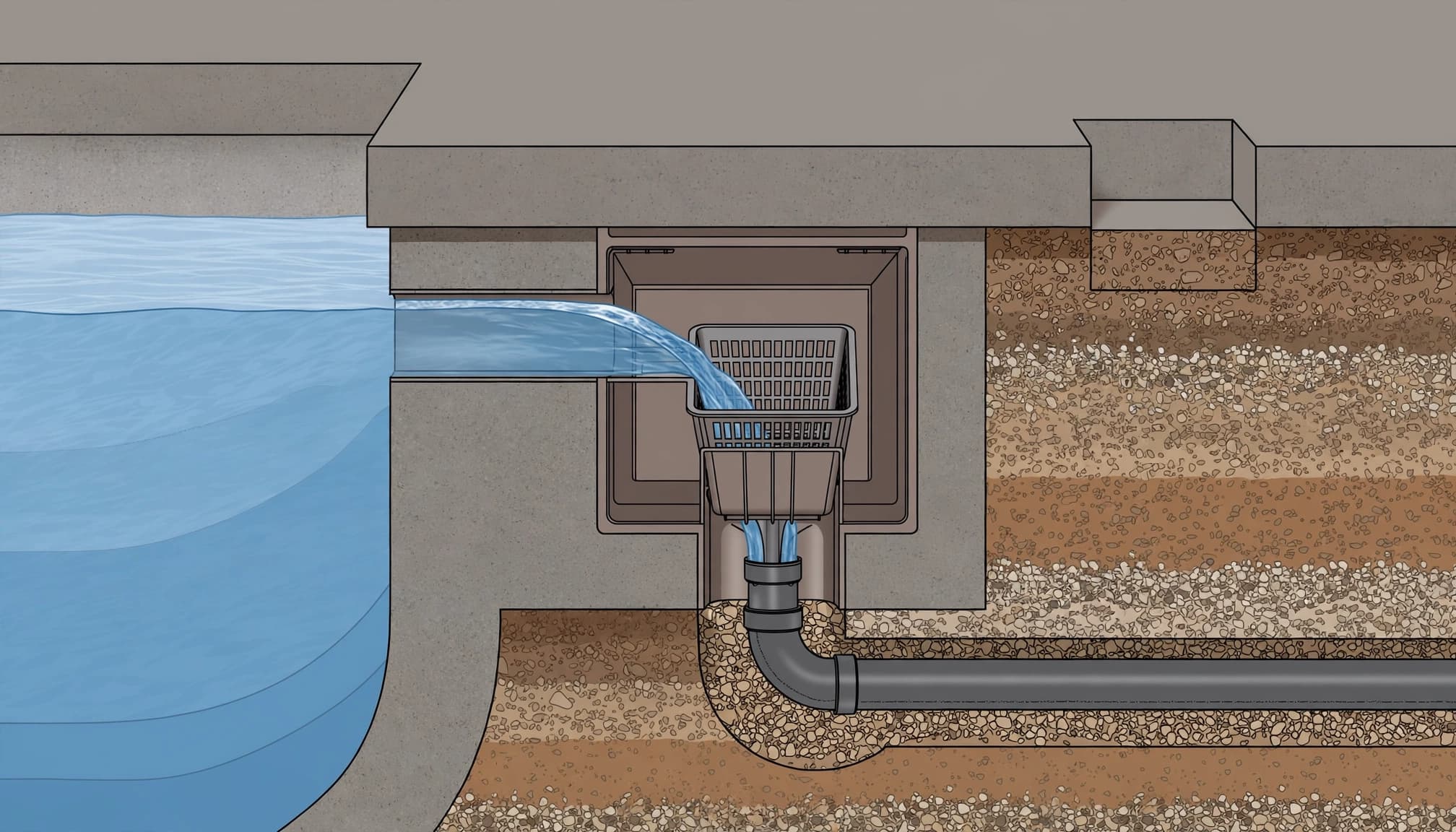
If a contractor can reach and replace the failed assembly and make sound plumbing connections without disturbing the deck, the deck may stay intact. That depends on the original construction, the location of the damage, and the working room available.
Replacing a basket, lid, or weir usually involves much less work than replacing the body. The weir is the movable flap at the skimmer opening. If one of these accessible parts is the only problem, the body may not need replacement at all.
Find the Source of the Problem First
Water loss or weak skimmer suction doesn't automatically mean the skimmer body has failed. A contractor should identify the cause before recommending a repair.
Look beyond the visible symptoms
A crack near a skimmer deserves attention, particularly when you also notice falling water levels or damp soil. Air bubbles in the return lines can be another clue, although they don't identify the source on their own.
Water loss can also come from plumbing, other fittings, or normal evaporation. Rain, wind, and splash-out can make the pattern harder to interpret.
Use testing to guide the repair
Depending on the symptoms, a pool professional may use dye testing, pressure testing, or other leak-detection methods. Those tests help distinguish a leak at the skimmer from one in a connected pipe or elsewhere in the pool.
The distinction matters because replacing the skimmer won't solve a leak in another part of the system. Our guide to gunite pool plumbing basics explains why concealed pipes can make repairs more involved.
What the Repair May Involve
The method depends on whether the damaged part is accessible and whether the surrounding pool structure remains sound.
Repair or replace accessible components
A damaged lid, basket, or weir can often be replaced without changing the entire assembly. A contractor may also recommend a targeted repair when testing identifies a defect that can be treated with a suitable material.
A patch needs proper surface preparation and a product suited to the conditions. It shouldn't be treated as a universal fix for a cracked body, a leaking pipe connection, or movement in the surrounding structure.
Replace the skimmer body and connections
When the body itself has failed, replacement involves more than fitting a new basket into the opening. The contractor needs access to the assembly and its plumbing connections, as well as a plan to restore any affected pool surfaces.
Once the work is complete, the repair should be tested before normal use resumes. If damage extends into the pool shell or the upper structural area, the job may require a broader assessment.
What Affects Feasibility and Cost?
There isn't a single price that fits every pool skimmer replacement. The skimmer itself is only one part of the job. Access, labor, plumbing, and restoration can make the difference between a modest repair and a larger project.
For example, a skimmer surrounded by finished concrete may be harder to reach than one with more accessible space nearby. Buried pipes, irrigation, drainage lines, or screen enclosure footings can also affect the work area.
In Southwest Florida, soil and groundwater conditions matter when excavation or water-level changes are involved. Don't drain an in-ground pool yourself to make a repair easier. Groundwater pressure can damage an empty pool.
Finish restoration also affects the scope. Existing tile, coping, and deck finishes may be difficult to match after years of sun and weather exposure. Ask for restoration details in the estimate, including any limits on matching the existing appearance.
When Deck Removal May Be Necessary
Deck work may be necessary when the contractor can't reach the damaged skimmer or plumbing through available access. It may also be needed when inspection finds deterioration around the pool edge that can't be addressed through a surface repair.
A crack near the skimmer doesn't prove that the deck or pool structure has failed. However, widening cracks, loose coping, settling, or recurring gaps deserve a closer look. Our guide to pool tile, coping, and deck problems covers other signs that may call for a broader assessment.
If several components need work, coordinating repairs with a planned renovation can reduce disruption. We offer pool renovation and remodeling services for Southwest Florida homeowners considering changes beyond the skimmer.
Questions to Ask Your Pool Contractor
A written scope helps you compare the proposed repair with the problem the inspection identified. Ask your contractor:
- What testing identified the leak or damage?
- Does the entire skimmer body need replacement, or is an accessible component the problem?
- Can the work be completed without disturbing the deck? What limits that option?
- Which plumbing connections and pool surfaces are included in the repair?
- What deck, tile, coping, or finish restoration is included in the estimate?
- How will the completed repair be tested before the pool returns to use?
Also ask how the price will change if the crew finds additional damage once the work begins. That gives you a clearer picture of the base estimate and possible added work.
Choose the Repair That Fits the Cause
A deck-free skimmer replacement is possible in some pools, but access and the location of the failure determine the options. Sometimes a removable part needs attention; other times the body, plumbing, or surrounding area needs work.
Start with a diagnosis and ask for a clear scope. That gives you a practical basis for deciding how much work your pool needs.