
Can You Build a Pool Before Your New Home Is Finished?
Yes, a pool can be built before a new home is finished when permits, site access, and construction schedules allow it. Building a pool before home completion requires coordination between the home builder and pool contractor.
The strongest plan uses a shared schedule that protects both projects. Start by deciding which pool stages can overlap with the house and which should wait.
Key Takeaways
- Pool construction can overlap with home construction, but the entire pool doesn't need to be finished early.
- Access, approved plans, inspections, and utility routes influence the schedule.
- Early planning can prevent rework, although overlapping construction adds coordination and protection responsibilities.
How to Sequence Pool and Home Construction
The right starting point depends on the lot and the house schedule, rather than one universal construction milestone.
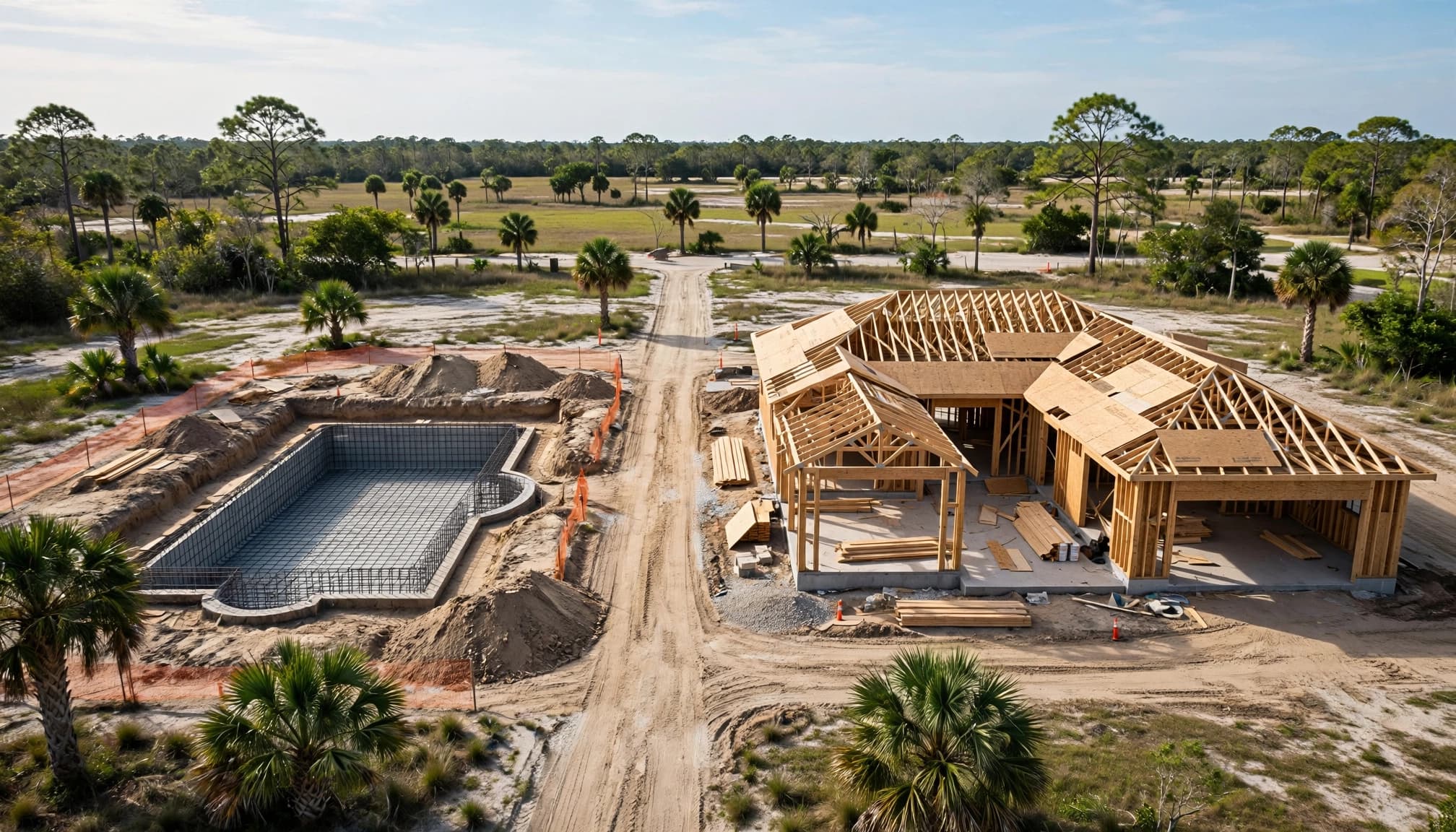
Separate early construction from final completion
Design, engineering, and permitting can move forward while the house is under construction. Excavation and shell work may also fit into that schedule when both builders agree the site is ready.
However, installing the shell doesn't mean the pool is ready for swimming. Tile, coping, decking, equipment, electrical work, interior finishing, and startup remain. The schedule should distinguish between starting the pool, completing its structure, and handing over a finished swimming area.
Allow time between major stages
Our gunite pool construction timeline includes planning ranges of two to six weeks for design and selections. Engineering and permit review can take four to 12 weeks or longer.
Gunite placement itself may take about one working day, while shell curing and related inspections can occupy two to four weeks. These stages don't always run consecutively. Therefore, a short installation task shouldn't become the basis for a promised move-in swim date.
Permits and Inspections Affect Both Schedules
An approved house plan doesn't settle every pool requirement. Pool drawings need to address the structure, plumbing, electrical bonding, equipment, drainage, decking, and safety barriers within the project scope.
Finalize the design before the permit application moves through review. Changing the pool shape or equipment location afterward can require revised drawings and disrupt scheduled work.
Our Cape Coral pool permit checklist explains why accurate site information and complete plans matter. HOA approval, where applicable, is another process alongside municipal permitting.
The pool contractor should manage inspection scheduling and corrections. Both builders also need to account for any pool-related conditions affecting the home's final approval, rather than assuming an unfinished pool cannot affect occupancy.
Protect Site Access and Define Builder Responsibilities
Overlapping work succeeds when crews have room to operate and everyone understands who controls each part of the site.
Preserve a usable construction route
Excavation requires more than enough space for the finished pool. Crews need an equipment route, room for soil handling, and protection for utilities and nearby construction.
Driveways, fences, landscaping, and screen enclosures can restrict that route once installed. Coordinate their installation with pool deliveries and remaining heavy work. Our guide to Fort Myers pool excavation explains how layout, access, drainage, and utility protection fit into site preparation.
Assign shared work before it begins
The home builder and pool contractor should agree on finished elevations, lanai connections, drainage paths, and equipment locations. Otherwise, separate crews can build to conflicting assumptions.
Assign responsibility for electrical connections, soil removal, backfill, temporary protection, and repairs to disturbed areas. Equipment selections also belong in the early plan because heaters, lighting, and automation affect wiring and conduit routes. Once decking covers those routes, changes may require demolition.
The Benefits and Drawbacks of Building Early
Building alongside the house can preserve equipment access before permanent improvements close it off. It also lets you coordinate pool elevations, outdoor living space, and drainage before crews finish the yard.
However, overlapping work puts more contractors in the same space. Construction debris can damage finished surfaces, and shared access can create scheduling conflicts. Starting early doesn't guarantee savings or simultaneous completion, so the proposal should identify protection and restoration responsibilities.
Practical Steps for Planning Both Projects
Use one written plan to connect design decisions with construction milestones.
- Put the house, pool, spa, deck, equipment pad, access route, and drainage features on a coordinated site plan.
- Finalize major features and equipment before engineering and permit submission.
- Build a shared schedule covering permits, excavation, inspections, curing, finishes, and startup.
- Document who handles site protection, utility connections, cleanup, and restoration.
Include allowances and change-order procedures in the agreement. That gives both builders a clear process when concealed conditions or requested changes affect the work.
Frequently Asked Questions
Can the pool be ready when we move in?
It can be, but overlapping construction doesn't guarantee matching completion dates. Weather, inspection corrections, material deliveries, and remaining house work can shift either schedule.
Can landscaping begin before the pool is finished?
Some areas may be ready earlier. However, sod, mulch, and plants should wait wherever crews still need access or inspectors need exposed work.
Plan the Pool as Part of the Home
Building a pool before your new home is finished is possible with coordinated plans and a realistic sequence. The strongest advantage comes from making access, drainage, and infrastructure decisions before construction limits your options.
Bring the home builder and pool contractor together early. A shared construction plan gives both projects a clearer path to completion.