Why Pool Rebar Matters in Southwest Florida
A concrete pool shell can look solid after the finish is applied, but its long-term strength begins with steel buried inside the concrete. That reinforcing steel, commonly called rebar, helps the shell handle tension, soil pressure, water weight, and normal movement.
For Southwest Florida homeowners, rebar details deserve close attention because sandy or filled soils, high groundwater, heavy rain, heat, and coastal air can affect pool construction. The steel must be properly designed, tied, supported, placed, and covered before concrete reaches the excavation. Those steps help manage cracking risk and protect the structure for years.
Key Takeaways
- Rebar gives a concrete pool shell added strength where concrete alone has limits.
- Southwest Florida soil, groundwater, weather, and coastal conditions make reinforcement details especially important.
- Ties, supports, correct placement, and adequate concrete cover protect the rebar from movement and corrosion.
- Rebar helps control crack width, but it can't prevent every crack or replace proper drainage, concrete placement, and curing.
- Homeowners should ask how the builder handles structural design, inspections, steel placement, plumbing penetrations, and site conditions.
Rebar Forms the Structural Backbone of a Pool Shell
Concrete handles compression well, but it has limited tensile strength. Tension develops when parts of the pool shell flex or try to pull apart under changing loads. Rebar helps carry those forces and spreads stress across a wider area.
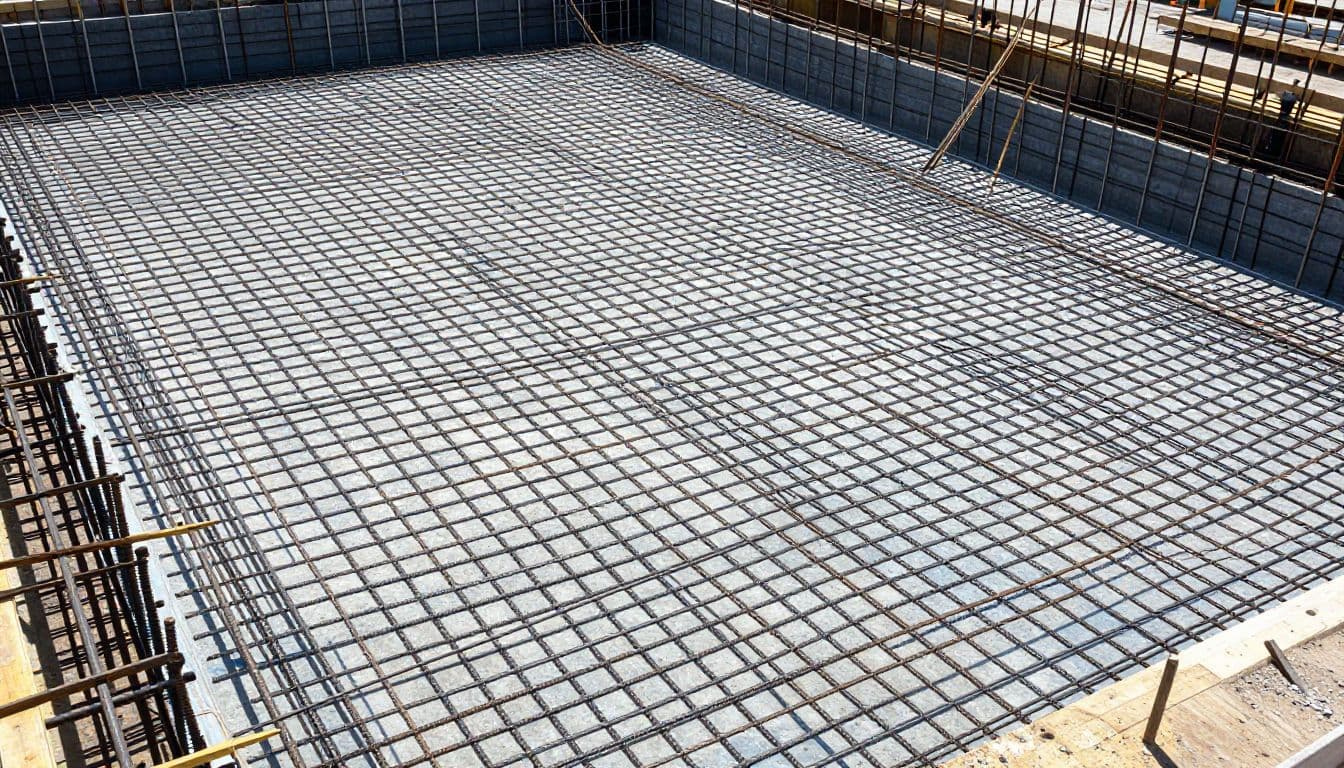
The steel grid follows the shape of the pool. Crews install reinforcement along the floor, walls, steps, benches, bond beams, raised sections, and other structural transitions. The exact layout depends on the pool's dimensions, depth, shape, soil conditions, plumbing design, and added features.
A pool shell also deals with more than the water inside it. Soil presses against the outside walls, while groundwater can push upward against the shell. As the pool fills, drains, settles, or experiences changes in surrounding moisture, the structure may face shifting loads. A properly designed rebar cage helps the concrete work as a connected shell instead of a collection of separate areas.
The steel doesn't make concrete waterproof, and it doesn't guarantee a crack-free pool. Instead, it helps hold concrete together when small cracks form from shrinkage, temperature changes, or movement. Keeping cracks narrower can reduce the chance of water movement and limit damage around the shell.
Rebar works with the concrete. It can't correct poor excavation, weak drainage, bad concrete placement, or inadequate curing.
For that reason, a strong pool structure depends on the entire construction system. Rebar is one of the most important parts, but it must match the engineering and the site.
Southwest Florida Conditions Make Reinforcement Details Matter
Every pool site needs individual review, but local conditions often create added challenges. Many properties in Cape Coral, Fort Myers, Naples, and nearby communities have sandy soils, placed fill, or changing soil conditions across the same lot. A pool builder needs to understand what the excavation reveals rather than treating every site as identical.
Groundwater is another concern. In many areas, water can enter an excavation quickly, especially during the wet season or after heavy rain. Water pressure affects excavation stability, concrete placement, and the forces acting around the finished shell. Rebar helps the shell carry structural loads, but it doesn't solve groundwater problems by itself. Site drainage, dewatering, hydrostatic planning, and the pool's overall design also matter.
Southwest Florida's climate brings long periods of heat, intense sun, and sudden rainfall. Concrete shrinks as it cures and expands or contracts with temperature changes. Those movements can create stress within the shell. Proper reinforcement helps distribute that stress and control the width of some cracks.
Coastal homes face another concern: salt-laden air. Chlorides can contribute to steel corrosion when they reach unprotected rebar through cracks or porous concrete. Concrete cover is the protective layer between the steel and the surrounding environment. If the steel sits too close to the surface, corrosion protection becomes weaker.
Water chemistry also deserves attention after construction. Balanced pool water helps protect interior finishes and equipment, while proper maintenance limits avoidable strain on the pool system. Good chemical care can't repair a construction defect, but it supports the shell and finish over time.
Hurricane conditions mainly affect the surrounding property, enclosure, equipment, deck, and drainage systems. Still, the pool project needs coordinated planning so nearby work doesn't damage the shell or direct water toward it. A local builder should account for the full site, not only the shape of the pool basin.
Properly Designed, Tied, Placed, and Covered Rebar
Rebar quality starts with design. A qualified pool builder and the appropriate design professionals determine the reinforcement plan based on the project, local requirements, and site conditions. The plan may call for different reinforcement at walls, corners, steps, openings, raised walls, spa connections, and beam areas.
Those transitions deserve attention because stress can collect where the shell changes direction or thickness. A simple-looking pool with a sun shelf and attached spa can involve more structural coordination than a basic rectangle. Waterline plumbing, lights, drains, return lines, and other penetrations also need to fit the reinforcement layout.
During installation, crews tie the rebar intersections so the grid holds its intended shape. Ties don't replace the steel's structural role, but they help prevent the cage from shifting while workers move through the excavation and place concrete. If reinforcement moves too far from its planned position, the finished shell may not have the protection or strength the design requires.
Supports and spacers keep the steel at the correct distance from the soil and the concrete surface. Rebar shouldn't lie directly on the excavation floor or press against the dirt sides. Workers need enough room around the steel for concrete to flow and surround it properly.
Concrete cover protects the steel from moisture and chlorides. The required cover depends on the design and exposure conditions. A qualified crew follows the project plans and applicable requirements rather than relying on a visual estimate.
Concrete placement matters just as much. Shotcrete or gunite must surround the reinforcement without leaving voids or poorly consolidated areas. The nozzle operator's technique, access to the steel cage, mix quality, placement conditions, and curing practices all affect the final shell.
Rebar also helps manage cracking risk, but homeowners should keep expectations realistic. Concrete naturally changes as it cures and responds to temperature and moisture. Reinforcement can limit crack width and help maintain the shell's continuity, yet it can't compensate for uncontrolled water pressure, poor soil preparation, or rushed concrete work.
A reliable project keeps each stage connected:
- The design accounts for the pool shape, site, loads, and special features.
- The crew installs and ties the steel according to the plan.
- Supports maintain the intended position and cover.
- Plumbing and penetrations receive proper coordination before concrete placement.
- The concrete crew places and cures the shell with care.
No single step carries the whole responsibility. The finished pool depends on how well the builder manages the sequence.
What Homeowners Should Ask Before Pool Construction
You don't need to calculate rebar sizes or inspect a structural drawing on your own. However, you should receive clear answers about how the builder will protect the shell's structure.
Ask whether the project includes a site-specific structural plan and who prepares or reviews it. The builder should also explain how soil conditions and groundwater affect excavation, reinforcement, drainage, and the construction schedule.
Before concrete placement, ask how the crew will verify the following details:
- The rebar layout matches the approved design.
- Steel remains tied and supported in the planned position.
- Concrete cover protects the reinforcement.
- Plumbing, lights, drains, and other penetrations don't interfere with the steel.
- Required inspections occur before the shell is placed.
- The concrete crew follows appropriate placement and curing practices.
A photograph of the steel can help you see the general layout, but a picture alone can't confirm the correct size, spacing, lap locations, or cover. Those details belong to the construction documents and the builder's inspection process.
Also ask how the project handles rain and groundwater. A wet excavation can affect work conditions, and a rushed pour can create avoidable problems. The builder should communicate schedule changes instead of forcing concrete placement when site conditions aren't suitable.
The construction sequence should be clear as well. San Juan Custom Pools & Spas describes its custom swimming pool construction process, including planning, excavation, installation, and the work needed to build a durable residential pool. A clear process gives homeowners a better way to track what happens before the shell receives its finish.
Look for a contractor that communicates in plain language and coordinates design, permits, excavation, steel, plumbing, concrete, and finishing work. Licensed and insured local service also gives you a direct point of contact when questions arise during construction.
Rebar Is Part of a Larger Shell-Building System
The steel cage is only one stage in building a concrete pool. The project begins with design, site review, permitting, and layout. Excavation follows, then the crew manages soil and groundwater conditions before installing plumbing and reinforcement.
Once the steel and plumbing are ready, the builder arranges any required inspection before shotcrete or gunite placement. The concrete forms the shell around the reinforcement. After placement, curing gives the material time to develop its intended properties before later finishes and features are installed.
Decking, drainage, equipment placement, waterline tile, plaster, coping, and screen enclosure work must also coordinate with the shell. Poor drainage near the deck can direct water toward the pool structure. Unplanned changes after steel installation can also create conflicts around penetrations and structural areas.
This is why homeowners should evaluate construction quality as a connected process. A strong rebar layout can't fix every problem, but careful structural planning reduces avoidable risks. The best questions focus on how each trade protects the work completed before it.
Conclusion
Rebar is hidden after construction, yet it helps determine how a concrete pool shell handles stress, movement, and changing loads. In Southwest Florida, proper design and installation matter because groundwater, variable soils, weather, and coastal air place specific demands on pool construction.
The steel must stay in position, receive adequate concrete cover, and work with sound excavation, concrete placement, curing, drainage, and site planning. When you compare pool builders, ask for clear information about those details. Good rebar work becomes part of the strength you rely on every time you use the pool.