
Tree Roots Pool Construction in Estero: Plan Before You Dig
An attractive mature tree can become the hardest part of a new pool plan in Estero. A tree that frames the yard may also sit above the future deck, plumbing trench, or equipment pad.
Good planning for tree roots pool construction starts before an excavator reaches the property. Early coordination among your pool builder, a qualified arborist, and utility-locating professionals can protect the tree, reduce redesign, and prevent avoidable surprises.
The first step is learning where the roots are, what the permit review may require, and which layout choices keep the project safe. Then the design can fit both the pool and the living landscape.
How tree roots pool construction affects an Estero yard
Roots don't follow property lines or the clean outline of a pool drawing. Many roots that absorb water and nutrients stay in the upper soil, while structural roots spread well beyond the trunk. The canopy and dripline offer useful clues, but they don't show every root.
During excavation, a bucket can sever roots under the proposed shell or deck. Even when the pool structure remains intact, disturbed roots can affect the tree's health and stability. Soil compaction from loaders and material piles also reduces air and water movement around roots.
The pool shell is rarely the first concern. Roots more often create problems around pavers, deck slabs, retaining features, plumbing lines, and drainage paths. As roots grow or soil settles, those elements can lift, crack, or shift. A concrete shell doesn't make an unstable excavation safe.
Large established live oaks, ficus, palms, and other landscape trees deserve review before the pool footprint is fixed. Species, health, root direction, soil conditions, and planned drainage all change the right answer.
Construction access matters too. An excavator may need to pass near a trunk, while concrete trucks and material deliveries can place heavy loads over a root zone. A design that fits on paper may still need a different access route.
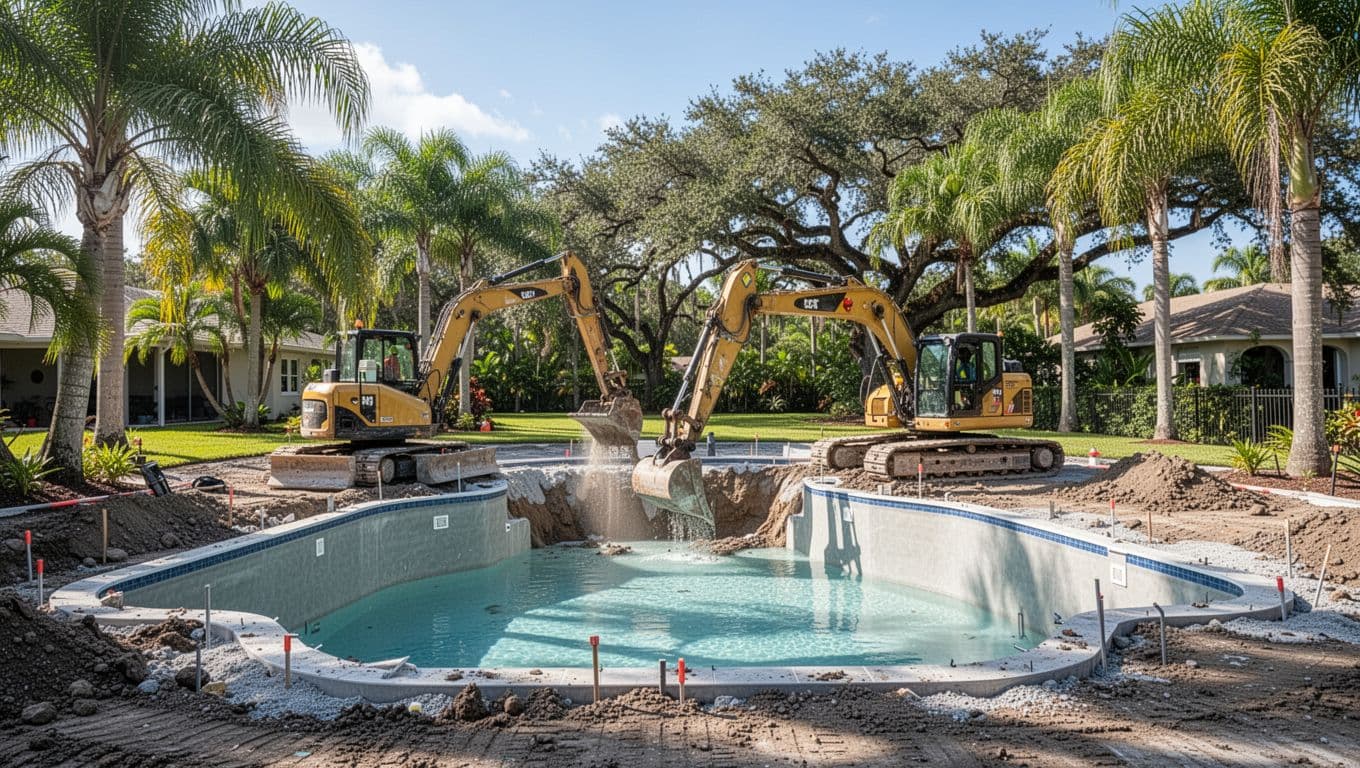
What happens when pool excavation cuts major roots
Root cutting can affect tree stability
Major roots anchor a mature tree and help it resist wind. Cutting several large roots on one side can change that support, especially when the tree already has decay, leaning, storm damage, or a narrow planting area.
The risk isn't limited to the day of excavation. A tree may show stress later through canopy thinning, dead branches, or reduced growth. Root loss can also leave the tree less able to handle strong winds and saturated soil.
A qualified arborist should decide whether a root can be cut, how much pruning is safe, and whether the tree should remain in the design. Pool crews should never make that decision casually at the edge of a trench.
Soil damage can be as serious as root cuts
Heavy equipment can compact soil across a wide area without visibly damaging the trunk. Stockpiled soil, concrete washout, fill, and repeated traffic can reduce the pore space roots need for oxygen and water.
A tree can look untouched above ground while its root zone has already been damaged by soil storage or machine traffic.
The same concern applies when workers raise or lower grades near the tree. Adding soil can cover roots and reduce oxygen. Removing soil can expose roots to heat and drying. Drainage changes may also send excess water toward the trunk or away from roots that depend on the existing moisture pattern.
How to survey an Estero yard before pool design
A reliable plan begins with three professionals working from the same site information. Each one answers a different question.
- The pool builder identifies the full construction footprint. The plan should include the pool, spa, deck, screen enclosure, equipment pad, plumbing runs, drainage features, retaining structures, and equipment access.
- The arborist evaluates the trees. The assessment should consider species, trunk size, health, defects, canopy spread, root flare, likely structural roots, and the effect of excavation on stability.
- Utility-locating professionals mark underground lines. Florida 811 can identify public utility lines. A private locator may also be needed for homeowner-owned electric, irrigation, gas, lighting, communication, and pool lines that public marking doesn't cover.
- The builder overlays the information before finalizing the layout. The team can then identify conflicts while moving the pool is still affordable and practical.
The University of Florida IFAS recommends planting trees at least 10 feet from a pool wall, with medium-maturing trees at least 20 feet away and large trees at least 30 feet away. Those figures are useful landscape guidance, not a universal construction code or a substitute for an arborist's assessment of an existing tree.
The root protection zone may need to extend beyond the dripline. An arborist can mark a protected area and explain where workers may travel, stage materials, excavate, or place temporary fencing.
An experienced builder should connect that survey to every phase of the pool building process and phases, especially excavation, plumbing, backfill, decking, and screen installation.
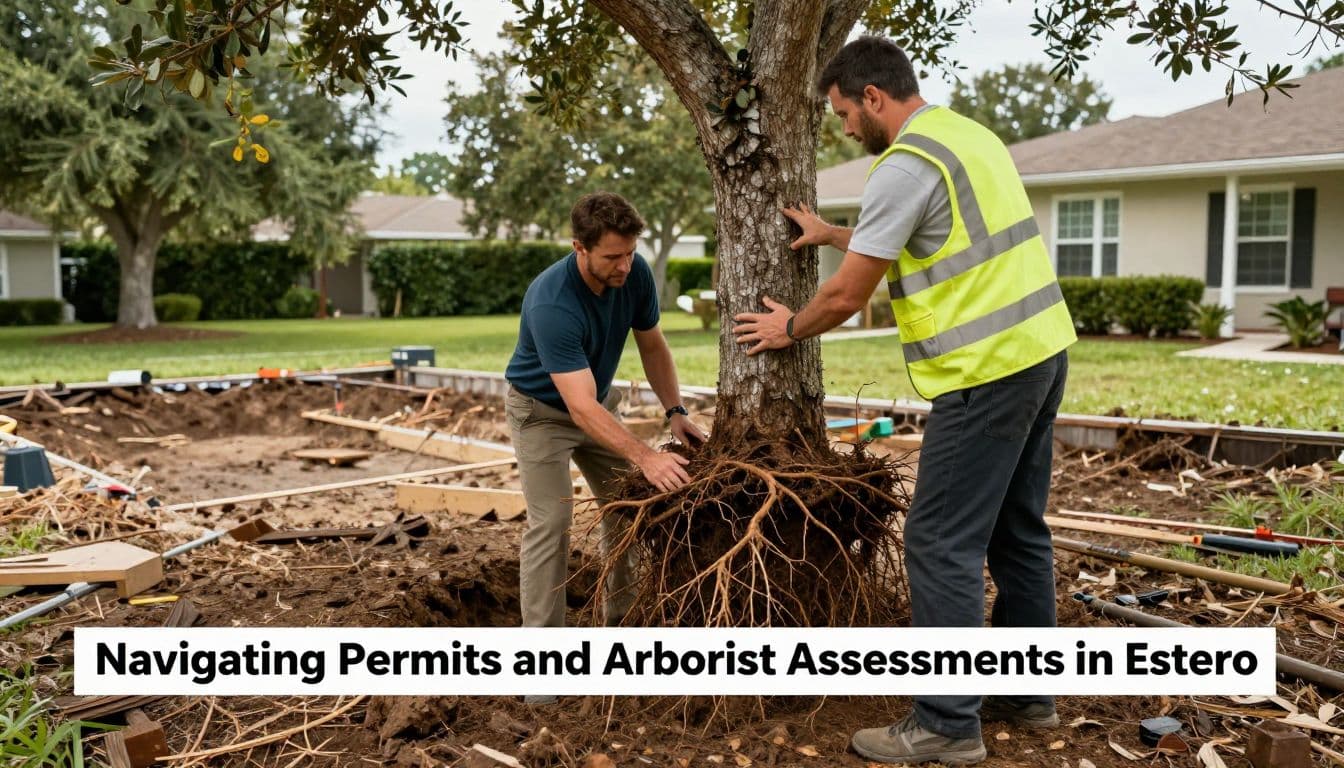
Estero permits and tree protection need early review
Tree work and pool construction may involve different reviews. The answer depends on whether the project removes a tree, clears part of the lot, disturbs a protected tree, changes grades, or affects drainage and easements.
The Village of Estero's Permit Office is the right place to confirm current local requirements. Its listed contact information is 239-221-5036, permitting@estero-fl.gov, and 9401 Corkscrew Palms Circle, Estero, Florida 33928.
Ask about tree removal, tree protection, arborist reports, mitigation, and any documents required with the pool application. Don't assume that a pool permit automatically covers every tree-related decision.
A complete site plan may need to show existing trees, trees to remain, trees proposed for removal, the pool and deck, property lines, easements, utilities, septic components, grading, and drainage. Requirements can change when lot clearing or mature-tree removal is part of the project.
The builder should raise these questions during design and permitting, not after clearing begins. If a tree must come out, the arborist can document its condition and the builder can coordinate the required approvals before equipment arrives.
Homeowners should also review the contractor's full range of custom pool design and installation services before choosing a layout. A company that handles design, permitting, excavation, and construction coordination can keep tree decisions connected to the rest of the project.
Design solutions when roots and the pool footprint overlap
Move the pool or supporting features
Relocating the pool is often the cleanest solution when the tree has high landscape value or the arborist identifies a serious stability concern. The adjustment may involve more than the shell. Moving the deck, screen enclosure, equipment pad, plumbing, or drainage path may reduce root disturbance without changing the pool's main shape.
A small change in orientation can also improve access for excavation equipment. The best location balances tree protection, setbacks, utilities, stormwater flow, property use, and the finished view from the house.
Keep the tree with a lower-disturbance plan
If the tree remains, the design team may reduce excavation near major roots and place features in less sensitive areas. For example, the equipment pad may move away from the trunk, while the deck shape follows the available open space.
Root barriers aren't a universal fix. They need proper placement and installation, and they don't make it safe to cut structural roots. The arborist and builder should decide whether a barrier fits the species, soil, drainage, and long-term plan.
Remove a tree only after professional review
Sometimes removal is the safest or most practical choice. However, removing a mature tree changes shade, privacy, wind exposure, soil moisture, and the character of the yard. The stump and major roots may also affect excavation, fill placement, and future landscaping.
Tree removal should follow an arborist's evaluation and the Village's current permitting direction. It should never be treated as a DIY step because cutting major roots or taking down a mature tree can injure people, destabilize the tree, damage utilities, or create property damage.
During tree roots pool construction planning, ask the team to compare at least two layouts before approving removal. One option may protect the tree, while another may simplify construction and improve long-term maintenance.
Construction controls that protect trees and the new pool
Once the layout is approved, the protection plan has to reach the jobsite. Mark the root protection zone with sturdy fencing before excavation begins. Keep equipment, fill, concrete, fuel, and washout areas outside that boundary.
Workers should avoid trenching through major roots. If excavation exposes a significant root, stop and contact the arborist rather than cutting it with a saw or excavator bucket. Keep exposed roots shaded and moist, and follow the arborist's instructions for a clean cut or protective covering.
Utility marks must be visible before digging starts, and private lines need separate attention when applicable. The builder should also control traffic routes so repeated machine passes don't compact soil around retained trees.
Grade changes deserve the same care. Don't bury the root flare, pile fill against the trunk, or redirect concentrated water into the root zone. A protected tree still needs air, water, and stable soil throughout construction.
Questions to ask before signing a pool contract
Ask these questions while the design is still flexible:
- Will the site plan show every tree near the pool, deck, screen, equipment pad, and access route?
- Has a qualified arborist reviewed the trees that excavation may affect?
- Who will coordinate the Village of Estero's tree-related requirements and permit documents?
- Will the contractor arrange public and private utility locating before excavation?
- Where will fencing, soil, fill, concrete, and equipment stay during construction?
- Who has authority to stop work if a major root is exposed?
- What happens if the approved layout conflicts with an unmarked root or utility?
Clear answers reveal whether the contractor has a real plan or expects the crew to make decisions in the field. Put important tree-protection measures and responsibility for unexpected conditions in writing.
Conclusion
Tree roots pool construction planning is part of responsible pool design in Estero, not a last-minute excavation concern. Roots can affect tree stability, deck movement, drainage, utilities, construction access, and permit requirements.
The safest path is early coordination between an experienced pool builder, a qualified arborist, and utility-locating professionals. When the team maps the site before digging, you can protect valuable trees and build a pool that remains functional, stable, and suited to the yard for years.