Pool Waterfall Design Options for Estero Gunite Pools
Estero homeowners often want a water feature that feels built into the pool, not added after the shell is finished. A well-planned pool waterfall design can shape the view, add steady sound, and connect a gunite pool to surrounding palms, patios, and outdoor living areas.
Gunite supports custom curves, raised walls, attached spas, ledges, and naturalistic features. The right choice depends on your available space, preferred water sound, materials, lighting, and maintenance expectations. Start with the pool's architecture and the way your family uses the yard.
Start with the Pool's Architecture and Backyard Scale
Waterfalls need room for structure, plumbing, access, and the water's landing zone. In a smaller Estero yard, a narrow wall or scupper can add movement without taking over the deck. Larger properties can support a rock ledge, grotto, or broad raised wall.
Place the Feature Where It Gets Attention
An elevated feature is most visible from the home, lanai, and primary seating area. A raised wall at the far end draws the eye across the water, while a spa spillover creates a closer focal point.
Keep splash away from walkways, furniture, doors, and areas where wind could carry water. Also consider views from inside the house, especially if the pool is visible through large windows or sliding doors.
A builder's custom pools and spas portfolio can help you compare how different waterfall shapes, finishes, and locations work in real backyards.
Match the Sound to the Setting
A narrow sheet produces a clean, controlled sound. A rough rock ledge creates a fuller, less uniform cascade. Height, flow rate, outlet width, and landing depth all affect the final volume.
If you often host conversations, choose a quieter sheet or adjustable flow. For a private lounging area, a stronger cascade may help mask traffic or equipment noise. Final hydraulic planning should account for pump capacity and circulation needs.
Pool Waterfall Design Options for a Modern Estero Backyard
Clean-lined features fit contemporary gunite pools and homes with strong geometric forms. They also work with transitional designs when stone, tile, or coping softens the edges.
Raised Wall Waterfalls
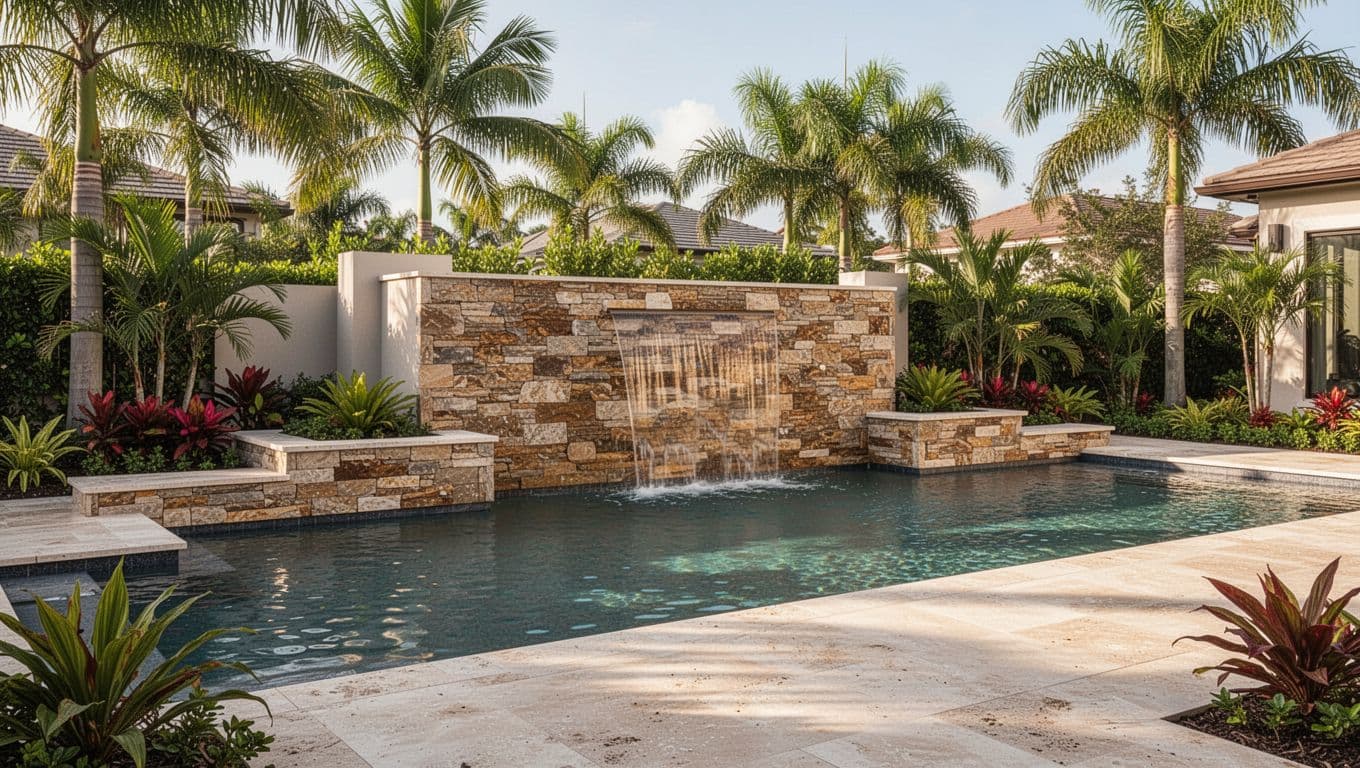
A raised wall can run parallel to the pool edge or frame one end of the pool. It gives the feature a solid architectural presence and can conceal plumbing behind the masonry.
Finish the wall with porcelain tile, stacked stone, ledger stone, or a material that matches the pool's interior finish. A full-width spill creates a broad sheet, while individual openings create separate streams with more visual control.
Low-voltage lighting beneath the lip can illuminate the falling water after sunset. This option needs structural support, proper waterproofing, and enough clearance for service access behind or beside the wall.
Sheer Descents and Scuppers
A sheer descent uses a narrow outlet to produce a smooth, glass-like curtain. A scupper projects through a wall or column and releases a more defined stream. Both options fit compact raised walls and spa backs, making them useful for narrow lots.
Stainless steel or polymer outlets can sit inside tile or stone so the hardware stays visually discreet. LED lighting can highlight the landing point without making the entire wall appear bright.
Wind can disturb a thin water sheet, especially in an exposed yard. Outlet width, water volume, and the distance to the pool surface deserve careful review before construction begins. Keep the catch area accessible for cleaning and inspection.
Natural Rock Waterfalls Add Texture and Movement
Naturalistic features suit backyards with palms, tropical planting, and freeform gunite shapes. They need more visual mass than a simple outlet, so decide early how much deck and planting space you want to give the feature.
Rock Ledges and Cascades
A rock ledge can create one gentle drop or several uneven cascades. Irregular surfaces produce changing water sounds and a more organic appearance than a straight sheet.
Use properly set natural stone or a manufactured rock system rated for pool applications. The installer should shape the basin so water returns to the pool instead of running behind the veneer or into surrounding soil.
Recessed lights beneath the ledges can add a soft glow, although fixtures still need access for service. Leaves and grit collect in crevices, while mineral deposits are easier to see on textured surfaces. Regular brushing and inspection help protect the appearance.
Grotto Features
A grotto places a shaded opening beneath a rock overhang. It can connect to a raised wall, sit at the end of the pool, or form part of a larger naturalistic feature.
Grotto waterfalls create a heavier sound because water moves across multiple surfaces and enclosed spaces. Dark interior tile, textured stone, and low-level lighting can make the opening feel cool and private.
This design uses more space and requires careful structural planning. The overhang, wet areas, drainage paths, and interior surfaces should remain accessible for cleaning and inspection. Avoid blind pockets where debris can collect unnoticed.
Connect the Waterfall to a Spa or Sun Shelf
Water features feel more integrated when they follow something already included in the pool plan. An attached spa spillover or shallow ledge can add motion without requiring a separate freestanding structure.
Raised Spa Spillovers
An attached raised spa can spill water into the main pool through one broad opening or several smaller ones. A wide spillway creates a calm band of water, while multiple spillways produce a more defined pattern.
The spa wall can use matching tile, stone, or a contrasting cap to create a clear design accent. Underwater or recessed LED fixtures can light the spillway after dark, and a separate control can adjust the feature when you want less sound.
The spillover needs enough wall height and landing space to prevent unwanted splash. Its plumbing, waterproofing, and access points should be planned with the spa shell rather than added later.
Sunshelf Edges and Bubblers
A sunshelf can include a low cascade along its edge or several bubblers that push water a short distance above the shallow surface. These features suit families who want gentle movement near lounge chairs or in-water seating.
A shelf waterfall has a lower profile than a raised wall, so it preserves open sightlines across the pool. Small bubblers create a lighter sound than a tall cascade and can be finished with tile, stone, or a contrasting waterline detail.
Keep furniture, umbrellas, and walking routes clear of the splash zone. Leaves can collect around shallow features, so the shelf and outlets should remain easy to brush and inspect.
Choose Materials, Lighting, and Water Behavior Together
A waterfall finish changes how water looks and how much upkeep it shows. Coordinate the coping, interior finish, wall tile, deck, and surrounding planting before the construction drawings are complete.
Select Pool-Rated Finishes
Natural stone gives a waterfall a varied texture and works well with tropical planting. Porcelain tile creates crisp lines and offers many color and pattern choices. Glass tile can add sparkle, although its installation system and maintenance requirements need professional review.
Travertine and other masonry materials can complement the deck and raised walls, but every surface near moving water needs proper setting, sealing, drainage, and waterproofing details. Use products intended for pool environments.
A contrasting finish can make the water easier to see. A matching finish creates a quieter, more unified appearance. Your pool waterfall design should support the larger material palette instead of competing with it.
Use Lighting to Show the Water
Lighting should reveal moving water without shining directly into nearby seating or the house. A fixture under a spillway emphasizes the sheet, while concealed lights within a rock feature create a softer glow.
White lighting keeps the feature architectural and understated. Color-changing LEDs allow you to adjust the mood for entertaining, but the fixture placement matters more than color settings.
Leave access to lights, niches, valves, and outlets. A beautiful feature becomes difficult to maintain when planting or masonry blocks the service area.
Plan Maintenance and Technical Details Early
Waterfall performance depends as much on access and plumbing as appearance. Ask where the pump, valves, cleanouts, lights, and outlets will sit, and how technicians can reach them after the deck and landscaping are complete.
Keep Water Moving Cleanly
Leaves, insects, and landscaping debris can collect in spillways, rock pockets, and shallow shelves. Pool chemistry also affects the feature. Mineral buildup can appear around outlets and along the path of falling water, while poor circulation can leave stagnant areas.
Depending on the design, the waterfall may use a dedicated feature pump or share part of the pool's circulation system. The right arrangement depends on the feature size, desired flow, equipment, and control system.
A qualified pool professional should balance water volume with pump capacity. Excess flow can create splash and noise, while insufficient flow may produce an uneven sheet.
Resolve Structural and Code Details Early
Raised walls, grottos, cantilevered caps, and attached spas add structural demands to a gunite pool project. The design also needs appropriate drainage around the feature, especially where rainwater and irrigation can affect nearby decks or planting beds.
A qualified pool professional should evaluate the soil, pool shell, reinforcing steel, waterproofing, plumbing, electrical bonding, equipment layout, and applicable local code requirements. Permitting and site conditions in Estero should be addressed before construction starts.
Discuss the feature during the pool planning and installation process, not after the pool shape and equipment plan are fixed. Early decisions allow the wall, plumbing, lighting, and finish materials to work together.
Conclusion
The right waterfall can give an Estero gunite pool a strong focal point, a comfortable background sound, or a gentle sense of movement around a spa and sunshelf. Raised walls and sheer descents suit clean-lined designs, while rock ledges and grottos add texture and shade.
Choose the feature based on your yard's scale, preferred sound, finish palette, lighting plan, and ability to maintain it. With structural, plumbing, engineering, and code details reviewed by a qualified pool professional, your pool waterfall design can feel like part of the pool from the first day.