
Pool Surge Protection for Cape Coral Gunite Pools
A new gunite pool adds sophisticated electrical equipment to your backyard, and Southwest Florida weather can be hard on it. Pool surge protection helps address voltage spikes that may reach pumps, controls, heaters, lighting, and chlorination equipment during storms or utility disturbances.
Cape Coral's wet season brings frequent lightning, sudden outages, and power restoration events. Planning protection while the pool is under construction is simpler than revisiting conduits, panels, and equipment wiring after the deck is complete.
Why New Gunite Pools Face Electrical Surge Risks
A gunite shell is built to last, but its equipment depends on sensitive electronics. A modern pool pad may include a variable-speed pump, automation controller, electric or gas heater controls, salt chlorinator, LED lights, and water-feature equipment.
Each component has a different job, yet many share the same electrical supply and control network. A voltage disturbance can travel through that connected system.
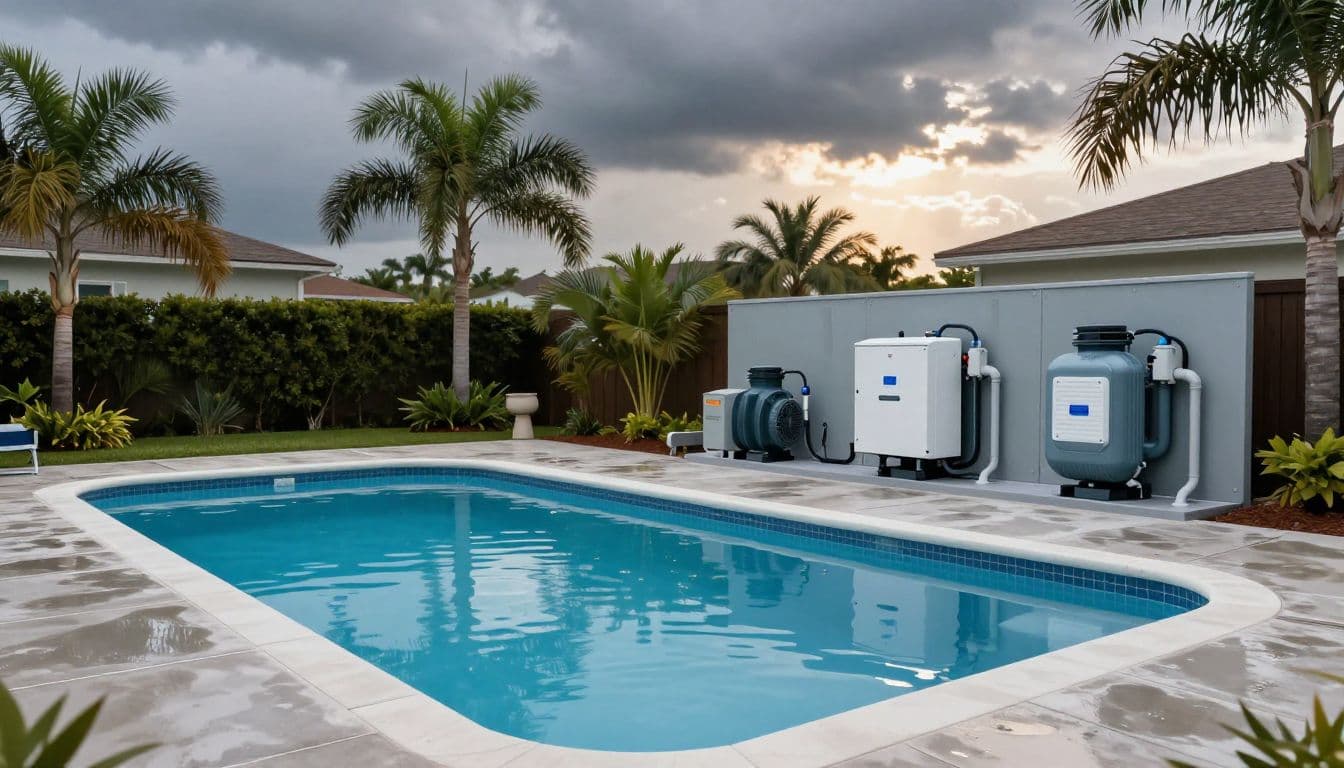
Lightning can affect equipment without a direct strike
A direct lightning strike is an extreme event. However, nearby lightning can also create a voltage surge on electrical wiring, service lines, or connected systems. That energy may reach the home's electrical panel and then move toward pool equipment.
Florida thunderstorms can also cause momentary interruptions and voltage changes. When power returns after an outage, equipment may face a sudden change in electrical conditions. Surge protection cannot make a pool lightning-proof, but it adds a layer of defense against transient overvoltage.
Utility disturbances also matter
Storms aren't the only concern. Utility switching, transformer problems, downed lines, and changes in neighborhood demand can produce electrical disturbances.
Pool equipment often runs on programmed schedules. Therefore, a pump or automation system may attempt to restart when power returns, even if nobody is home to notice unusual behavior. Protection belongs in the original electrical plan, not as an afterthought after a damaged control board.
Pool Surge Protection at the Service and Pool Panel
A strong plan often considers two locations: the home's service equipment and the dedicated pool panel. A licensed electrician can determine whether one or both locations fit the home's electrical design and the equipment manufacturer's instructions.
A whole-home surge protective device addresses surges entering through the main electrical service. A second device at the pool subpanel can help protect circuits that supply the equipment pad.
Why layered protection makes sense
Surges don't always begin at the same point. A disturbance can enter through utility service wiring, while a nearby event may affect wiring serving outdoor equipment. A panel-mounted surge protective device is intended to redirect excess voltage toward the grounding system.
The device must be correctly rated, listed for its use, and installed according to its instructions. Its location, breaker arrangement, conductor length, and connection method all affect the installation.
A surge protective device relies on the electrical system around it. Poor grounding or incorrect panel work can limit the value of an otherwise appropriate device.
Keep protection close to sensitive pool loads
The pool subpanel is often near the equipment pad. That makes it a practical place to coordinate protection for the pump, heater, chlorinator, automation panel, lights, and optional features.
A homeowner should not assume every pool panel has space for another device or breaker. The electrician needs to review the panel capacity, load calculations, equipment voltage, and manufacturer requirements before selecting the installation approach.
Bonding and Grounding Are Different Safety Systems
People often use "bonding" and "grounding" as though they mean the same thing. They don't. Both matter around a swimming pool, but they do different jobs.
Grounding connects the electrical system to the grounding electrode system. It provides a path related to fault clearing and electrical system reference. Surge protective devices also depend on proper grounding connections.
Equipotential bonding around the pool
Bonding connects conductive parts so they stay at a similar electrical potential. Around an in-ground gunite pool, this work may include the reinforcing steel, the pool perimeter, water-bonding component, and certain metal equipment connected with the circulation system.
Cape Coral's pool electrical review requirements call for a bonding detail. The city's permit materials also identify items such as pump motors, heaters, chlorinators, and covers as equipment that may need bonding when they are part of the pool water-circulating system.
The National Electrical Code's pool provisions address bonding for permanently installed in-ground pools. Your licensed electrician should verify the work before concrete, decking, and finishes hide access points.
Do not treat surge protection as a substitute
A surge protective device does not replace bonding, grounding, GFCI protection, correct conductor sizing, or proper equipment installation. These systems work together, but each addresses a different hazard.
For example, a pool can have a panel surge device and still have an incomplete bond grid. Conversely, properly bonded steel does not protect an automation circuit from a utility-related voltage spike.
Coordinate Electrical Work Early in Pool Construction
Electrical planning belongs with the pool layout, plumbing runs, equipment location, and deck design. The earlier the builder and electrician review the plan, the fewer surprises arise when equipment is ready for final connection.
A detailed Cape Coral pool installation process includes electrical work after equipment installation, but the needed decisions begin much earlier. Equipment selections affect electrical demand, panel space, wire size, conduit routes, and the final panel schedule.
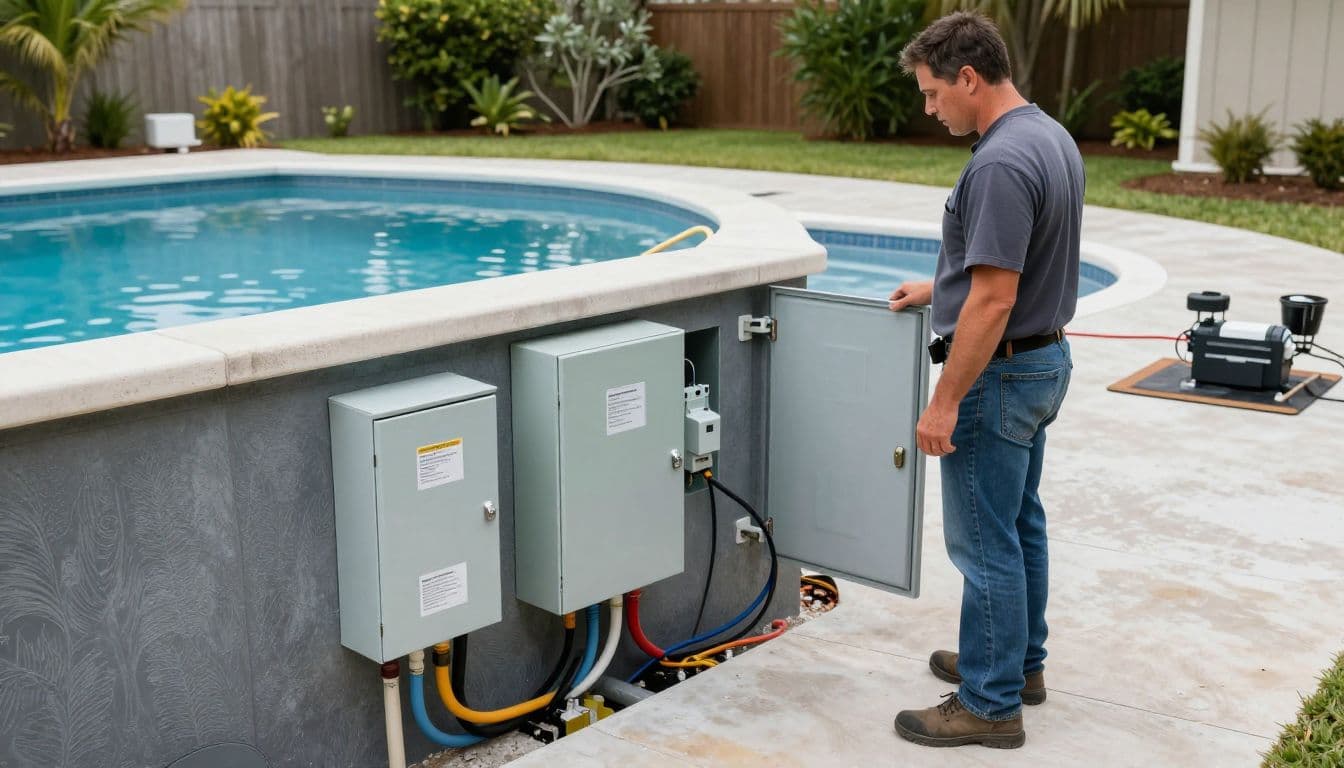
Give the electrician the full equipment list
Share every planned load before electrical drawings are finalized. That includes items that may seem optional during early design discussions:
- Variable-speed circulation and feature pumps, including spa jets, waterfalls, bubblers, and deck jets.
- Automation panels, actuators, wireless controllers, and low-voltage transformers.
- Salt chlorinators, heaters, heat pumps, LED lights, auto-fill equipment, and pool covers.
- Future additions such as a spa, chiller, fire feature controls, or outdoor kitchen circuits.
A later equipment upgrade can require new conductors, larger breakers, a different panel, or additional conduit. It is less disruptive to reserve capacity while the yard is open.
Confirm permit documents match the finished pool
Cape Coral requires site-specific pool electrical information during plan review. The electrical design can include the equipment list, conduit and wire sizes, breaker sizes, overcurrent protective device sizes, feeder details, panel schedule, and bonding detail.
Ask who is responsible for the electrical permit scope and inspections. The licensed electrical contractor should verify that drawings match the installed equipment. If the selected pump, heater, or controller changes, the electrical plan may need an update.
Protect the Equipment Most Likely to Be Sensitive
Modern pool equipment is more efficient and convenient than older single-speed systems. It also contains circuit boards, sensors, displays, and variable-speed drives that need stable electrical service.
Variable-speed pumps and automation controls
A variable-speed pump has electronic controls that allow the motor to run at different programmed speeds. This design can reduce energy use, but it also makes the pump more electronics-dependent than a basic single-speed motor.
Automation systems coordinate schedules, valves, lighting, temperature, and water features. Some systems also connect to a home network. A damaged controller can leave the pool operating manually or prevent equipment from communicating correctly.
Pool surge protection should be part of the conversation whenever a project includes automation or a variable-speed pump. The electrician can review the voltage and circuit arrangement, while the pool professional can confirm the equipment layout.
Heaters, chlorinators, and pool lighting
Pool heaters and heat pumps contain control boards and sensors. Salt chlorinators use electronic power supplies to generate chlorine. LED lights may include drivers or transformers. These parts can all be affected by power quality issues.
After any major storm or outage, inspect the pool area before restarting equipment. Look for tripped breakers, error displays, damaged conduits, water around panels, or unusual pump behavior. If anything looks wrong, stop and call the appropriate licensed professional rather than repeatedly resetting breakers.
Questions to Ask Before Electrical Installation
Clear questions help homeowners compare proposals without trying to design the electrical system themselves. Ask the pool builder how the equipment pad will be arranged and where the pool panel is likely to sit.
Then ask the licensed electrician how surge protection fits within the home's overall electrical plan. The discussion should cover the main service, the pool subpanel, and the current equipment list.
Use this practical review list
Before work begins, confirm that the licensed electrician will:
- Review service capacity, pool-panel capacity, equipment voltage, breakers, conductors, and conduit sizes.
- Verify GFCI protection where required under the adopted code and for the installed equipment.
- Install any surge protective device according to its listing, manufacturer instructions, and applicable electrical requirements.
- Inspect grounding electrode connections and the complete pool bonding system.
- Coordinate permits, required inspections, and corrections before final closeout.
Flood exposure also deserves attention in Cape Coral. If your property has flood-related building requirements, discuss equipment-pad elevation, mounting, and anchoring with the project team. Electrical equipment should remain accessible and protected from standing water.
Maintain Protection After the Pool Is Finished
Surge protection is not a one-time topic. Pool equipment changes over time, and electrical protection needs occasional review.
Check after storms and equipment upgrades
After a severe storm, walk the equipment area once conditions are safe. Keep the panel closed and avoid standing water. A licensed electrician should inspect damaged enclosures, loose conduits, or electrical components exposed to water.
Also review the setup when you add a heat pump, convert to salt chlorination, install automation, or expand water features. A new load can change the electrical plan that made sense on day one.
Some surge protective devices include a visual status indicator. If the device shows that it needs replacement, have a qualified electrician handle the evaluation and replacement. Never rely on a status light as proof that every connected component is undamaged.
Build Electrical Protection Into the Original Plan
Cape Coral pool ownership comes with sun-filled afternoons and stormy summer evenings. A well-planned electrical system prepares for both.
Pool surge protection works best as one part of a complete installation that includes sound equipment planning, proper GFCI protection, verified grounding, complete bonding, permits, and inspections. Put those conversations on the construction schedule early, then let a licensed electrician confirm the details before the new gunite pool goes into service.