Pool Fire Bowls for Fort Myers Backyards
Pool fire bowls turn a standard backyard pool into a polished gathering space after sunset. In Fort Myers, where outdoor living continues through much of the year, the combination of moving water and controlled flame creates a resort-style setting without overwhelming the yard.
The right feature adds ambiance, but it also requires thoughtful planning. Fuel, wind, saltwater splash, seating distance, maintenance, and family safety all affect the final design. Start with the experience you want, then choose a fire bowl system that suits your pool and property.
Why pool fire bowls work so well in Fort Myers backyards
Water and fire create a strong visual contrast. During the day, a fire bowl can complement the pool's tile, coping, and raised walls. At night, the flame adds a soft focal point that gives the entire pool area more definition.
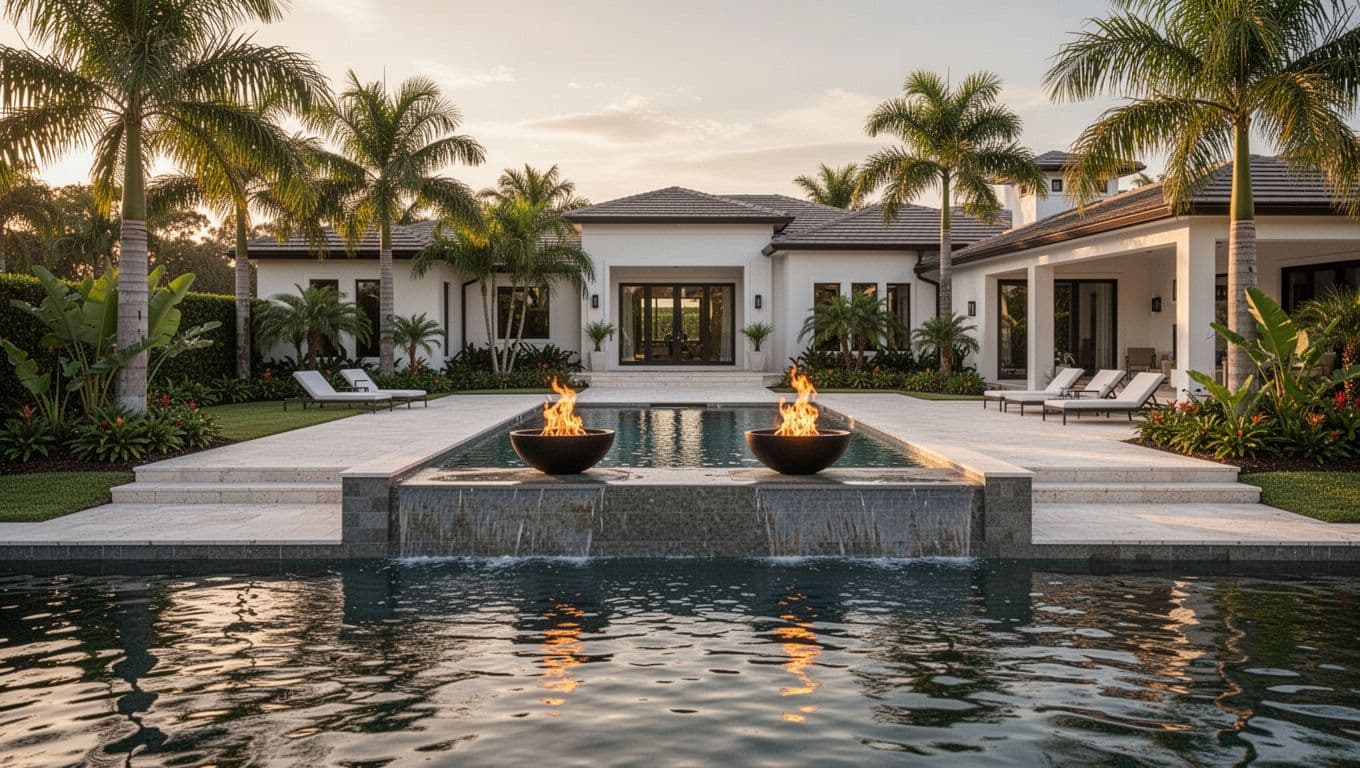
A pair of pool fire bowls often works well at the ends of a raised wall or spa. Their symmetry gives a clean, architectural look. One bowl can create a quieter accent near a spa, water wall, or narrow pool renovation.
The flames also extend the usable feeling of the patio after dark. They make a seating area feel more finished and can provide a small amount of radiant warmth on cooler evenings. However, a fire bowl isn't a substitute for a pool heater or outdoor heating system. The open flame warms nearby air and surfaces, but it won't raise the temperature of the pool water.
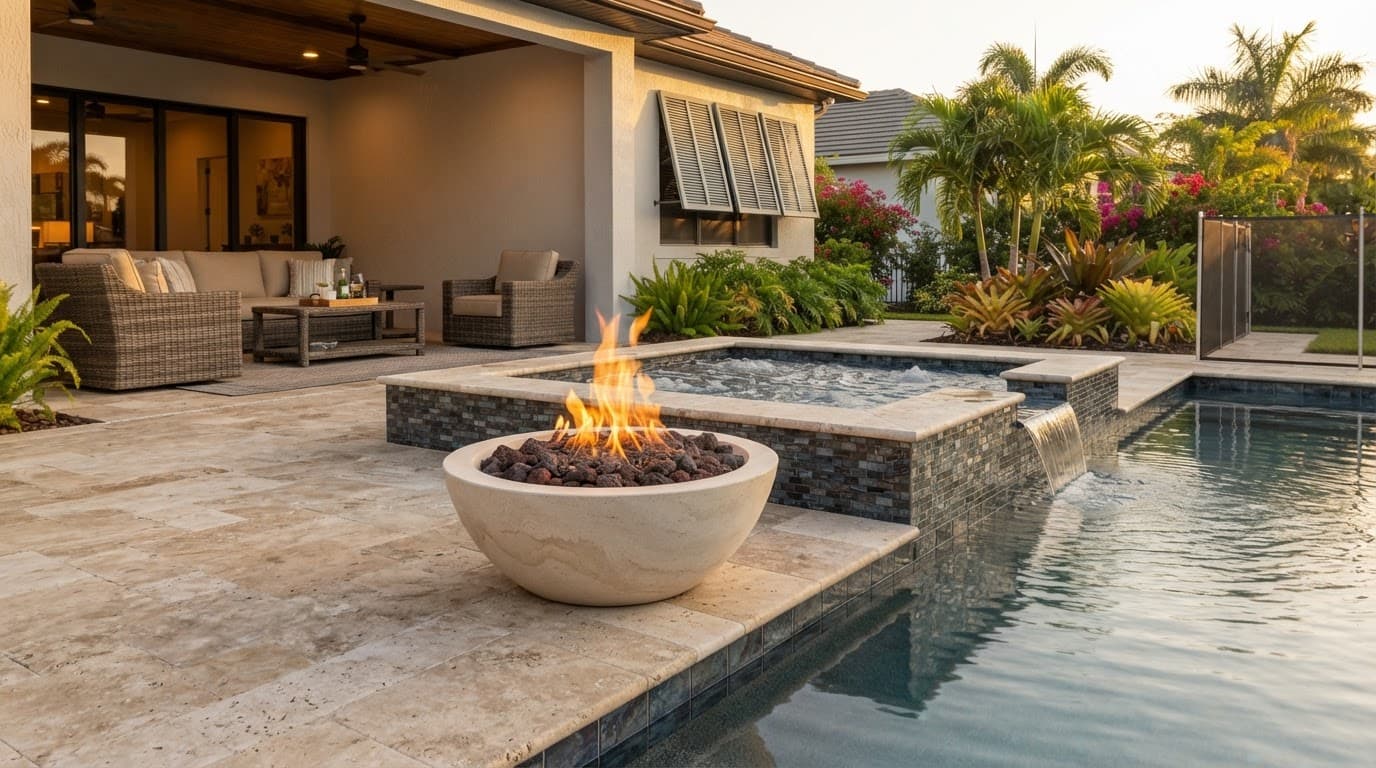
Fire bowls can also help define different zones in a large backyard. A raised spa with fire features can become the visual centerpiece, while lounge chairs and dining areas remain separate. This arrangement gives guests a clear view of the flame without placing furniture directly beside it.
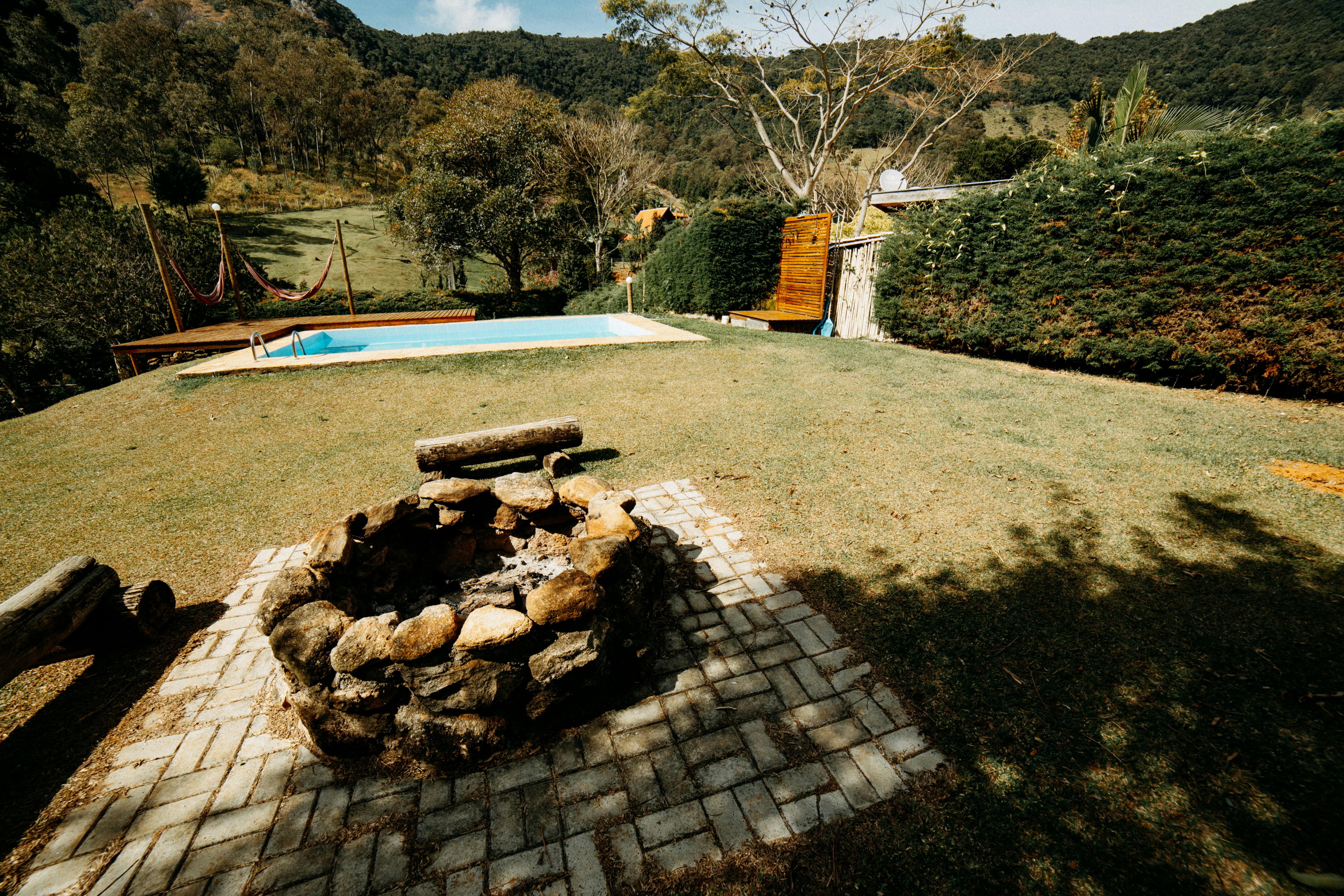
Photo by Matheus Bertelli
Choose fuel, controls, and finishes for Florida conditions
Most built-in pool fire features use gas because it provides a controllable flame without ash, smoke, or embers near the water. The best fuel choice depends on the property, the location of the feature, and how often you plan to use it.
Natural gas can be convenient when a suitable service line is available. It supports on-demand use without storing a tank in the yard. However, the gas route and control location need to be considered early, especially when the bowl sits across the pool from the equipment area.
Propane gives homeowners more flexibility when natural gas isn't available. It still requires a planned tank or supply location, along with access for service and refilling. The tank should remain discreet without being placed where heat, foot traffic, or landscaping creates a problem.
Wood-burning fire pits are a different type of feature. Smoke, ash, sparks, and cleanup make them less suitable for a bowl integrated into a pool wall. A gas-fired system generally gives a cleaner appearance and more precise control around a swimming pool.
Controls may include a manual ignition, remote operation, automation tied to the pool system, or a dedicated control panel. Ask how the feature starts, how quickly it shuts off, and what happens after a power interruption. A simple control setup can be easier for daily use, while automation may suit homeowners who already control pool lights, pumps, and water features from one system.
The bowl finish matters just as much as the flame. Common options include cast stone, concrete, tile, copper, and stainless steel. Your selection should work with the pool coping, deck pavers, house exterior, and other metal finishes in the yard.
Fort Myers weather adds another layer. High humidity, heavy rain, airborne salt, and pool splash can wear on exposed components. Saltwater pools don't rule out fire features, but they do make material selection and cleaning more important. Specify outdoor-rated burner components and hardware that can handle the installation conditions.
Saltwater exposure usually affects the details first, including burner assemblies, fasteners, and decorative metal surfaces. A suitable finish and regular rinsing help protect the feature.
Place the flame where people can enjoy it safely
A fire bowl should sit within the main sightline of the pool and seating area. That doesn't mean it belongs directly beside a sofa or where swimmers enter the water. The most comfortable placement gives guests a clear view while keeping a sensible separation between the flame and regular foot traffic.
Raised walls, spa corners, and the ends of tanning ledges are common locations. A bowl near a raised spa can connect the water levels and create a layered focal point. At the end of a pool, two matching bowls can frame the water and draw attention away from equipment, fences, or less attractive views.
Before settling on a location, study how Fort Myers wind moves through the yard. Open lots, screened enclosures, lanai roofs, and nearby walls can change the direction of a flame. A strong cross-breeze may push heat toward seating, plants, screens, or the house. The installation plan should account for the manufacturer's clearance requirements and the actual conditions around the pool.
Keep the bowl away from low overhead structures, hanging fabrics, dry plant material, and narrow walkways. Furniture placement matters too. Chairs should not force people to pass close to the flame whenever they move between the patio, pool, and home.
Families with children or pets need an extra layer of planning. A low, easily reached bowl may look attractive but can put curious hands or noses too close to the burner. Consider a raised location, controlled access to the controls, rounded surrounding edges, and a clear path that keeps young children away from the feature. Adults should supervise children and pets whenever the flame is operating.
Designers also need to consider what happens when the feature is off. The bowl should still look intentional in daylight. A well-proportioned feature can function as an architectural accent even when it isn't lit.
Plan for humidity, rain, and saltwater splash
Fire bowls need regular visual checks, especially in a damp coastal climate. Remove leaves and debris after the bowl has cooled. Keep the burner area clear, and follow the manufacturer's instructions for cleaning the bowl surface.
Saltwater splash can leave residue on nearby tile, stone, and metal. Rinsing exposed surfaces with fresh water helps limit buildup. Avoid using abrasive cleaners or unapproved chemicals, since they can affect decorative finishes and burner components.
Rain also deserves attention. A bowl should drain properly and stay free of standing water before ignition. If the burner doesn't light normally, the flame looks uneven, or you notice a gas odor, shut the system off and arrange professional service. Don't try to solve fuel or ignition problems by modifying the burner.
Covers can reduce debris, but they need to match the bowl and installation. A cover that traps moisture or sits against a hot surface can create its own maintenance problem. Let the feature cool fully, then use the approved cover as directed.
Regular pool care doesn't replace fire feature care. The bowl, burner, fuel connections, ignition, and controls need their own inspection. A qualified service professional can check the system when the pool equipment receives seasonal attention or after a major storm.
Add fire bowls during a new build or pool renovation
New construction gives you the most freedom. The pool shape, raised walls, spa, gas route, electrical controls, drainage, deck, and seating can all be planned together. That coordination helps the fire feature look built into the pool rather than added beside it.
Renovation projects require a closer review of the existing structure. The team may need to assess the pool wall, plumbing access, equipment location, deck layout, and available space before recommending a fire bowl. Adding a raised feature can affect circulation paths and the relationship between the pool, screen enclosure, and patio.
Homeowners planning an update can review available Fort Myers pool renovation services when comparing options for a fire bowl, spa, tanning ledge, deck, or water feature. The right improvement depends on the condition of the existing pool and the way your household uses the yard.
A thoughtful design process should answer several practical questions:
- Will the feature be a single accent or part of a matched pair?
- Does the yard support natural gas, or would propane work better?
- Will the bowl sit beside a spa, on a raised wall, or at the pool's end?
- Can guests see the flame from the main seating and dining areas?
- Are children, pets, plants, screens, or roof structures close to the proposed location?
- Does the finish match the tile, coping, pavers, and exterior of the home?
- How will the feature be cleaned, covered, inspected, and controlled?
Planning early also gives you time to consider the rest of the backyard. Fire bowls can coordinate with pool lighting, waterfalls, deck jets, outdoor kitchens, and a covered lanai. Each feature should support the layout instead of competing for attention.
Reviewing the custom pool design and construction process can help you understand when decisions about structure, plumbing, controls, and finishes should be made. Early choices are easier to coordinate than changes after the deck and pool walls are complete.
Make the feature fit your evening routine
The best pool fire bowl is the one that suits how you use the property. If your family gathers around the spa, place the flame where it adds light without crowding the conversation. If you entertain beside the pool, use the bowl to frame the water and create a focal point visible from the main seating area.
A larger flame isn't always a better choice. Scale should match the pool, raised wall, deck, and surrounding architecture. Two modest bowls can look more refined than oversized features that dominate a compact yard.
Consider the seasons too. Fort Myers evenings can be warm, humid, breezy, or rainy. A fire bowl may see frequent use during comfortable winter nights and less use during hot summer evenings. Choose controls and maintenance features that make occasional use easy, not burdensome.
The finish should remain attractive when the flame is off, the pool cover is in place, or the patio is quiet. That day-to-night flexibility gives the feature lasting value in the overall design.
Conclusion
Pool fire bowls bring a distinct resort-style character to Fort Myers backyards, especially when they frame a raised spa, define a pool wall, or face the main seating area. They add light and limited radiant warmth, but they also need suitable fuel planning, weather-resistant materials, careful placement, and routine care.
Saltwater splash, humidity, wind, children, and pets all belong in the design conversation before installation begins. When the feature matches the pool's scale and the way your family uses the yard, the flame becomes a natural part of the space instead of an afterthought.