
Pool Orientation Florida Homeowners Should Consider Before Building
A pool can sit in the right spot and still feel too hot, too dark, or uncomfortable at certain times of day. For Southwest Florida homeowners, pool orientation Florida planning deserves attention before excavation begins.
The sun changes position across the sky by season, while your house, screen enclosure, trees, privacy walls, and neighboring homes create additional shade. A smart layout considers when you use the pool, where you want shade, and how the backyard will feel in January compared with August.
Key Takeaways
- East-facing areas receive the strongest morning sun, while west-facing areas receive hotter afternoon sun.
- South-facing pool layouts usually provide more direct sunlight during the year.
- North-facing areas can receive more shade from the home, screen enclosure, and nearby structures.
- Seasonal sun angles change the size and location of shadows across the pool deck.
- Your pool designer should study the property, not rely on a standard orientation rule.
How Pool Orientation Florida Homes Need Changes Sun and Shade
Southwest Florida sits in a warm, sunny region, but sunlight still follows a predictable daily pattern. The sun rises in the east, crosses the southern portion of the sky, and sets in the west. Its height and exact path change throughout the year.
That means pool orientation affects more than the appearance of your backyard. It influences water temperature, deck comfort, glare, shade placement, and the time of day your pool feels most inviting.
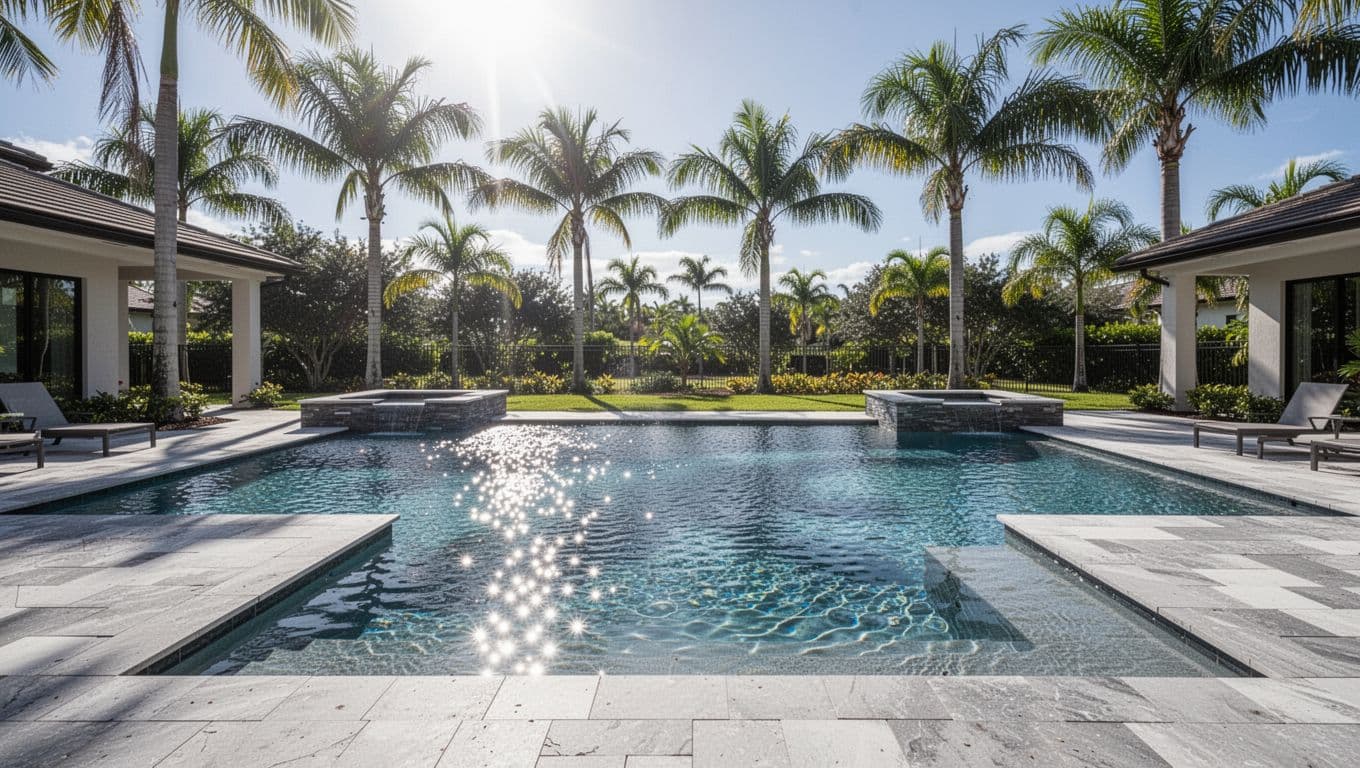
A pool with open exposure to the south usually receives strong direct light around midday. A pool positioned near the north side of a house may fall into the home's shadow during parts of the day. However, the result depends on the building's height, the pool's distance from it, and the height of the screen enclosure.
Morning sun
East-facing pool areas receive direct sunlight earlier in the day. This can make an east-side sun shelf or seating area comfortable for an early swim, morning coffee, or breakfast beside the water.
Morning sunlight is usually less intense than afternoon sun. As a result, an east-oriented layout can work well for homeowners who use the pool before work or during the first part of the day.
Shade from the house may cover the west side of the pool in the morning, while the east side remains bright. A designer can use that contrast to create separate sunny and shaded zones.
Midday sun
Around midday, the sun sits high in the southern sky, especially during the summer. Open southern exposure usually brings the most direct light to the pool and deck.
This arrangement can help a pool feel bright and warm. It also creates stronger glare on the water and more heat on exposed pavers. A covered lanai, planting bed, umbrella sleeve, or shade structure can make the area more comfortable without blocking all sunlight.
Afternoon sun
West-facing areas receive direct afternoon light. In Southwest Florida, this period can feel hot because the deck and surrounding surfaces have already absorbed heat throughout the day.
A west-facing pool can be attractive for evening gatherings because the water and patio remain bright later. However, the low western sun can shine directly into seating areas and create glare across the pool. Privacy screens, landscape trees, a roof extension, or carefully placed shade features can reduce that effect.
Comparing North, South, East, and West Pool Orientation in Florida
There isn't one perfect direction for every Cape Coral or Fort Myers backyard. The best choice depends on your home, lot, enclosure, trees, and daily routine.
| Pool orientation | Typical sun pattern | Potential advantages | Planning concerns |
|---|---|---|---|
| East | Strong morning light | Comfortable early swims and softer morning sun | More afternoon shade may arrive sooner |
| South | Strong midday and seasonal sun | Bright pool, more direct exposure, good winter sun | More glare and deck heat without shade |
| West | Strong afternoon and evening light | Bright late-day entertaining area | Hotter surfaces and low-angle glare |
| North | Often more structure-related shade | Cooler deck zones and less direct exposure | Pool may receive less winter sunlight |
An east-facing design often suits a family that swims in the morning. It can also help keep the pool deck more comfortable later in the day, when the house or enclosure may shade part of the area.
South-facing exposure is often useful when you want a bright pool with substantial direct sunlight. In winter, the sun travels lower across the southern sky, so southern exposure can become especially valuable. Still, the pool may need shade during summer's strongest midday hours.
West-facing layouts support late-afternoon use. If your family gathers after school or work, that light may matter more than morning sun. Place lounge chairs and dining areas carefully, because west sun can make those spaces uncomfortable without protection.
North-facing pools can provide a cooler feel when the house or enclosure blocks southern light. This direction may appeal to homeowners who prefer shade, but dense shade can also make the water and deck feel darker during winter.
The pool's long axis matters too. A narrow pool running north to south may receive a different pattern of light than one running east to west. Your designer should review both the direction the pool faces and the direction it extends across the yard.
Seasonal Sun Angles in Southwest Florida
Summer and winter can produce noticeably different shade patterns around the same pool. During summer, the sun rises farther north of east, travels high across the sky, and sets farther north of west. The high sun can reduce the length of shadows around midday, although nearby structures still affect the pool.
Winter brings a lower sun angle. The sun rises closer to the southeast, follows a lower path through the southern sky, and sets closer to the southwest. As a result, shadows stretch farther across the yard, especially during morning and late afternoon.
A house or screen enclosure that creates limited shade in August may cover much more of the pool deck in January. This matters if you want winter sun on a sun shelf or prefer a warm seating area during cooler weather.
Spring and fall sit between those patterns. Southwest Florida also experiences a wet season with frequent clouds and storms, but the annual sun path still guides long-term design decisions.
A shade study should account for both the low winter sun and the high summer sun. Looking at one season can give you an incomplete picture of daily comfort.
Ask your pool designer to review shadows at several times, such as 9 a.m., noon, 3 p.m., and 5 p.m. They can also examine the property during different months using site measurements and digital modeling tools.
Design Features That Balance Sun and Shade
Orientation is only the starting point. Pool features and surrounding construction can fine-tune how the backyard feels.
A sun shelf works well in a bright part of the pool where shallow water can support loungers or supervised play. If that area receives intense afternoon sun, add nearby shade rather than placing the shelf directly beneath heavy tree cover. Falling leaves, roots, and maintenance can create problems near the water.
A covered lanai provides reliable shade for dining and seating. Its location should match your use pattern. For morning shade, a west-side covered area may help. For afternoon relief, shade on the west or southwest side can reduce glare and heat.
Trees can soften sunlight, but their mature size matters. A small tree near the pool may eventually create extensive shade or drop leaves into the water. Root growth, storm exposure, and maintenance should all be part of the planting decision.
Screen enclosures also affect sunlight. The frame and roof can cast lines of shade that shift across the pool during the day. Their height and placement should appear in the sun study, along with the house, privacy fence, neighboring structures, and existing palms.
Water features add visual interest but don't replace shade planning. A raised wall, waterfall, fountain, or deck jets can alter the look of the pool while also casting limited shadows. For broader comfort, combine them with a covered area, landscape canopy, or adjustable shade.
Homeowners planning a full backyard project can review custom pool design and construction services before deciding which features belong in the layout.
What to Discuss With Your Pool Designer
Bring your daily routine to the design meeting. The right orientation for a retired couple who swims at 8 a.m. may differ from the right layout for a family that entertains after dinner.
Discuss these practical questions:
- Which parts of the pool receive direct sun at 9 a.m., noon, 3 p.m., and 5 p.m.?
- Where will the house and screen enclosure cast shade in January and July?
- Will the main seating area face low western sunlight?
- Do you want a sunny sun shelf, a shaded lounge area, or both?
- Which existing trees should remain, and where will their roots and canopies reach?
- Will a proposed pool orientation affect privacy, views, drainage, or access around the home?
- Where should the lanai, umbrellas, privacy walls, and landscape beds go?
- How will the placement support the way your family uses the pool?
A site-specific plan matters in Southwest Florida because two neighboring lots can have different setbacks, trees, home elevations, and enclosure designs. A contractor should also coordinate orientation with engineering, permitting, plumbing, electrical work, decking, and screen installation. You can review the pool construction process to see how these stages connect.
Conclusion
The best pool orientation Florida homeowners choose depends on how sunlight moves across their specific property. East exposure favors morning use, west exposure supports late-day gatherings, south exposure brings more direct annual sun, and north exposure often creates cooler conditions.
Before finalizing the layout, review seasonal shadows and the position of every major structure. When orientation, shade, seating, landscaping, and water features work together, your pool feels comfortable at more times of the day and throughout the year.