
Pool Leak Detection Before a Southwest Florida Renovation
A pool renovation can transform an aging backyard, but new finishes won't solve hidden water loss. Pool leak detection should happen before you approve resurfacing, replace the deck, or change major equipment.
Southwest Florida homeowners deal with heat, wind, rain, irrigation, and evaporation, all of which can make water loss difficult to judge by sight. A careful review helps separate normal conditions from a plumbing, shell, fitting, or equipment problem. Start with simple observations, then bring in qualified help when the evidence points beyond a cosmetic issue.
Why pool leak detection comes before renovation
Renovation work often covers the exact areas where a leak may be developing. A new surface, fresh tile, replacement coping, or repaired deck can improve appearance while leaving the underlying problem unresolved.
Separate visible aging from unresolved water loss
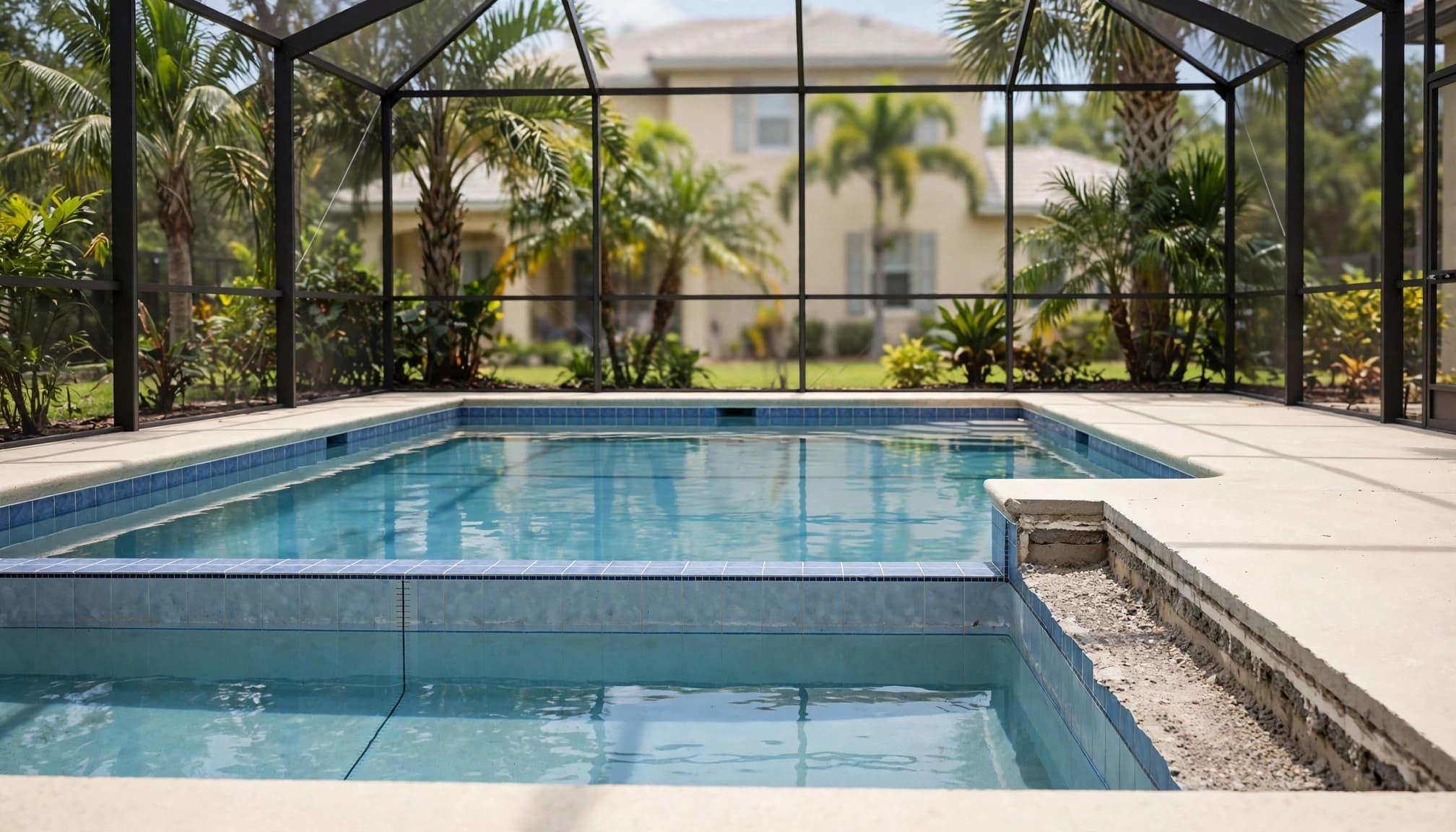
Cracked or faded finishes don't automatically prove that a pool is leaking. Plaster can age, tile can loosen, and deck surfaces can settle for reasons unrelated to water loss. On the other hand, a pool that needs frequent refilling deserves attention before cosmetic work begins.
Look for changes that occur together:
- The water level drops faster when the circulation system runs.
- The equipment area stays wet after the pool has been dry.
- Soil near the pool, spa, or plumbing lines remains unusually damp.
- The autofill activates more often than it used to.
- Water appears near lights, returns, skimmers, drains, or other fittings.
- A crack grows or remains wet after surrounding surfaces dry.
One observation may have an ordinary explanation. A consistent pattern is more useful, especially when you record it over several days.
Why renovation can make the problem harder to address
If a leak remains active during renovation, crews may need to stop work, remove recently installed materials, or revise the scope. A deck replacement can become more complicated if plumbing beneath the deck needs access. New interior finish work may also need to wait while a structural or plumbing concern receives attention.
Testing first doesn't guarantee a simple repair. It does give you a clearer starting point and helps you discuss the work in the right order.
A renovation estimate should identify whether it covers cosmetic improvements only or includes investigation and repair of suspected water loss.
What homeowners can check before calling a professional
Homeowners can gather useful information without dismantling equipment or disturbing pool finishes. These observations won't locate every leak, but they can help a contractor understand what changed.
Track the water level consistently
Choose a stable reference point, such as a piece of painter's tape on the tile or a mark on the skimmer face. Record the pool level at the same time each day. Note rain, heavy wind, water features, cleaning, swimming, and any manual refilling.
Run a short comparison with the circulation system operating normally, then ask your pool professional whether a system-off observation would add useful information. Keep the pump schedule consistent during the comparison. Avoid drawing a firm conclusion from one reading, since evaporation and pool use can affect the result.
If the pool has an autofill, monitor how often it activates. Turn it off only if your pool professional considers that safe for the equipment and finishes. Never allow the water level to fall below a safe operating level.
Inspect the equipment area and nearby surfaces
Walk around the pump, filter, heater, chlorination equipment, valves, and visible plumbing. Look for active drips, standing water, mineral deposits, cracked fittings, or damp soil. Photograph anything unusual before cleaning it.
Also check the spa, waterline, skimmer area, light niches, return fittings, and decorative features. Waterfalls, bubblers, fountains, and deck jets can lose water through fittings or plumbing, but their normal operation can also create splash-out. Record whether the loss occurs when each feature runs.
This information is useful during a renovation consultation because it connects the visible symptom to the time and conditions when it appears.
What professional pool leak detection may include
Homeowner observations are a starting point, not a substitute for a professional assessment. A qualified leak-detection provider or pool contractor can decide whether the evidence points to evaporation, equipment, plumbing, fittings, the pool shell, or another source.
Testing depends on where the evidence leads
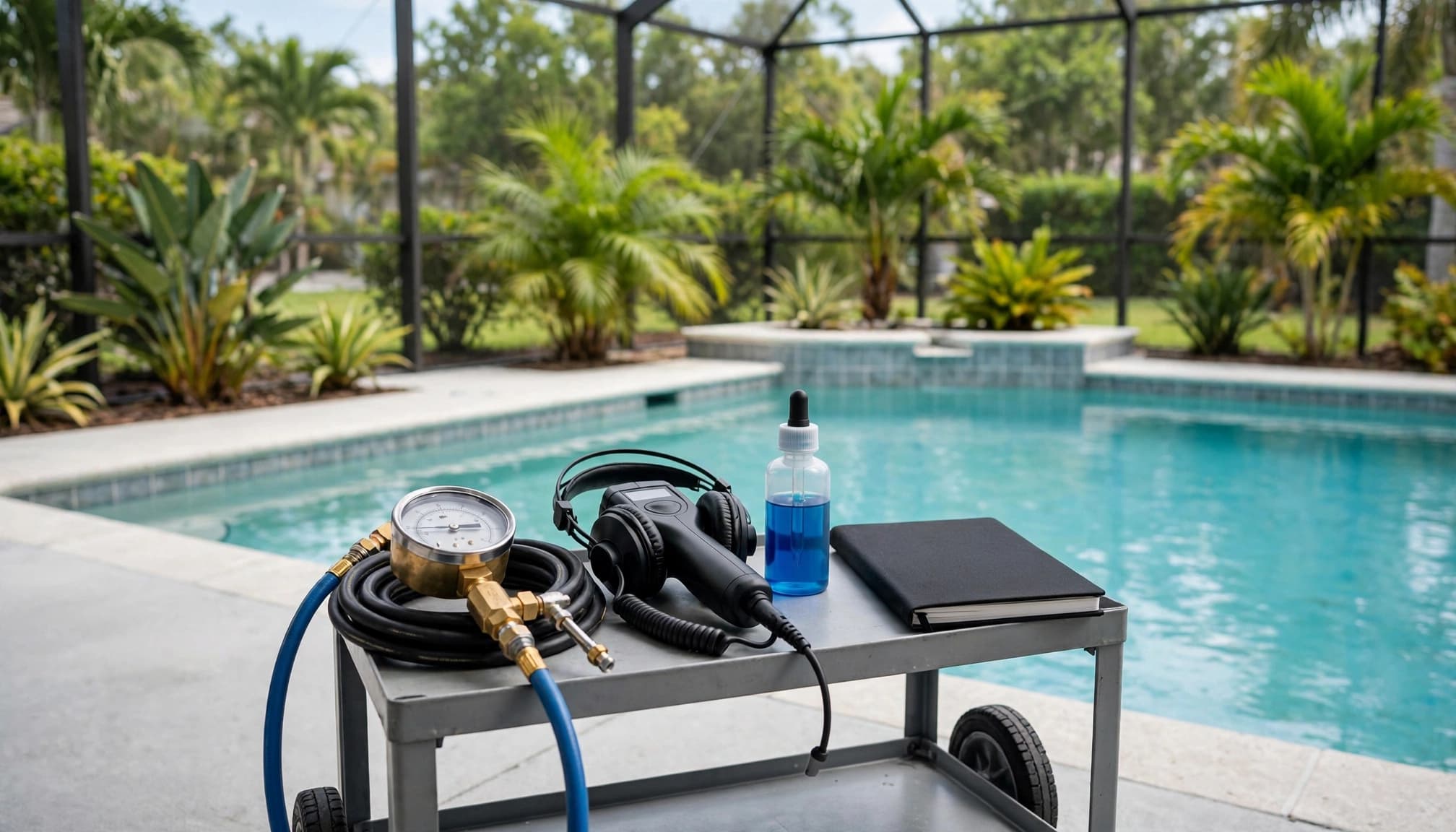
Professional methods vary by pool design and suspected location. A provider may compare water levels under controlled conditions, inspect visible plumbing, use dye near selected fittings, or perform pressure testing on an isolated line. Some specialists also use listening equipment or other methods to narrow the location of underground plumbing leaks.
These methods answer different questions. A water-level comparison may show that water is leaving the pool. Pressure testing can help assess a plumbing line. Dye can show movement near a fitting. None should be treated as a universal test for every pool.
Ask what the provider plans to test, what the test can confirm, and what it cannot confirm. Also ask whether the inspection covers the pool, spa, water features, equipment pad, or only one part of the system.
Request findings in writing
A written report, service note, or detailed estimate can prevent confusion later. Ask the provider to identify the suspected source, the tested components, evidence supporting the finding, and any limits on the conclusion.
The report should distinguish a confirmed defect from a recommendation for further testing. It should also state whether the next step involves repair, monitoring, excavation, removal of a finish, or coordination with the renovation contractor.
Without documentation, a homeowner may remember only that someone said the pool was "looked at." Specific records are more useful when you compare renovation proposals or revisit the pool months later.
Questions to ask before approving the renovation scope
Leak information should affect the order of work, even when the renovation itself focuses on appearance or comfort. These questions can help you compare proposals fairly.
Ask what happens before finishes are removed
Clarify whether the contractor will inspect the pool and equipment before demolition begins. Ask whether suspected leaks need to be evaluated by a separate specialist, and whether the cost of that evaluation appears in the proposal.
You should also ask which items are included:
- Pool and spa water-retention concerns
- Visible equipment and plumbing
- Water features and autofill components
- Deck areas over suspected plumbing
- Skimmers, returns, lights, drains, and other fittings
A contractor may not include every diagnostic service in a renovation price. The important point is to identify that boundary before work starts.
Ask how findings change the plan
A leak may affect the schedule, access requirements, materials, and price. Ask what happens if testing identifies a repair beneath the deck or near a fitting that was included in the original design.
Get revisions in writing. A clear change order should describe the repair, affected materials, added work, and any decision you need to make before the renovation continues. Avoid approving a broad allowance when the actual repair remains undefined.
San Juan Pools & Spas lists re-plastering, tile and coping replacement, deck remodeling, equipment renovations, screen enclosure work, and custom additions among its renovation services. You can review the company's pool resurfacing and equipment upgrades while asking which items require a sound, leak-free base.
Timing pool leak detection around your renovation
The best time to investigate is before final design decisions and before demolition. Early testing gives you more options if the suspected problem involves plumbing beneath the deck or a feature you planned to keep.
Test during the planning stage
Share your water-level records, photographs, equipment notes, and maintenance history during the first consultation. Mention any recent changes, such as a new pump schedule, added water feature, repaired deck, or replacement autofill.
If the renovation includes a spa, tanning ledge, waterfall, fountain, bubbler, or deck jet, include those features in the discussion. A new feature should be planned with access, plumbing, and future maintenance in mind.
The published professional pool construction steps list design, engineering and permits, plumbing and backfill, deck work, equipment, interior finish, and filling the pool among 16 stages. Leak-related questions belong near the beginning of that sequence, before work conceals access points.
Recheck after repairs and before final finishes
If a repair occurs, keep the documentation and ask how the repair will be verified. A reasonable verification plan may involve monitoring, a targeted test, or another method selected by the qualified provider.
Don't rely only on the appearance of new materials. A clean deck and fresh interior finish show that the renovation looks complete, not that every water-retention question has been resolved.
Local planning for Cape Coral and Fort Myers homeowners
Pool designs and renovation conditions vary by property. A pool in Cape Coral may have different access, deck, enclosure, equipment, or plumbing constraints than a project in Fort Myers, Estero, Bonita Springs, Punta Gorda, Port Charlotte, or Lehigh Acres.
Local project experience can help a contractor ask better questions about the existing pool. San Juan Pools & Spas says it has built and renovated pools throughout Cape Coral and Fort Myers, and its Cape Coral pool renovation projects show examples of local pool, spa, tile, and water-feature work.
Bring practical information to the meeting:
- The pool's approximate age and construction type, if known
- Previous repairs and renovation dates
- Recent water-level observations
- Photos of damp areas, cracks, fittings, or equipment
- The features you want to keep, remove, or add
- Any access limits around the deck or screen enclosure
A review can also help you understand how another homeowner experienced the planning and construction process. One published Matlacha custom pool review describes an 11 by 28 foot pool and discusses the project experience over two and a half years.
Key Takeaways
- Check for unexplained water loss before resurfacing, deck replacement, tile work, or equipment upgrades.
- Track water levels under consistent conditions and record rain, wind, swimming, cleaning, and water-feature use.
- Inspect visible equipment, fittings, plumbing, and nearby soil, but don't treat a homeowner check as a complete diagnosis.
- Ask what a professional test covers, what it can confirm, and whether the pool, spa, features, and equipment are included.
- Request written findings and written changes to the renovation scope.
- Plan leak-related investigation before demolition and before new finishes cover access points.
- Use local renovation experience as one factor when comparing contractors, but ask for the actual testing and repair details in your proposal.
FAQ about pool leak detection before renovation
Should I test for a leak if my pool only needs new plaster?
Yes, it is sensible to discuss water loss before removing the existing interior finish. New plaster can improve the surface, but it won't correct an unrelated plumbing, fitting, equipment, or structural problem. Ask whether the contractor recommends testing and whether that service is included in the estimate.
Can evaporation look like a pool leak in Southwest Florida?
Yes. Heat, wind, pool use, splash-out, rain, and water features can all change the water level. A consistent log helps separate normal loss from a pattern that deserves professional testing. Avoid relying on a single measurement.
Can I find a pool leak myself?
You can document symptoms and inspect visible areas yourself. You may notice damp soil, drips, mineral deposits, or water loss linked to equipment operation. Underground plumbing, concealed fittings, and structural concerns often require professional evaluation.
Should the pump be running during a water-loss check?
Operating conditions can affect where water escapes and how much equipment leaks. Keep normal schedules during your initial notes, then ask a qualified pool professional whether a controlled comparison with the system off is appropriate. Protect the pump and other equipment from low water levels.
What should I do if a leak is found under the deck?
Pause the affected renovation work and ask for a written repair plan. The plan should identify the suspected line or component, required access, restoration work, and how the repair will be checked before new deck materials are installed.
How do I arrange the next conversation with a renovation contractor?
Bring your notes and photos to the consultation, then ask for a renovation estimate that separates investigation, repairs, and finish work. San Juan Custom Pools & Spas provides a way to request a pool renovation estimate through its Cape Coral office.
Conclusion
A beautiful renovation starts with a pool that has been properly understood. Before selecting new plaster, tile, coping, decking, equipment, or custom features, document water loss and ask whether professional testing is appropriate.
Early pool leak detection won't remove every repair decision, but it can keep hidden problems from being buried under new work. Clear records, defined testing, and a written scope give your Southwest Florida renovation a more reliable foundation.