How to Position Pool Return Jets in a New Gunite Pool
A return jet can look well placed on a drawing and still leave a step corner collecting debris. If you're planning a gunite pool, circulation needs to be part of the design , not an adjustment after the shell is built.
Pool return jets send filtered water back into the pool. Their locations and direction should suit the shape, skimmers, shallow features and plumbing plan. There isn't one layout that works for every backyard, so the useful question is how your proposed returns will move water through your pool.
What return jets do in a pool
Water leaves the pool through skimmers and other designed suction points. The pump sends it through the filtration system, and the returns deliver it back to the pool. Their job is to help distribute that water throughout the swimming area.
A strong stream at one wall doesn't prove the whole pool circulates well. Water can take an easy path through open space while a recessed step or narrow corner receives little movement. Return direction matters, but so do the fittings' locations and the amount of water the plumbing can deliver to them.
It's useful to separate two goals: mixing pool water and moving floating debris toward a skimmer . They overlap, but a layout that looks effective at the surface may need adjustment to reach water around benches or in deeper areas. Your designer should consider both before settling on wall penetrations.
How pool return jets work with skimmers
Consider where debris naturally gathers
A skimmer draws in water at the surface. Leaves and other floating debris also respond to wind, pool shape and nearby features. On a breezy Southwest Florida property, the side where debris collects may change with the weather.
Ask the designer how the proposed skimmer locations relate to the returns and the yard's usual conditions. A return can help guide surface movement, but aiming every outlet straight at a skimmer isn't a universal rule. That approach could leave other parts of the pool with weak circulation.
Look beyond a single circular flow pattern
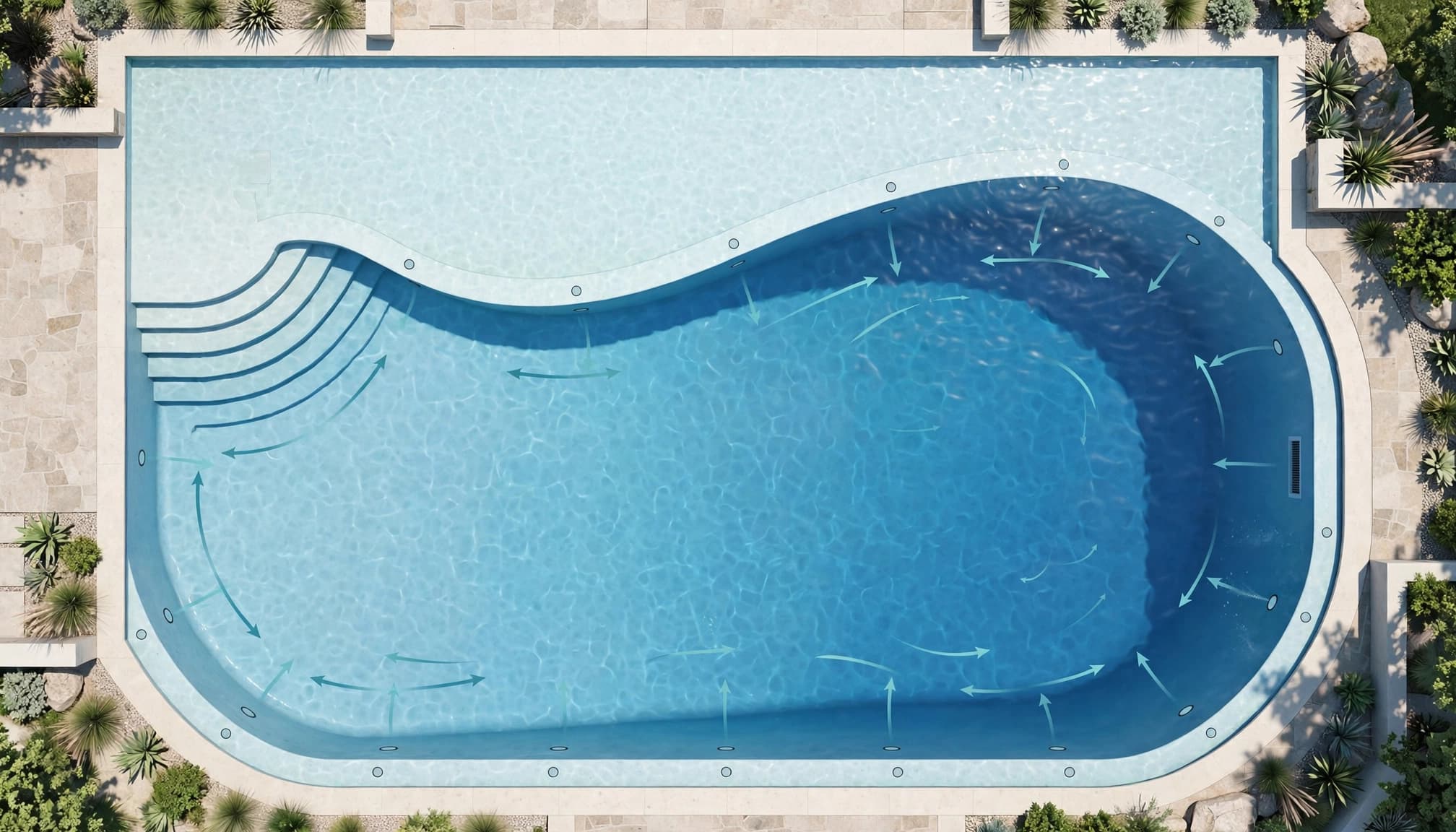
Drawings sometimes show one sweeping loop around the pool. That can help you discuss the intended flow, but it isn't proof that every corner will receive moving water. A freeform curve, raised feature or projecting step can interrupt the path shown on paper.
Have the designer trace the likely movement through the full pool, including areas that don't sit on that main path. Return fittings with adjustable directional inserts can offer some flexibility after filling. They can't replace a missing return in a sheltered area.
Adapt return locations to the pool's shape
San Juan Pools & Spas designs both rectangles and freeform pools through its custom pool design and construction services. Those shapes call for different circulation discussions, even when their equipment is similar.
Rectangles still need a full layout review
A rectangular pool offers long, open walls, which can make the proposed flow easier to visualize. Still, entry steps, a deep-end slope and the skimmer positions change how water moves. The designer should explain how returns serve the entire swimming area rather than treating equal spacing as the goal.
Also consider where swimmers will gather. If a fitting points into a favorite seating spot, an adjustable insert may help with comfort. Comfort matters, but any change in direction should preserve useful movement elsewhere.
Freeform pools create sheltered pockets
Curves, alcoves and narrow extensions can sit outside the main flow. Two fittings that look evenly distributed on a plan may send water through the same open area while a pocket remains still.
Walk through the drawing with the pool designer and point out each inward curve. Ask which return serves it and what happens when that fitting is aimed toward the adjacent open water. Coverage matters more than visual symmetry around the perimeter.
Give steps, benches and sun shelves their own attention
Shallow features make a pool easier to enjoy, but they also change its circulation. Their edges can shield water from a stream passing through the main swimming area.
Check the areas beside entry steps
Entry steps often create small corners where leaves or dirt settle. A return across the pool may move water past the steps without reaching those corners. During design, ask how water will reach the step area and where loose debris is likely to go.
This doesn't mean every staircase needs a dedicated wall fitting. The appropriate approach depends on the step geometry, nearby returns and available flow. The plumbing designer needs to assess those details together.
Treat a sun shelf as part of the pool
A sun shelf or tanning ledge may have bubblers, but a bubbler is a feature with its own purpose and plumbing needs. Don't assume it will provide all the circulation that the surrounding shallow water needs.
Likewise, a bench tucked along one wall can interrupt an otherwise clear path. Review the space above and around each feature, especially where the shelf meets the deeper pool. A return location that works for an empty outline may need reconsideration once those features appear on the plan.
A return can move plenty of water through the open pool while a recessed shallow area receives little of it.
Match the returns to the plumbing and equipment plan
A mark on the pool drawing shows where a fitting might go. The hydraulic design determines whether the planned plumbing can supply it as intended.
Discuss flow, not a standard jet count
The number of returns alone doesn't describe circulation. Pump operation, pipe sizing, equipment requirements and the way flow divides among branches all affect what reaches each fitting. Adding an outlet without reviewing the system won't automatically improve a weak area.
Ask whether any return branches will be separately controlled and what that means for the intended flow. If your pool includes a spa, waterfall, bubblers or other water features, clarify which plumbing serves each one. Feature outlets and ordinary pool returns shouldn't be treated as interchangeable marks on a sketch.
Keep adjustable direction in perspective
Where the selected fittings allow adjustment, the installer can refine their aim after the pool is filled. That may help with surface movement or a stream that feels uncomfortable near a seat. However, the range of adjustment is limited by where the fitting sits in the wall.
The pool designer and plumbing contractor should settle the layout together. General circulation principles can guide the conversation, but pipe routing, flow and fitting locations require a project-specific hydraulic plan . Avoid relying on a fixed placement formula borrowed from another pool.
Confirm return locations before the gunite shell is installed
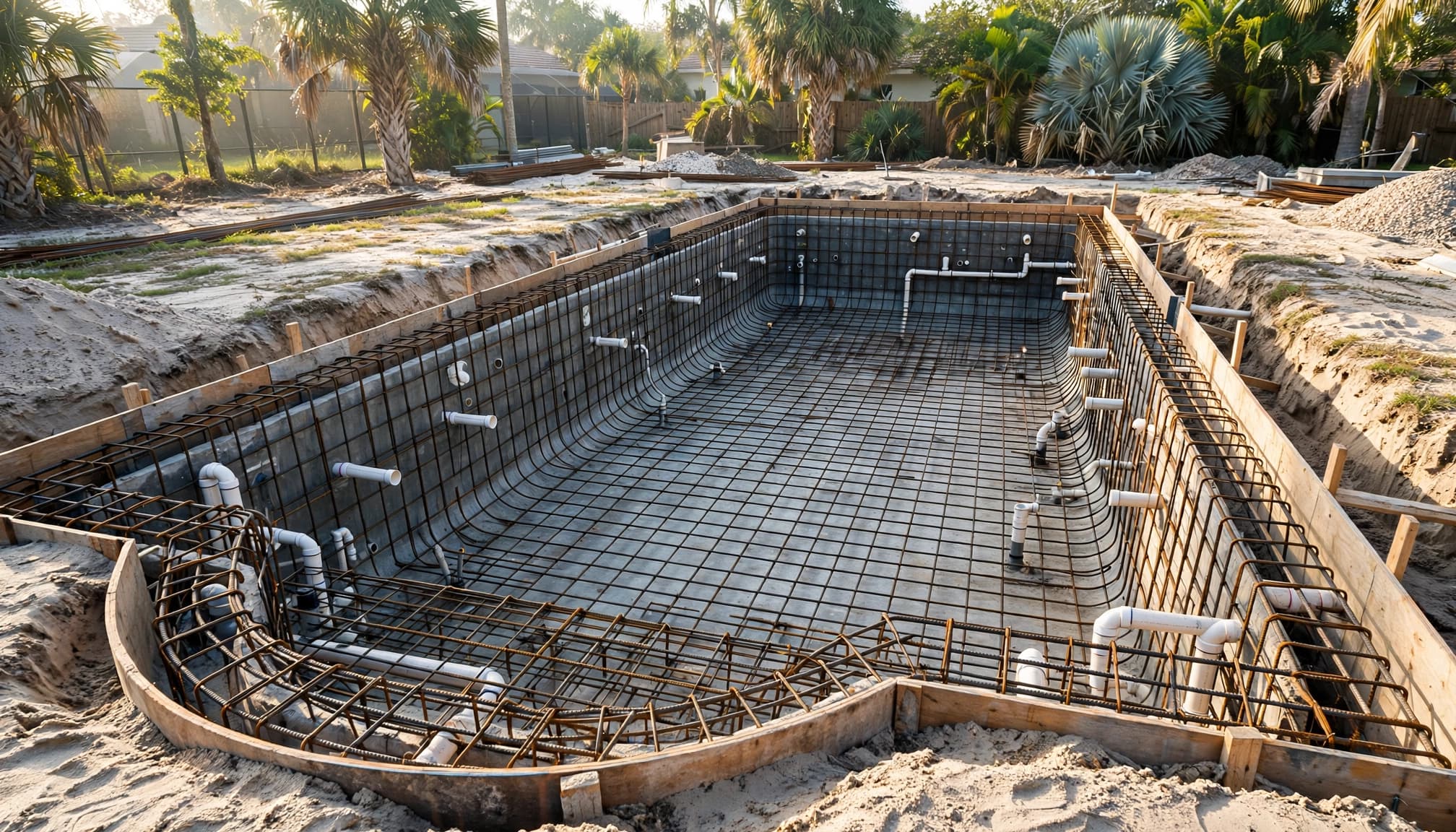
Return locations belong on the construction drawings, not in a conversation held after the shell takes shape. A fitting that conflicts with a bench, step or structural detail is harder to address once the concrete shell is in place.
Review the drawings as one plan
San Juan Pools & Spas' custom pool construction process lists design and engineering before forming and steel work, followed by concrete work and later plumbing and backfill. The precise construction details vary by project. What's important for return placement is agreeing on planned wall locations before the shell work commits to them.
Compare the pool outline, elevations, skimmers, steps, benches and feature plumbing on the current drawings. If a sun shelf changed size during design, confirm that the return plan changed with it. Ask the builder to identify each proposed return on the plan rather than relying on a general note that says "returns."
Check changes before construction moves on
Design choices can shift after an initial drawing. A longer bench or relocated skimmer may affect the circulation plan even if the equipment list stays the same.
Before gunite installation, ask the builder and plumbing designer to confirm that the latest approved layout matches the locations planned for the shell. Also ask how they'll handle a conflict found during layout. Moving a return later can require more than redirecting its fitting, so it's better to resolve the location while the plans are still open for review.
Check circulation after the pool is filled
A sound plan still needs an on-site check. Once the pool is operating, observe where floating debris travels with the pump running and where it repeatedly collects. Look at the steps, shelf edges and any recessed corners after normal use.
If the fittings are adjustable, have the builder explain their intended direction and how to make small changes without neglecting another area. Judge a change over time rather than by the appearance of one strong stream. Wind and weather can alter surface debris patterns from day to day.
Persistent dirt or cloudy water isn't necessarily a return-placement problem. Cleaning, filtration, pump settings and water chemistry also affect pool conditions. If an area remains troublesome, ask the builder to review the system rather than assuming an extra fitting is the answer.
Key takeaways for your design review
- Return locations should follow the pool's shape and features, not a standard spacing pattern.
- Skimmers, wind exposure and sheltered corners all belong in the circulation discussion.
- Steps and sun shelves need attention even when the main swimming area has clear water movement.
- Return count and direction must make sense within the project-specific plumbing design.
- Confirm planned wall locations with the builder before the gunite shell is installed.
Frequently asked questions
Should returns point toward the skimmer?
Sometimes a return direction can support surface movement toward a skimmer. The right aim depends on the other returns, the pool's shape and how water reaches sheltered areas. Aiming every fitting at the skimmer could sacrifice circulation elsewhere. Ask the designer to explain the overall flow path rather than prescribing one direction for every outlet.
How many return jets does a new gunite pool need?
There isn't a useful number that applies to every new pool. Size and shape matter, as do ledges, steps, equipment and plumbing layout. The designer should show how the proposed fittings cover the pool and how the hydraulic plan supplies them. That explanation is more useful than a count without context.
Can return placement be changed after construction?
An adjustable fitting may let you change the direction of its stream after filling. Moving the fitting itself is different: its location is tied to the shell and plumbing. Ask about placement changes before gunite work proceeds, while the builder can still review the drawings and construction plan together.
A better pool starts with a clear circulation plan
The step corner that collects debris later is easier to address on a drawing now. Review return locations alongside the skimmers, shallow features and plumbing, then ask how water is expected to move through each part of the pool.
The best-positioned returns are the ones designed for your pool , with their locations agreed upon before the gunite shell is installed.