
Pool Fountain Design Ideas for Bonita Springs Homes
A well-placed fountain can change the mood of a pool without taking over the backyard. The right pool fountain design ideas add movement, soft sound, and a focal point while still leaving plenty of room for swimming and entertaining.
Bonita Springs homeowners also need to design for strong Florida sun, humidity, coastal air, storms, and hard-water buildup. A fountain should look attractive on installation day, but it also needs accessible equipment and finishes that are practical to maintain. Start with the way you use your pool, then choose a feature that fits the yard and your routine.
Start With the Way You Use the Pool
A fountain can be a visual centerpiece, a background sound, or a small detail that adds motion to an otherwise simple pool. Your answer will guide the size, location, pump setup, and operating schedule.
Match the Feature to the Yard
Large raised walls and wide spillways suit expansive pool decks with room for a strong architectural focal point. Smaller yards often look better with narrow deck jets or a compact bowl fountain. A feature that is too large can crowd the pool and make the patio feel busy.
Look at the fountain from the places where you spend time. The view from a covered lanai, kitchen window, outdoor dining area, and pool entry may matter more than the view from the street.
Choose Sound and Visibility
Some homeowners want a noticeable rush of water. Others prefer a quiet trickle that blends with conversation. The height, width, and water flow all affect the sound.
Wind also affects performance. A tall, exposed stream can splash outside the pool on breezy afternoons. A lower spillway or wall feature usually keeps water movement more controlled. Before choosing a design, review a contractor's custom water features and tile work to compare proportions and finishes.
Pool Fountain Design Ideas for Bonita Springs Homes
The most useful pool fountain design ideas balance appearance with the shape of the pool. These options work well in both new construction and selected renovation projects.
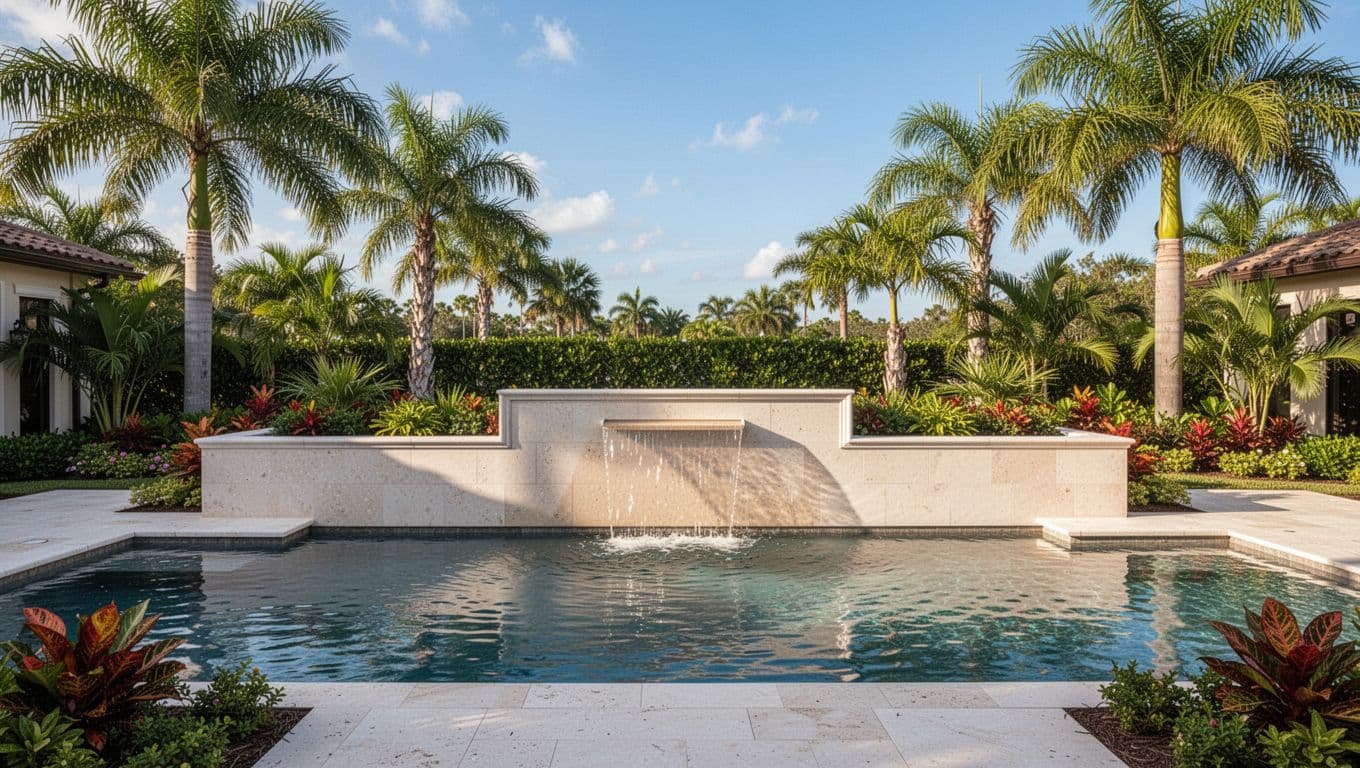
Raised Walls and Scuppers
A raised wall creates a clean backdrop at one end of the pool. Water can spill through one or more openings called scuppers, creating a controlled sheet or short cascade into the water below.
This design works especially well beside a spa, along a property boundary, or behind a sun shelf. Stone, porcelain, glass tile, and other pool-rated finishes can give the wall a look that matches the home's exterior. The wall also hides plumbing and equipment more easily than a freestanding feature.
However, the structure takes space and needs a clear relationship with the deck. A designer should confirm that the wall won't block an important view or narrow the path around the pool.
Deck Jets for a Light, Modern Look
Deck jets send narrow streams of water from the pool deck into the basin. They create a clean line and take up little visual space, making them a good choice for contemporary pools or smaller yards.
Several jets can be arranged along one side of the pool, though spacing and aiming matter. Poor placement can send water toward the walkway, outdoor furniture, or screened enclosure. A designer can also position jets to remain visible from the lanai without putting them directly in the main swimming area.
Deck jets are often easier to pair with lighting and automated controls. Their smaller scale also makes them a practical addition when a full raised wall doesn't fit an existing pool.
Use Vertical Features With Intention
Vertical water features draw the eye upward and can connect the pool to a raised spa, retaining wall, or outdoor living area. They need careful planning because height, splash, and wind become more important as water travels farther.
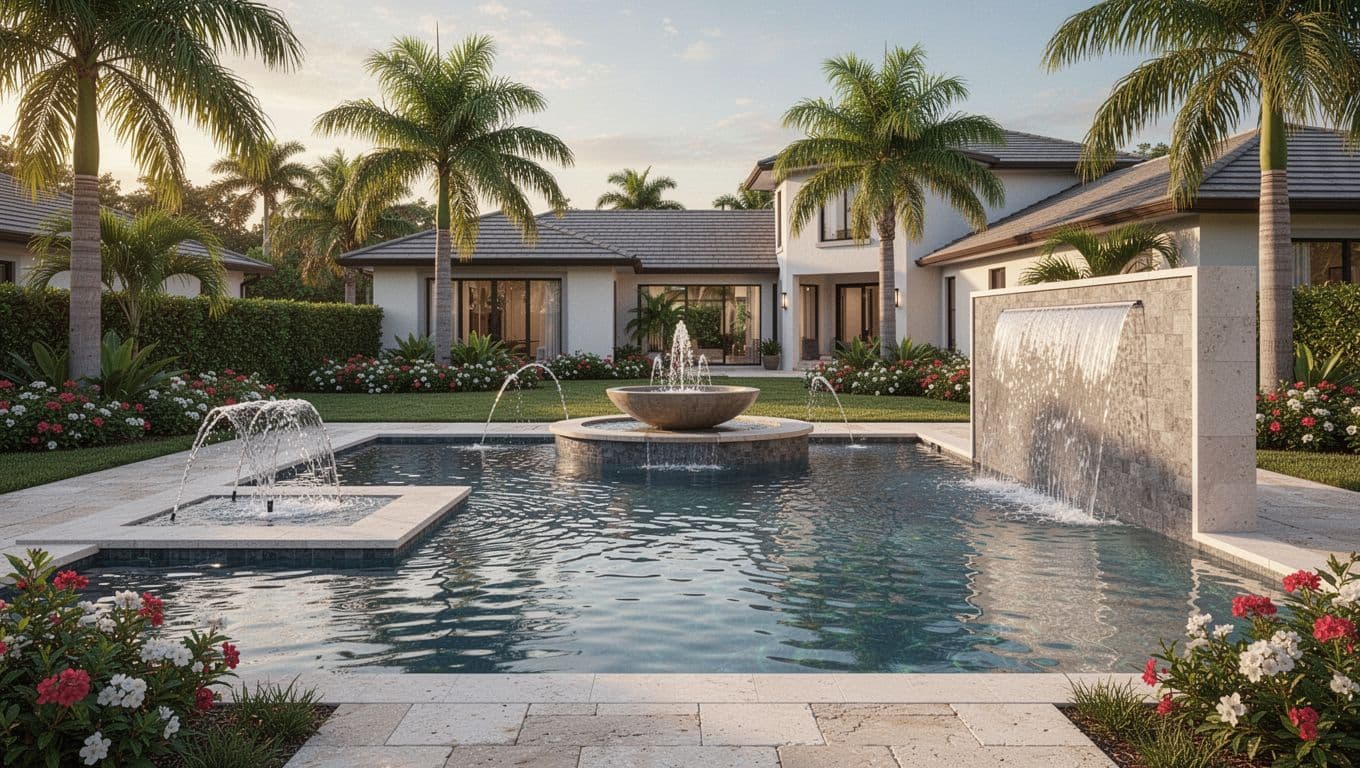
Sheer Descents and Narrow Spillways
A sheer descent produces a smooth, clear curtain of water. It can be installed in a raised wall, integrated into a spa wall, or placed within a short architectural feature.
The result is more structured than a natural-looking waterfall. It fits homes with simple lines, large-format pavers, and restrained planting. A narrow spillway gives a similar effect with less width and can work well beside a tanning ledge or along the edge of a spa.
Ask to see the feature operating at the proposed width and flow rate. A water curtain that looks elegant in a drawing may look uneven if the lip, plumbing, or water level isn't planned correctly.
Spa Spillovers and Fountain Bowls
A raised spa with one or more spillways combines two functions in one structure. The spa becomes part of the pool's design, while the moving water adds sound and connects the two bodies of water visually.
A fountain bowl offers a separate focal point. It may sit on a pedestal, low wall, or ledge and spill into the pool. This approach can add character without building a large water wall.
For renovations, the existing pool shell, deck, and plumbing may limit placement. A professional should inspect those conditions before promising a particular spillway or bowl arrangement.
Design for Florida Sun, Salt, and Storms
Bonita Springs weather affects both the appearance and upkeep of a fountain. Materials and equipment need to fit the exposure around your home, not only the style shown in a design rendering.
Select Finishes That Age Well
Direct sunlight can fade some surfaces over time, while humidity keeps outdoor areas damp for long periods. Choose tile, stone, coping, sealers, and metal components rated for pool use and suitable for the planned location.
Hard-water deposits are another concern. Mineral buildup often appears along the waterline, fountain lip, or spillway where water evaporates. A balanced pool system helps reduce problems, but the design should also make the affected surfaces easy to reach and clean.
Coastal air and salt exposure can affect vulnerable metal hardware. Ask which components need extra protection and how the contractor will handle fasteners, grates, lighting housings, and other exposed parts.
Account for Wind and Severe Weather
Bonita Springs can experience strong wind and heavy rain during storm season. A fountain with a tall arc or wide splash pattern may lose more water during windy conditions. Water can also reach the deck, screen enclosure, planting beds, or nearby walls.
A fountain should be tested for splash at the same viewing angle and approximate flow planned for the finished pool.
Ask how the feature should be operated before a severe storm and whether the controls allow you to turn it off separately. Keep furniture, loose decorations, and potted plants out of the fountain's splash zone when weather conditions change.
Coordinate the Fountain With Plantings and Maintenance
The pool feature should fit the entire backyard, including plants, paving, drainage, and service access. A beautiful fountain can become frustrating if leaves collect in the basin or technicians can't reach the pump and valves.
Keep Plants and Debris Under Control
Palms, tropical shrubs, ornamental grasses, and flowering plants can frame a fountain beautifully. Still, dense planting close to the water can drop leaves, seed pods, flowers, and soil into the pool.
Place plants with mature size in mind. Avoid thorny varieties beside walking routes and be careful with plants that attract heavy insect activity near seating areas. Large roots can also affect nearby hardscape, so the planting plan should account for distance from the pool shell and deck.
Use planting beds to frame the feature rather than hide it. A low, simple background often makes moving water easier to see.
Plan Cleaning Access Before Construction
Fountains need routine attention even when the main pool receives regular service. The lip, basin, nozzle, screen, and nearby tile may need cleaning more often than a quiet section of the pool.
Ask where valves, pump components, and electrical connections will sit. Access panels should remain reachable after pavers, plants, and outdoor furniture are installed. If the feature uses a separate pump, confirm how it will be controlled and serviced.
Also discuss evaporation and operating time. Running a fountain all day in direct sun can increase water loss, especially during dry or windy periods. A timer or pool automation system can run the feature when you use the yard most.
Questions to Ask Before Installation
For a new pool or renovation, review the pool design and installation process before approving the fountain details. Bring these questions to your design meeting:
- Will the fountain use the pool's existing circulation system or need a separate pump?
- How will wind, splash, and water loss affect the proposed location?
- Which finishes and hardware suit Florida sun, humidity, coastal air, and salt exposure?
- Where will hard-water scale collect, and how will those areas be cleaned?
- Can the fountain operate on its own schedule through the pool controls?
- What happens to the feature during storms, power interruptions, or equipment service?
- Does the quote include plumbing, pumps, valves, lighting, controls, finishes, cleanup, and required project coordination?
- Is the contractor licensed and insured, and who handles service after installation?
Clear answers make it easier to compare proposals. They also help separate a feature that looks good in a drawing from one that works well in daily use.
Conclusion
The right fountain gives a Bonita Springs pool more movement and personality without sacrificing space or comfort. Raised walls, deck jets, sheer descents, spillways, and bowls each create a different effect, so the best choice depends on your yard, sightlines, sound preferences, and maintenance plans.
Before selecting a style, account for Florida weather, salt exposure, hard-water deposits, plant growth, and service access. The strongest pool fountain design ideas are attractive at first glance and practical every time the pool is used.