
Pool Deck Resurfacing Ideas for Aging Fort Myers Backyards
A pool deck can look tired long before the pool itself needs work. If yours has faded color, rough patches, or puddles that linger after a Fort Myers rainstorm, the condition beneath the finish matters as much as the finish you choose.
Pool deck resurfacing can refresh sound concrete, but a new coating won't fix a sinking slab or poor drainage. Start by identifying what has worn out. Then you can choose a surface that suits Southwest Florida's sun, humidity, rain, and poolside use.
Read the deck before choosing a finish
Walk the entire deck after it rains and again when it's dry. Look beyond color: note cracks, loose patches, standing water, uneven edges, and areas that feel slippery underfoot.
Separate surface wear from movement
Fading, staining, and worn texture may be mainly finish problems. A crack that keeps widening, a raised slab edge, or a section that has settled needs a closer look before anyone covers it. Moisture trapped beneath a coating can also affect how well the new material bonds.
Check the concrete beside the coping, screen-enclosure posts, and drains. These transitions often reveal problems that a broad view of the deck misses. Take photos of wet areas so a contractor can see where water collects, even if the deck is dry during the visit.
Know when replacement belongs in the conversation
Resurfacing depends on a suitable base. If substantial areas are unstable or drainage requires changing the deck's shape, removing and replacing sections may be the more sensible scope. A contractor should assess the concrete rather than promise that a finish will hide every defect.
That distinction also protects your design plans. You can choose an appealing texture and color after you know which portions of the existing deck can stay.
Pool deck resurfacing ideas that suit Fort Myers
For a yard exposed to strong sun and frequent rain, choose a finish based on its texture, installation requirements, and upkeep. The lightest-looking option isn't automatically comfortable or slip-resistant when wet.
Spray texture over suitable concrete
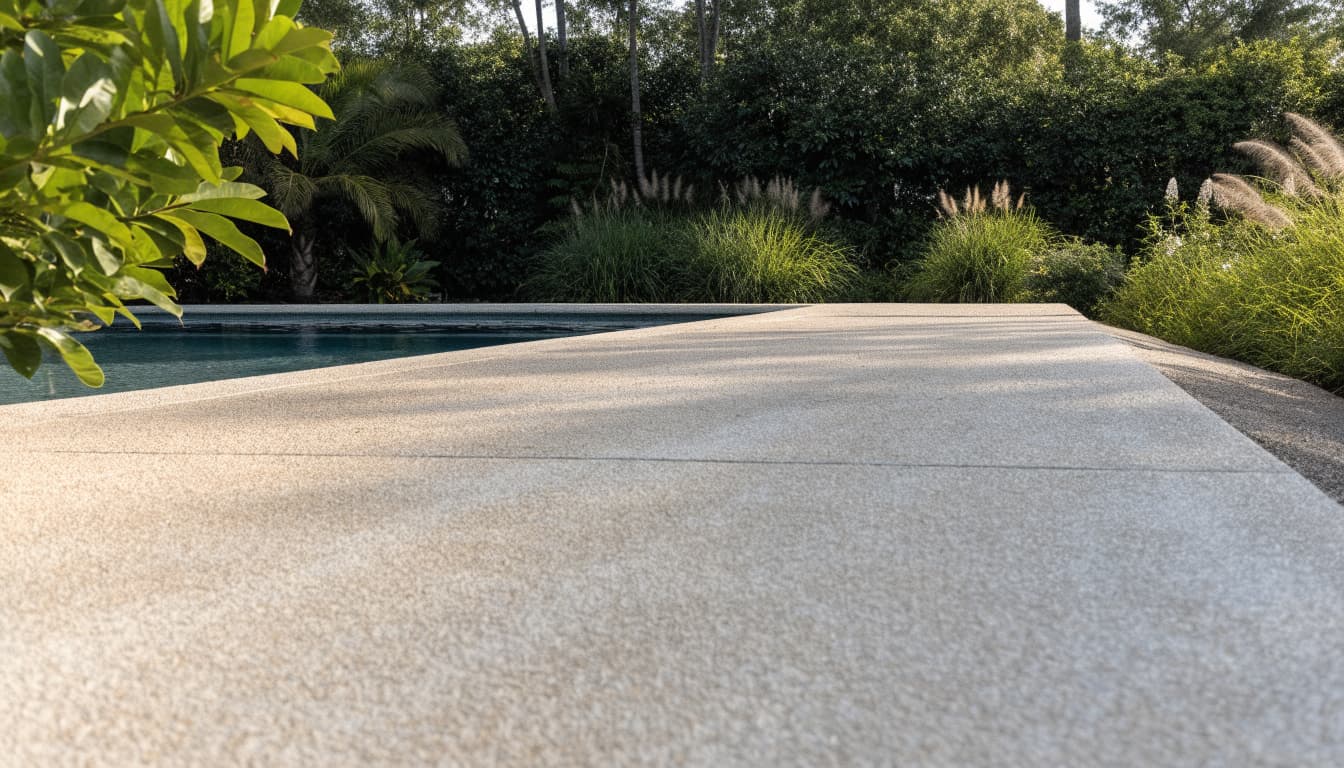
A spray-applied deck texture can refresh existing concrete with a patterned, textured finish. Ask the installer what surface preparation the proposed system requires and which topcoat goes over it. A light sand or warm gray color can give an older pool a fresh look without making the deck the yard's focal point.
Request a physical sample you can see outdoors. Morning shade and direct afternoon sun can change how a color reads, while a sample helps you judge how the texture feels under bare feet.
Pavers when the project calls for a new deck surface
Pavers offer a different construction approach. Depending on the deck's condition and design, they may involve removal, changes to deck height, and careful detailing at the coping and drains. They aren't simply a coating applied to worn concrete.
San Juan Pools & Spas lists both pavers and spray deck among its pool and spa renovation services. Ask how each option would work with your existing deck, rather than comparing finishes in isolation.
These choices affect different parts of a project:
| Approach | Best question to ask |
|---|---|
| Textured resurfacing | Is the existing concrete sound enough for the proposed system? |
| Paver deck remodel | How will the new surface meet the coping, doors, and drains? |
| Concrete replacement | Which damaged or poorly sloped areas need rebuilding? |
The right answer may differ across the yard. A damaged section can need repair or replacement even when another section can accept a new finish.
Give the new surface a sound base
The finished deck gets the attention, but preparation determines whether the chosen system has a suitable place to bond. Fort Myers humidity and passing showers make installation conditions worth discussing before work begins.
Remove what won't hold
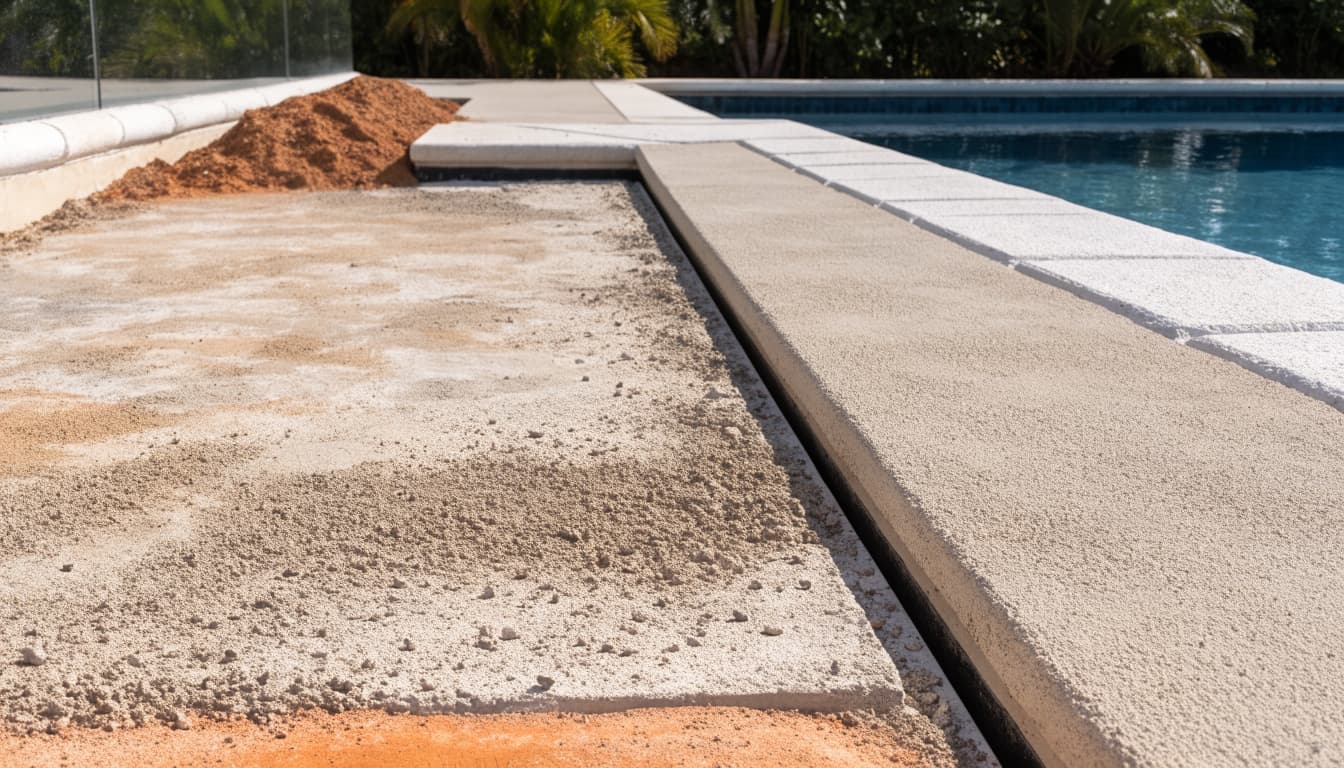
An installer may need to remove failing coatings, clean residue, repair damaged concrete, and prepare the surface to match the material manufacturer's instructions. Painting over flaking finish or dirt leaves the new layer attached to a weak one.
Tell the contractor about earlier coatings, pressure-washing damage, or spots that stay damp. Those details can change the preparation plan. Ask how they'll check the condition of the substrate before applying a finish across the whole deck.
Preserve joints and usable details
Existing joints, drain openings, skimmer lids, and access points need attention in the plan. Covering a joint with a continuous decorative finish may invite cracking where the concrete is meant to move. Likewise, a thicker surface can affect how flush a drain or access cover sits.
Have the proposal show where the finish will stop, which joints remain visible, and how repairs will blend with the surrounding texture.
Keep rainwater moving away from the pool
Southwest Florida rain can turn a minor deck low spot into a puddle beside the pool. Pool deck resurfacing should account for where that water goes, especially near the house, screen enclosure, and planting beds.
Trace the water's path
After a storm, watch where runoff collects and where it exits the deck. Water shouldn't be directed toward the home's foundation or left against a doorway. Existing channel drains and other outlets also need to remain open and serviceable.
A thin decorative finish cannot correct every drainage problem. If the concrete has settled or the slope sends water the wrong way, ask whether repairs or a redesigned deck section are needed before resurfacing.
Check every change in height
A raised new surface can create a trip point where the deck meets coping, steps, patio doors, or a walkway. Pavers can also change finished elevations. Review those edges on site, not only on a small material sample.
The goal is a comfortable route around the pool after rain, with water moving toward the planned drainage points instead of across the path people use.
Balance hot sun with wet-foot traction
A Fort Myers deck must handle direct sun and swimmers stepping out with wet feet. Color and texture both matter, but neither works alone as a safety guarantee.
Judge colors in real sunlight
Darker finishes may absorb more solar heat than lighter ones. Still, shade, surface texture, and the specific material affect what you'll feel underfoot. Place samples in the part of the yard that gets strong afternoon sun, then check them at the times your family uses the pool.
A pale finish can also show leaves, dirt, or stains differently from a medium tone. Choose a color you like in the actual setting, with the maintenance it needs in mind.
Test texture where feet will land
A decorative pattern that looks attractive in a photo may feel different when wet. Ask to feel a sample with damp bare feet, and discuss traction around steps, entries, and the route to the house. The finished texture should be comfortable enough for regular barefoot use.
A textured finish can improve footing, but standing water still needs a drainage fix.
Keep furniture placement in mind, too. Chairs should sit steadily without forcing you to choose a slick finish across the walking areas.
Let coping and the backyard guide the look
A refreshed deck looks more intentional when it works with the existing pool edge. Compare samples beside the coping and waterline tile, where you'll see them together every day. If the coping is loose or damaged, discuss repairing it before selecting a deck finish.
The rest of the yard matters as well. A restrained texture can suit a planted, shaded space, while a more defined paver pattern may suit a pool with a simple shape. Browse completed pool and spa projects for examples of how decks, tile, and water features sit together.
If you're also considering new steps, a spa, or another pool change, discuss the full renovation at once. That gives the deck design a chance to accommodate the layout rather than ending awkwardly at a future work area.
Plan for chemicals and everyday maintenance
Pool water reaches the deck through splashes and wet feet. Chlorine products and saltwater systems both call for attention to material compatibility and cleaning instructions. A saltwater pool still uses chlorine, produced by its salt chlorine generator.
Ask about the whole finish system
Check which coating, color treatment, and sealer the contractor proposes, if any. Ask for the manufacturer's care guidance, including when the new surface can get wet and which cleaners are appropriate. Harsh chemicals or an unsuitable pressure-washing method can damage a finish.
Also discuss metal fixtures and nearby materials if saltwater regularly splashes onto them. The deck surface is only one part of the poolside setting.
Keep water and debris from sitting
Sweep leaves and grit, rinse splashed areas as the finish instructions allow, and keep drains clear. Pay attention to stains near planters or outdoor furniture so you can address them before they spread.
During routine cleaning, look for changes in texture, loose spots, or water that has begun pooling. Early observations make it easier to distinguish ordinary wear from a problem beneath the surface.
Get a proposal that matches the deck's condition
A useful quote should describe more than color. Ask what happens to old coatings, which cracks or damaged areas need repair, how joints and drains will be treated, and which exact finish materials are included. Confirm whether coping work or deck replacement is part of the proposed scope.
Discuss how rain could affect preparation and application, along with the care instructions you'll receive afterward. If two proposals recommend different approaches, ask each contractor to explain the condition they found in the existing concrete.
For a Fort Myers renovation, you can request a pool renovation estimate and bring photos of puddles, cracks, and the deck after a storm. Those details help turn a conversation about appearance into one about the work your yard needs.
Key Takeaways
- Pool deck resurfacing is an option when the existing concrete provides a suitable base; moving or badly damaged sections need separate attention.
- Compare spray texture with a paver deck remodel based on drainage, finished height, preparation, and upkeep.
- Check color in afternoon sun and texture with wet feet before committing to a finish.
- A clear proposal should account for coping, joints, drains, repairs, and the complete finish system.
FAQ
Can a cracked pool deck be resurfaced?
It depends on why the concrete cracked and whether it has moved. A contractor should inspect the crack, surrounding slab, and drainage before recommending repair or resurfacing. A new texture can change a deck's appearance, but it won't stop movement underneath.
Are pavers the same as resurfacing concrete?
No. A spray-applied finish changes the surface of suitable existing concrete. A paver remodel introduces a different deck surface and may require changes to the base, height, drainage, and edges. Ask for a scope that explains those transitions.
What should I look for in a deck finish for Fort Myers?
Look for a proposed system suited to outdoor poolside use, with a texture you can walk on comfortably when wet. Review samples in direct sun, and ask how the finish handles cleaning and pool-water exposure. The deck's drainage and existing condition deserve equal attention.
Conclusion
An aging pool deck doesn't need a cosmetic answer to a structural or drainage problem. Start with the concrete and water flow , then choose the texture, color, or deck remodel that fits what you find.
That approach gives your Fort Myers backyard a surface you can enjoy beyond the first sunny afternoon.