
Best Time of Year for a Cape Coral Pool Renovation
A pool renovation can leave your backyard out of commission longer than you expected, especially if rain interrupts a weather-sensitive step. For a Cape Coral pool renovation , the best start date depends on the work you want done, your contractor's schedule, and how much flexibility you have.
The drier part of the year may offer more predictable outdoor workdays, while the rainy season can still suit some projects. Start by matching the calendar to your renovation scope rather than choosing a month first.
Finding the best time for a Cape Coral pool renovation
Cape Coral's weather changes through the year, but no season comes with a guaranteed construction schedule. Your contractor needs to consider the forecast alongside the work happening on each day.
The drier months favor weather-sensitive work
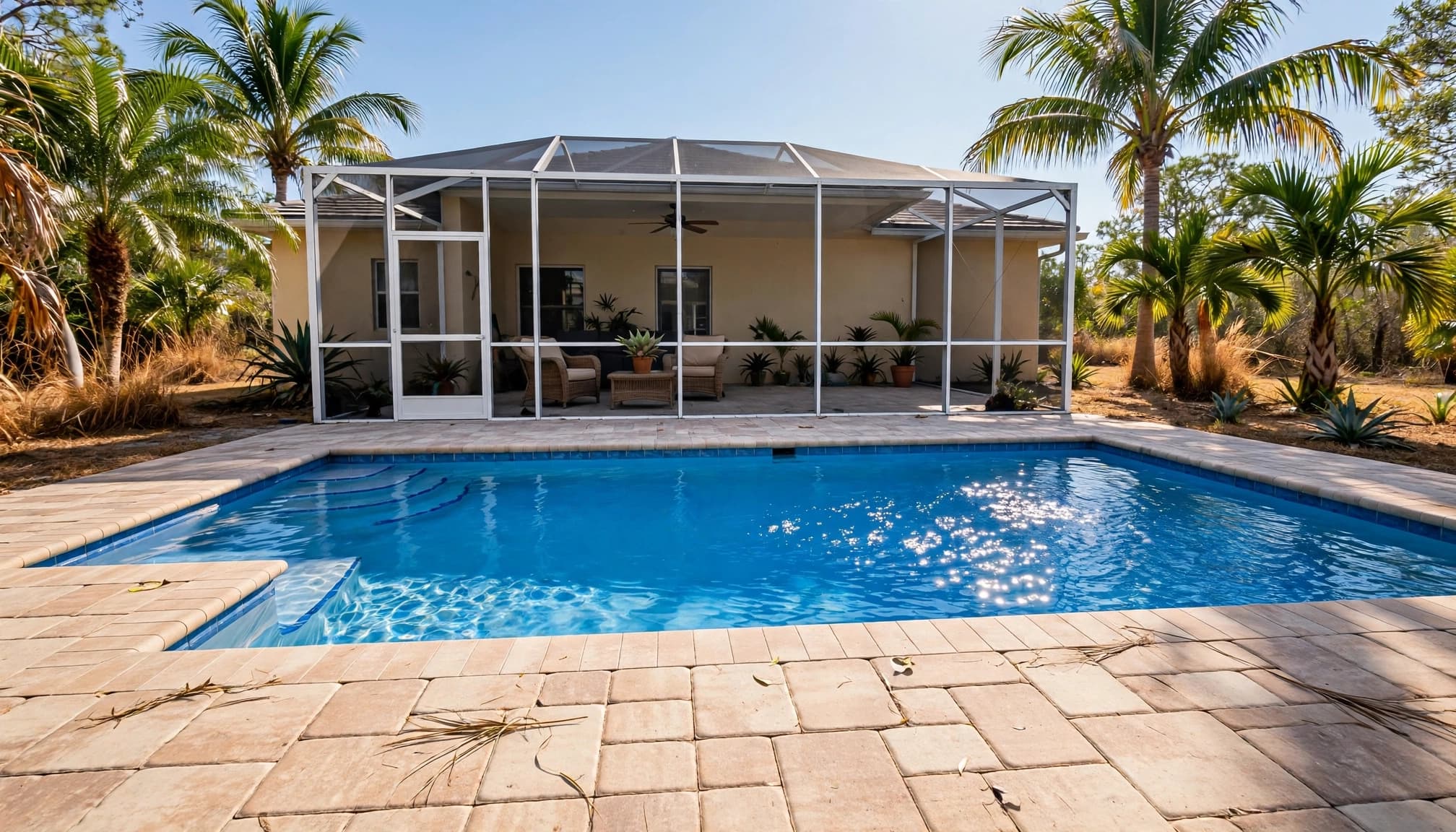
Southwest Florida is generally drier in winter and early spring. That can make it easier to plan work involving an open pool shell, an exposed deck base, or a new interior finish. Fewer rain interruptions may also help crews keep related tasks close together.
However, a favorable forecast doesn't guarantee an early start. Ask when the contractor can begin, when materials will arrive, and whether other projects are already on the schedule. Those answers matter more than choosing a dry-season date that isn't available.
The rainy months call for flexibility
Rain becomes more frequent in Southwest Florida during the warmer months. Afternoon storms may shorten a workday or delay a step that needs dry conditions. Crews can plan around forecasts, but they can't make every outdoor task safe or suitable during a storm.
That doesn't rule out a rainy-season renovation. It means the schedule should allow for interruptions, particularly if you're replacing a deck or refinishing the pool. If you can accommodate a flexible completion date, discuss that window with your contractor rather than ruling it out.
Let the renovation scope shape your schedule
The term "pool renovation" covers projects with different demands. Before asking for a finish date, decide which changes you want and which problems need an on-site assessment.
Interior finishes and tile have their own sequence
Re-plastering an interior generally means draining the pool, preparing the surface, applying the finish, and refilling it. Tile or coping replacement may be part of that job, but each addition affects the order of work. Weather and existing surface conditions can change the plan after work begins.
San Juan Pools & Spas lists re-plastering, tile replacement, and coping brick replacement among its pool remodeling and renovation services. When requesting an estimate, describe any stains, rough areas, loose tile, or cracked coping you can see. An in-person inspection can help separate cosmetic work from repairs that need more attention.
Decks and additions affect the whole backyard
A deck remodel with pavers or spray deck involves more than the pool's waterline. Crews need room to remove materials, prepare the base, and protect nearby landscaping. Access may be tighter if you also have a screen enclosure.
Adding a spa, tanning ledge, or water feature can require more design and construction planning than replacing an existing finish. For a Cape Coral pool renovation with several upgrades, ask the builder to show which tasks depend on earlier work. Changing the design after materials are ordered may affect both the schedule and the price.
Account for rain, storms, and site conditions
Weather matters most when it interferes with a particular task. A forecast that allows equipment planning may still be unsuitable for deck work or an interior finish.
Protect work that needs dry conditions
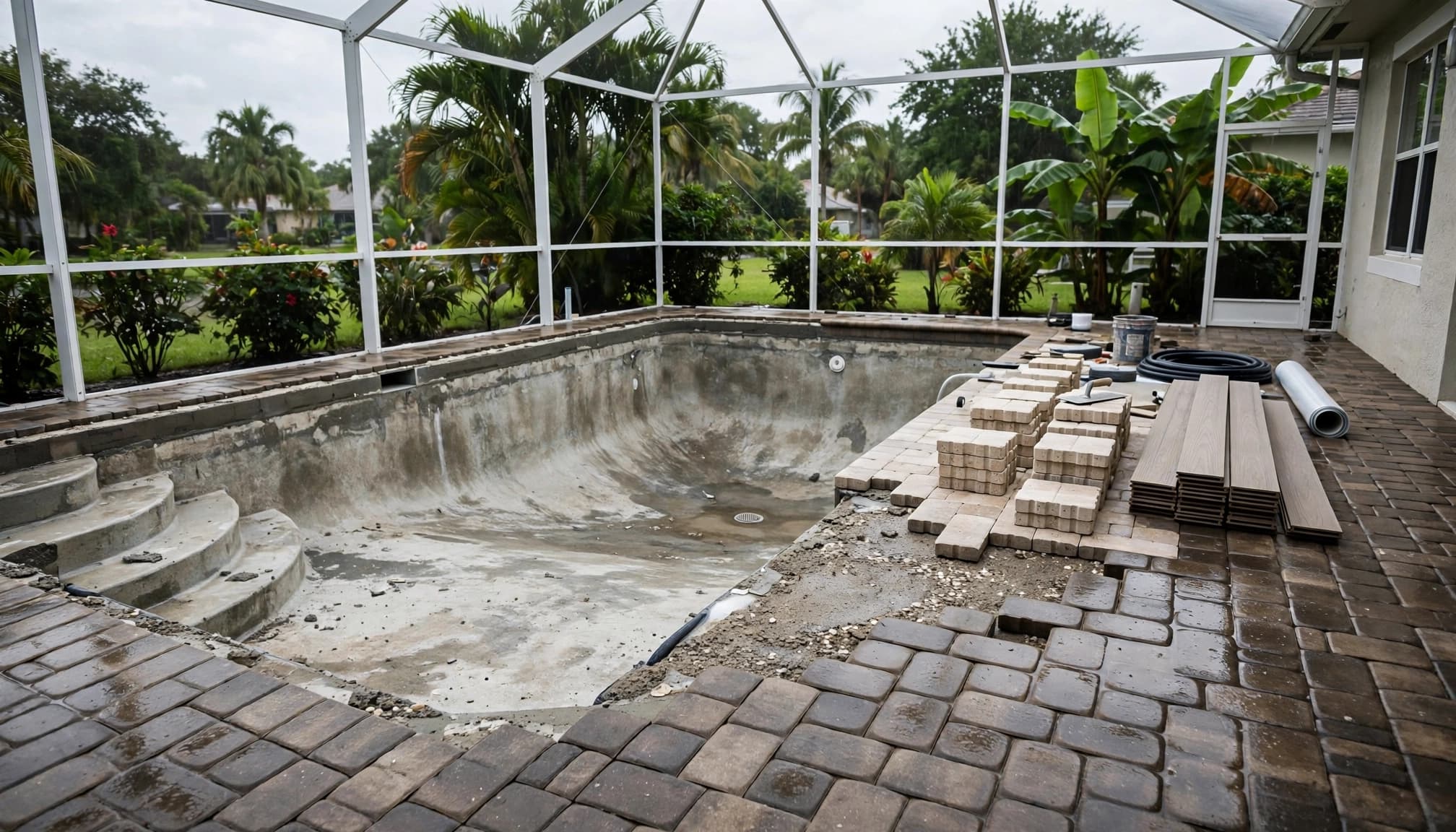
A contractor may need to postpone surface preparation, coating, or deck installation if rain threatens the result. Wet ground can also complicate excavation or base preparation. The exact response depends on the product, site conditions, and stage of the job.
Ask how the crew protects an open work area and who decides when conditions are suitable to resume. Product instructions and the contractor's assessment should guide that decision. Pushing ahead to meet a party date can create a problem that takes longer to fix than a weather delay.
Treat storm preparation as part of the plan
Atlantic hurricane season runs from June 1 through November 30. A storm may affect deliveries, crew availability, and site safety even if the forecast later improves. Temporary materials and exposed areas need attention before severe weather arrives.
If work is planned during that period, ask what happens when a storm approaches. Clarify how the site will be secured, how you'll receive updates, and how the contractor will assess the backyard before restarting. A flexible schedule gives those safety decisions room.
Check contractor availability before picking a month
The first available start date isn't necessarily the right one. A contractor may be able to visit soon but need more time for design decisions, material orders, or a specialist trade. Availability can also change as other jobs move.
Get a project-specific schedule , not a general promise about how long renovations take. Ask when the contractor expects to assess the pool, finalize the scope, order materials, and begin on-site work. Then ask which dates are firm and which depend on approvals, deliveries, or weather.
Compare estimates on the same basis. One proposal may cover the interior finish only, while another includes coping, equipment, and deck repairs. A lower price or shorter timeline is hard to evaluate until you know what's included. If you have a fixed date for guests or seasonal travel, share it before signing so the contractor can tell you whether it looks realistic.
Confirm permits and the order of work
Permitting needs vary with the work and the property. Don't assume that every renovation needs the same approvals, or that a previous permit covers a new addition.
Ask which approvals apply to your design
Replacing an existing finish is a different scope from adding a spa, changing electrical work, or replacing a screen enclosure. Your contractor should identify any permits, inspections, or other approvals required for the proposed work. Homeowners with a homeowners association should also check whether it requires approval before construction.
Ask who will prepare and submit documents, and whether work can start before approval. Approval times can vary, so avoid building a firm event date around an unconfirmed permit schedule. Keep the agreed scope in writing; if you add a feature later, ask whether it changes the approval plan.
Review dependencies, not just the start date
San Juan Pools & Spas' pool construction process includes design, engineering and permits, deck work, equipment, electrical work, interior finishing, and filling. That's a new-construction sequence, not a promised renovation timeline, but it shows why a project's steps need coordination.
Your renovation may use only some of those trades. Ask which work must happen before the interior finish and when the pool can be filled again. Also confirm who handles cleanup and equipment setup. A completion estimate is more useful when you know what "complete" includes.
Build a calendar around how you use the pool
The best window for your household depends on when you'll miss the pool most. A family that swims throughout summer may prefer a different plan from seasonal residents who want the backyard ready when they return.
Work backward from the date that matters
Tell your contractor about visits, travel, or celebrations before settling on a start date. If you want new pavers or a water feature, choose the design early enough to check materials and scheduling. San Juan's pool and spa project gallery can help you identify details worth discussing during that first meeting.
Also ask when you can use the pool, not only when construction crews expect to finish. Filling, equipment checks, water balancing, and care instructions can follow the last visible construction step. Your contractor should explain the requirements for your finish and equipment.
Leave room for discoveries and changes
Older pools can reveal problems once tile comes off or the shell is exposed. A contractor may need to assess those conditions before recommending a repair and updating the schedule. Allowing for that possibility is more useful than assuming every change will happen exactly as planned.
Before work begins, agree on how you'll receive updates and approve added work. Ask for a revised schedule if the scope changes. That keeps a Cape Coral pool renovation tied to the work actually required, rather than an estimate made before the pool was opened up.
Key takeaways
- Drier weather can make exposed pool and deck work easier to schedule, but contractor availability still matters.
- Rainy-season projects can proceed when the scope and your calendar allow for weather delays.
- Interior finishes, decks, equipment, and additions have different planning needs.
- Confirm approvals, material availability, and the steps between construction and swimming before committing to a deadline.
Frequently asked questions
How far ahead should I plan a pool renovation?
Start discussing the project before you need the pool ready, especially if you want design changes or a particular finish. The lead time depends on your contractor's schedule, material choices, approvals, and scope. Share your target date during the first visit and ask for a schedule based on your pool, not a general estimate.
Does my pool have to be drained?
An interior refinishing project generally requires draining. Some equipment work may not, while a larger remodel may involve draining for several reasons. Ask the contractor what your scope requires and how they'll manage the pool while it's empty.
Can I use the pool as soon as the crew leaves?
Don't assume the pool is ready when visible work ends. A new finish may have fill and care requirements, and the equipment and water need to be checked. Follow the instructions for the materials installed in your pool, and ask who will explain the first steps of maintenance.
Should I wait until the dry season?
Waiting may help if your project has weather-sensitive work and your schedule has room. It may be less useful if the contractor you want has a different opening or your pool needs attention sooner. Compare available start dates, the proposed work sequence, and your tolerance for rain delays before deciding.
Choose a date that fits the work
The best time to renovate isn't a single month on Cape Coral's calendar. It's a window that fits your pool's condition, the work you've chosen, and a schedule with room for weather and approvals.
If you're weighing dates, schedule a pool renovation consultation with San Juan Custom Pools & Spas. A clear scope is the strongest starting point for a realistic plan.