
Built-In Pool Bench Ideas for Fort Myers Gunite Pools
A built-in feature can turn open water into the place where everyone naturally gathers. For Fort Myers homeowners planning a new build or renovation, the right built-in layout adds a comfortable perch without taking over the swimming pool.
Unlike movable poolside benches, a built-in pool seat becomes part of the gunite shell. This practical design guide considers its location, depth, finish, plumbing, and circulation alongside the steps or spa. A thoughtful feature feels easy to use on an ordinary Tuesday and when the house is full.
Key Takeaways
- A built-in pool bench becomes part of the gunite shell and can create a comfortable gathering spot without reducing the pool's most-used swimming space.
- Long, L-shaped, and spa-side benches can support conversation, easier movement, or a dedicated place to rest, but each layout should preserve clear circulation around steps and swim areas.
- A starting point for many underwater benches is 16 to 20 inches below the waterline with roughly 18 to 24 inches of front-to-back depth, although comfort depends on the users and overall pool design.
- Bench placement, returns, skimmers, drainage, finishes, and maintenance access should be planned together to support water circulation and long-term durability.
- Confirm dimensions, transitions, plumbing, electrical, drainage, and safety details with a licensed Fort Myers pool professional before construction or renovation.
Why a Built-In Bench Changes How You Use the Pool
A built-in gunite pool seat gives swimmers a place to pause without leaving the water. It supports relaxed conversations, lets adults keep closer watch during family swim time, and offers a lower-effort route for entering or resting in the pool.
This built-in gunite feature should complement water safety habits, not replace them. Active supervision, barriers, and clear rules still matter around every residential swimming pool.
Create a natural gathering spot
A long bench along one wall works well for homeowners who entertain. Guests can sit partly submerged while others swim nearby, so the pool feels social instead of divided between swimmers and spectators.
For a pool beside a covered lanai, place the bench where seated swimmers can talk with people at the outdoor kitchen or dining table. Check sightlines from the lanai, the entry route, and areas where children or older adults are likely to pause. However, keep enough open water between the bench and main entry steps. Busy pathways should stay clear.
Support easier movement in the water
A pool seat near wide entry steps can give someone a pause point before moving into deeper water. This can feel more comfortable for older adults, young children with close adult supervision, or anyone rebuilding confidence in the pool.
The feature isn't an accessibility guarantee. Still, a stable underwater seat, broad treads, handrail options, and a clear route from deck to water can make daily use more welcoming.
A built-in bench works best when it belongs to the traffic pattern, rather than becoming an obstacle in the shallow end.
Pool Bench Ideas That Suit a Gunite Design
Gunite gives you freedom to shape seating around how your household spends time outdoors. Unlike a stock tank pool, a permanent Fort Myers gunite swimming pool can be shaped around your yard and routines. The strongest layouts begin with a purpose: conversation, a spa landing area, a child-friendly shallow zone, or a peaceful place to cool off.
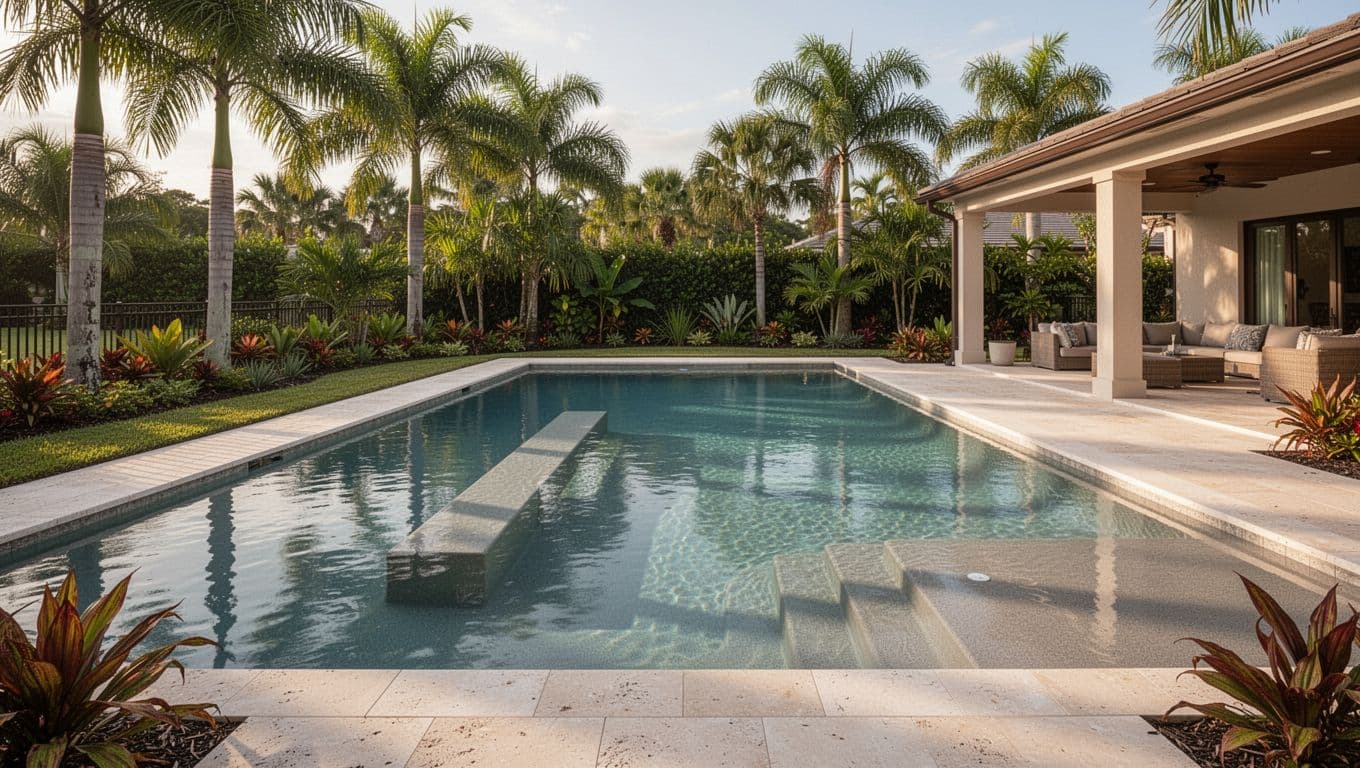
Choose a long wall bench for conversation
A straight bench along the pool's long edge is a clean choice for rectangular pools. It keeps the center open for laps, games, and floating while creating a calm seating zone along the perimeter.
This layout also suits a compact Fort Myers backyard. Use a contrasting tile line or subtly different finish at the bench edge so swimmers can see the change in elevation. That small detail helps the seating read clearly beneath moving water.
Use an L-shaped bench to define a social corner
An L-shaped bench turns one end of the pool into an in-water lounge. It pairs naturally with a raised spillover spa, water feature wall, or shaded side of the pool.
Avoid making the corner too tight. Swimmers need room to pass the bench without brushing knees or feet. A generous inside radius also helps a robotic cleaner and pool brush reach the transition between the seat and wall.
Pair a bench with tanning ledges
Tanning ledges and a bench serve different needs. The shallow area suits loungers and small children under close supervision, while a deeper pool seat serves a different purpose.
Placing both in the same shallow-end zone can make sense for large pools. In a compact design, separating them usually feels less crowded. Use landscape design software to visualize the bench, shallow feature, steps, and open swim space before finalizing the gunite shape. Explore tanning ledges and built-in pool benches together during the design phase, because each pool seat affects water depth, steps, plumbing, and usable swim space.
Set Bench Depth and Height for Real Comfort
A bench seat that looks good in a drawing can feel awkward if its dimensions don't fit the people using it. Discuss bather height, preferred water level, and planned activities before finalizing the design.
Start with a comfortable seat height
Set the pool seat height around the people who will use it. Many underwater benches sit about 16 to 20 inches below the waterline.
That range often places an adult's upper torso in the water, but body height and preference matter. The pool seat also needs enough front-to-back depth for comfortable sitting.
A depth of roughly 18 to 24 inches is common for a simple seat. Wider benches can feel more relaxed, but they take more room from the pool floor.
| Design detail | Practical starting point | Why it matters |
|---|---|---|
| Bench top below waterline | About 16 to 20 inches | Affects seated comfort and immersion |
| Bench front-to-back depth | About 18 to 24 inches | Gives legs and hips adequate support |
| Entry step tread | Often 12 inches or wider | Provides stable footing during entry |
| Shallow-end water depth | Chosen around the bench and steps | Keeps the intended use clear |
These are preliminary comfort ranges, not universal specifications or building-code requirements. The result can change with body height, intended immersion, finish thickness, pool geometry, family use, and water depth.
Keep water depth purposeful
A bench shouldn't create a confusing, uneven shallow end. The pool seat dimensions should work with water depth and the surrounding floor across the entire swimming pool.
If children will play nearby, define shallow and deeper areas clearly. Use visible tile, a finish color change, or a clear geometric break to clarify elevation changes.
Also, avoid placing a bench where a diver or jumper might mistake it for open water. Diving and jumping areas need separate depth and clearance planning.
A builder can lay out the bench, slope, and transition lines before gunite is applied, which helps prevent expensive changes later. Confirm dimensions, transitions, drainage, electrical, and safety details with a licensed Fort Myers pool professional before construction.
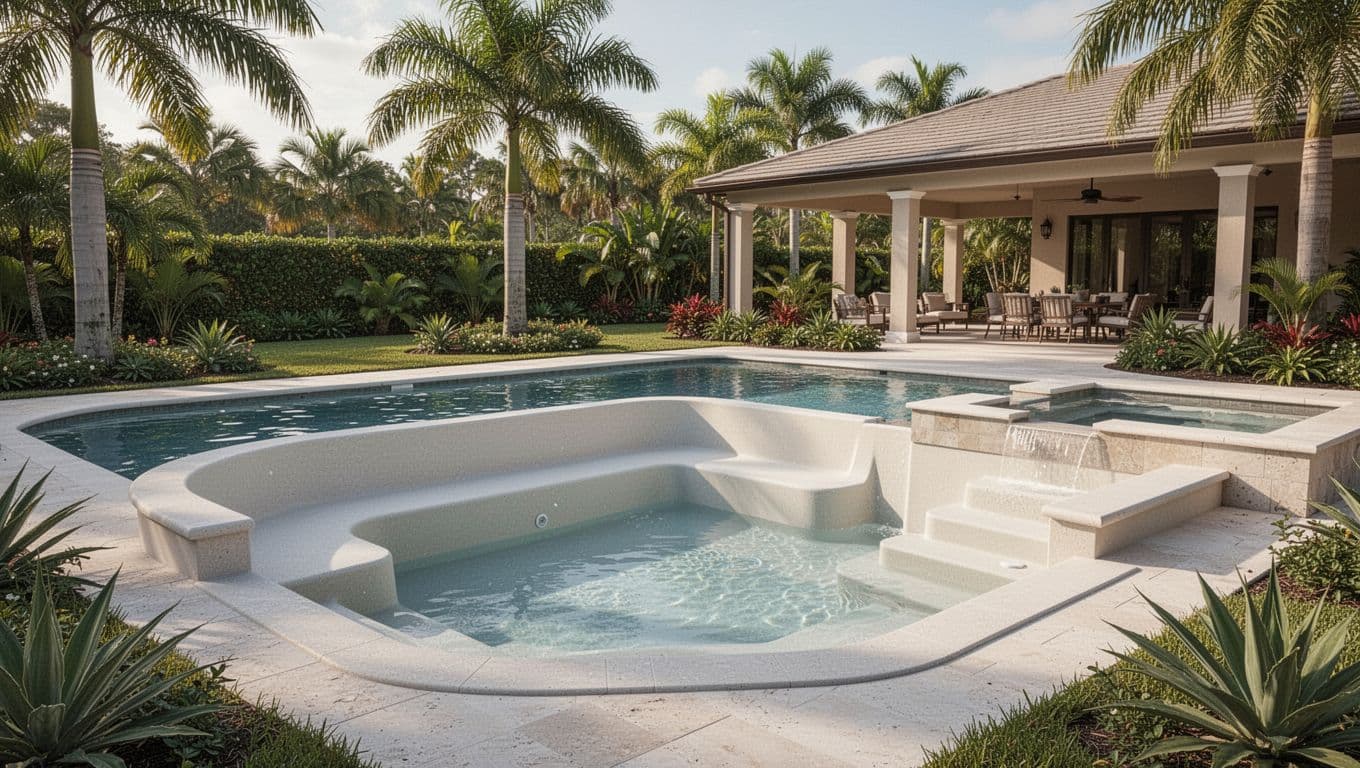
Plan Entry, Exit, and Water Circulation Together
Pool benches should make movement simpler. A pool seat shouldn't narrow the route between the steps, spa, swim lane, and shallow lounging areas.
Give swimmers a clear way around the seat
A bench opposite the primary entry steps often works well in a rectangular layout. Swimmers can enter, cross the shallow end, and settle onto the bench without crossing a narrow choke point.
For freeform pools, tuck the bench into a broad curve rather than an acute point. The rounded shape feels intentional and is easier to vacuum. It also preserves deck-side sightlines for adults watching children in the water.
Account for returns and skimmers
Water movement matters as much as bench placement. In a swimming pool, returns should move water around the seat instead of leaving still corners where debris settles. Skimmer placement, prevailing winds, nearby trees, and water-feature flow all shape the circulation plan.
Ask how the bench will fit into the equipment layout and existing plumbing. A spa spillway or deck jets can add movement, but neither replaces properly positioned returns. During a renovation, plumbing changes may be needed if a new bench alters the old circulation pattern.
A licensed local pool professional should confirm circulation, drainage, electrical, and safety details. No fixed bench placement is universally compliant for every Fort Myers gunite pool.
Choose Finishes That Handle Salt, Chlorine, and Sun
In Fort Myers, a swimming pool faces bright sun, heavy rain, heat, and frequent use. A built-in pool seat should use materials that resist this exposure and stay comfortable against bare skin.
Coordinate coping, tile, and interior finish
The bench can blend into the pool interior or receive a tile accent along its front edge. Select weather-resistant, pool-rated options only after confirming their suitability for submerged conditions. Glass tile, porcelain waterline tile, and other finishes may work, but product guidance should determine the final selection.
Use a pale interior finish to make the underwater seat easier to see. Darker finishes may create a moodier look but can make depth changes less obvious. Coordinate the bench with coping, deck pavers, spa tile, and waterline tile so the pool feels unified instead of pieced together.
Saltwater pools still rely on chlorine produced by the salt system, so both salt and chlorine exposure matter. Choose pool-rated tile, grout, and fittings after reviewing manufacturer guidance and confirming compatibility with your builder or pool professional. Maintain the recommended water balance, and avoid unprotected metal details near splash zones.
Design for brushing and algae prevention
A bench adds corners, vertical faces, and a horizontal surface that need regular attention. Smooth transitions and accessible edges make brushing easier.
Keep dense plantings far enough from the water that leaves, blossoms, and mulch don't collect along the seat. Keep brushes, vacuum equipment, and other pool supplies accessible, since a robotic cleaner may not reach every bench surface. Good circulation, balanced sanitizer, and regular brushing help prevent algae in sheltered spots.
Connect the Bench to Fort Myers Outdoor Living
The best poolside benches outside the shell should complement the built-in bench, deck, and yard beyond the water. In Southwest Florida, the swimming pool often sits at the center of a screened lanai, patio, grilling area, and planted border. A built-in pool seat connects the swimming area and lanai, while outdoor seating completes the backyard oasis.
Use shade without hiding the pool
West-facing benches receive strong afternoon sun. That may be welcome in winter, but it can be intense in July. A nearby pergola, lanai roofline, umbrella sleeve on the deck, or thoughtfully placed palms can provide relief without dropping constant debris into the pool.
Place outdoor furniture, including a wooden bench, where it won't obstruct screen panels or drainage paths.
Keep large trees away from the shell, deck, and screen enclosure. Their roots, falling fronds, and shade can complicate maintenance. Lower, wind-tolerant planting near the deck usually gives a cleaner view across the water.
Prepare the pool area for hurricane season
Loose chairs, poolside cushions, and storage items need a plan before a storm. An outdoor storage bench can hold pool supplies and toys, while also offering practical seating when the weather is calm. A waterproof resin deck box can hold pool supplies, toys, and patio cushions, providing another storage option.
A resin storage box or waterproof storage box can organize brushes and other small maintenance items. Choose weather-resistant resin, powder-coated aluminum, marine-grade fabrics, or properly sealed wood for furniture outside the pool.
Outside the shell, an outdoor storage bench or a second deck box can hold patio cushions between uses, but loose furniture still needs a storm plan. Before severe weather, secure or relocate loose furniture, including chairs and tables. Built-in seating inside the gunite pool avoids storing another loose bench. Deck furniture still needs secure storage or relocation before severe weather.
Landscape design software can help test how the bench, pool deck, shade, and furniture work together before construction. For renovation inspiration, view custom gunite pool designs that combine seating, tile, spas, and water features in Southwest Florida settings.
Build the Bench into the Original Plan or Renovation Scope
A new gunite swimming pool gives the greatest freedom. The bench can be formed, reinforced, and shot as part of the shell. Its geometry, plumbing, steps, finishes, and circulation can be coordinated from the start, so the feature won't feel added on.
A renovation can also add a built-in pool seat, after reviewing the existing shell, plumbing, depth profile, and finish condition. Document the pool seat, dimensions, drainage, electrical access, circulation, and safety details in the scope of work. Confirm the plan with a licensed local pool professional, including equipment access and storage for pool supplies. That may also be the right time to update waterline tile, resurface the interior, refresh coping, or improve shallow-end steps.
Bring photos of the pool activities you value most. Use landscape design software to map the bench, steps, spa, deck, and circulation paths. Match seating options to your routine: choose a long social bench for cookouts or a short spa-side seat for quiet evenings. An outdoor storage bench belongs on the deck, not in the gunite shell, so protect the water space you use most.
Frequently Asked Questions
How deep should a built-in pool bench be?
Many underwater benches sit about 16 to 20 inches below the waterline and have roughly 18 to 24 inches of front-to-back depth. These are starting points rather than universal requirements, since comfort depends on body height, water depth, finish thickness, and intended use.
Where is the best place to put a pool bench?
A bench can work along a long wall, in an L-shaped corner, or near entry steps and a spa. The location should support the intended activity while leaving a clear route between the steps, spa, shallow area, and main swimming space.
Can a built-in bench be added during a pool renovation?
A renovation may be able to add a built-in seat after the existing shell, plumbing, depth profile, and finishes are reviewed. The scope should document the bench dimensions, circulation, drainage, electrical access, equipment access, and safety details.
What finishes work well for a gunite pool bench?
Use pool-rated, weather-resistant finishes that are suitable for submerged conditions and comfortable against bare skin. A pale interior finish or contrasting tile along the front edge can also make the bench and elevation change easier to see.
Does a pool bench affect circulation and maintenance?
Yes, a bench can create sheltered corners where debris settles and may alter the movement of water around the pool. Properly positioned returns, accessible edges, regular brushing, balanced sanitizer, and a cleaner-friendly shape help keep the seat easier to maintain.
A Bench Should Feel Like Part of the Pool
A well-planned pool seat gives a Fort Myers gunite pool a comfortable place to gather, rest, and enjoy the water. Its success depends on sensible dimensions, clear access, reliable circulation, durable finishes, proper drainage, and professional review. An outdoor storage bench serves a different purpose because this feature is formed inside the gunite shell.
The strongest pool bench ideas fit the pool's daily rhythm. When the seat aligns with the steps, spa, deck, and view, it feels less like an added feature and more like the place everyone chooses first, without reducing the pool's most-used swimming space.