
Pool Coping Replacement Options for Aging Gunite Pools
Aging pool edges can make an otherwise attractive backyard look worn, but damaged coping does not always require a complete pool renovation. The right pool coping replacement plan depends on the condition of the existing edge, the adjacent deck, the gunite shell, and your preferred material.
Concrete, natural stone, brick, pavers, porcelain, and cast products each offer different benefits for durability, appearance, maintenance, heat, and cost. Before choosing a finish, have a qualified pool professional inspect the existing coping and define whether you need spot repairs, resurfacing, or full replacement.
Key Takeaways for Aging Gunite Pools
- Coping is the finished edge around the pool. It connects visually and physically with the pool deck.
- A small isolated defect may suit spot repair, while widespread movement, cracking, or separation may require replacement.
- Concrete, brick, natural stone, pavers, and porcelain can all suit a gunite pool when the substrate and installation details are appropriate.
- Slip resistance, surface temperature, drainage, joint design, and compatibility matter as much as appearance.
- Damage near the bond beam, deck edge, or pool shell deserves professional evaluation before work begins.
- Local weather, soil conditions, construction methods, municipal requirements, and project scope can affect recommendations.
San Juan Custom Pools & Spas lists tile and coping brick replacement, along with deck remodeling using pavers or spray deck, among its renovation services. Its experience includes pool renovations in Cape Coral and Fort Myers, where outdoor materials must handle intense sun, rain, and frequent pool use.
Why Gunite Pool Coping Eventually Needs Attention
Coping takes regular exposure to sunlight, rain, chemicals, foot traffic, and temperature changes. The surrounding deck also expands and contracts, which can place stress on joints and transitions.
Gunite pools can last for years, but their visible finishes may age sooner than the structural shell. Replacing worn coping can improve the pool's appearance and help create a cleaner transition between the waterline, pool edge, and deck.
What the coping does
Coping covers the upper edge of the pool structure. It creates a finished border, protects the pool edge from direct exposure, and provides a transition to the surrounding deck.
The coping may sit beside waterline tile, a concrete deck, pavers, or other hardscape materials. Those elements can age at different rates, so a coping project should account for the entire edge instead of treating each material as completely separate.
Signs that the scope needs review
Loose sections, cracked units, open joints, staining, uneven edges, and visible separation can have several possible causes. Some problems stay limited to the finish. Others may involve the substrate, bond beam, deck edge, drainage, or movement around the pool.
That distinction cannot be confirmed from appearance alone. If damage appears in several areas, returns after repair, or affects the pool edge and deck together, ask a professional to inspect the area before selecting materials.
Pool Coping Replacement Options Compared
Material selection affects more than color. The surface should suit the pool's shape, deck design, climate, maintenance expectations, and construction details.
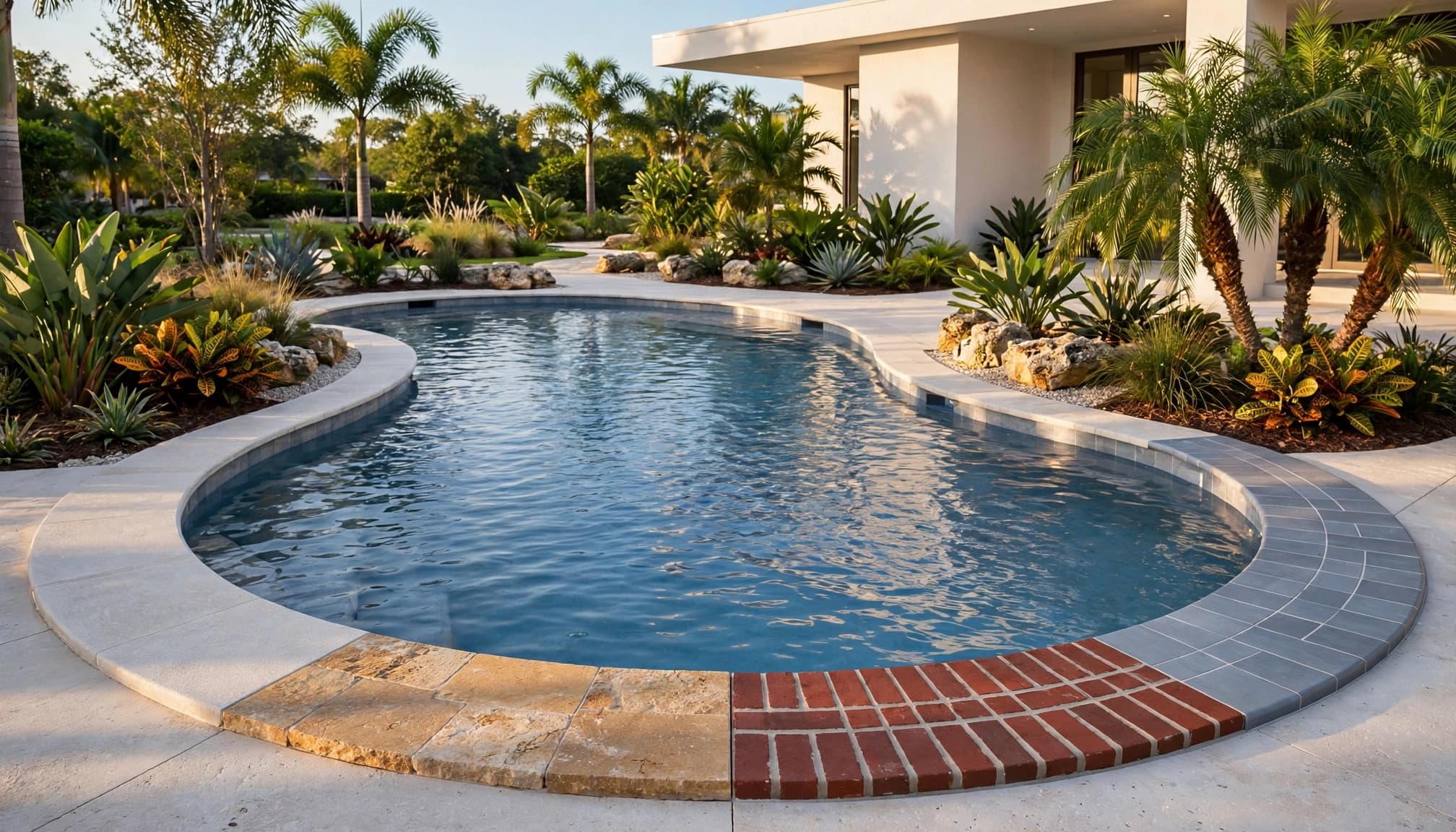
The table below provides a general comparison. Actual performance depends on product quality, installation, color, texture, exposure, and the existing pool structure.
| Material | Durability | Maintenance | Slip and heat considerations | Compatibility | Relative cost |
|---|---|---|---|---|---|
| Poured or precast concrete | Good when properly installed | Low to moderate | Texture improves grip; darker colors can become hot | Usually high with gunite pools | Low to moderate |
| Natural stone | Good, but varies by stone and finish | Moderate | Choose a textured, pool-suitable surface; heat varies by color and density | Good when detailed correctly | Moderate to high |
| Brick | Good with sound joints and proper installation | Low to moderate | Textured faces can provide good traction; heat is usually moderate | Often compatible with traditional pool designs | Moderate |
| Concrete pavers | Good and replaceable in sections | Moderate | Textured finishes can improve grip; color affects heat | Works well with compatible decks | Moderate |
| Porcelain | Very good when rated for exterior use | Low | Use a slip-rated poolside finish; heat depends on color and surface | Requires careful edge and substrate detailing | Moderate to high |
| Cast stone or specialty coping | Varies by product | Low to moderate | Finish and color determine grip and heat | Depends on dimensions and installation method | Moderate to high |
Concrete and brick
Concrete coping offers broad flexibility in shape, profile, color, and texture. It can work well around freeform gunite pools because installers can match curves and create a consistent transition to a concrete deck. Light colors and suitable textures can help manage surface heat and traction.
Brick coping provides a more traditional appearance. It can pair well with brick accents, older pool designs, and established landscaping. Its long-term performance depends on sound joints, stable support, and proper transition to the deck.
San Juan's services page specifically lists coping brick replacement. The final profile, color, condition of the existing support, and relationship to the deck should be confirmed during an estimate.
Stone, pavers, and porcelain
Natural stone gives the pool edge a varied, high-end appearance. However, stone types differ in porosity, texture, heat retention, and maintenance needs. A smooth decorative stone may not provide the same traction as a textured pool coping product.
Pavers offer design flexibility and can make future localized repairs easier because individual units may be replaced. The installer still needs to address the edge restraint, joints, elevation, and connection to the pool structure.
Porcelain can provide a clean, contemporary finish with relatively low routine maintenance. Poolside porcelain must be rated for exterior use and selected with slip resistance in mind. Its installation also requires careful cutting and support around curves, corners, drains, and transitions.
Repair, Resurfacing, or Full Coping Replacement?
Not every damaged pool edge needs to be removed. A professional can compare the location, number, and cause of defects before recommending a scope.
When spot repair may be enough
Spot repair may suit a limited issue in an otherwise stable coping system. Examples can include a small number of damaged units, isolated joint deterioration, or a localized finish problem with no visible movement around it.
The repair should match the existing material as closely as possible. Even a sound repair may remain visible if the original coping has faded, weathered, or changed color over time.
When full replacement makes more sense
Full replacement becomes more practical when damage appears throughout the perimeter, the coping no longer matches the deck, or repeated repairs have not solved the problem. It may also make sense when you want to change the pool's style during a larger renovation.
Full replacement does not automatically mean rebuilding the pool. The scope may include removing the old coping, preparing the edge, installing new material, and repairing adjacent tile or deck areas as needed.
Check the Bond Beam, Deck, and Pool Edge
The finished coping is only one part of the pool perimeter. A gunite pool has a reinforced upper edge, commonly called the bond beam, which supports the coping and connects with the surrounding construction.
Why the substrate matters
New coping needs a stable, properly prepared surface. If the supporting edge has movement, deterioration, or an irregular profile, installing new material without addressing that condition may lead to future problems.
A professional evaluation should identify whether the issue is limited to the coping or involves the bond beam, pool shell edge, deck, or joints. Ask for the findings to be included in the written scope of work.
When the deck should be included
The deck may need attention if it has settled, cracked near the pool, drains poorly, or no longer aligns with the proposed coping. Deck replacement is not required for every coping project, but the two areas must meet at the correct height and slope.
Pavers and spray deck are among the deck remodeling options listed by San Juan Custom Pools & Spas. The best choice depends on the existing deck, drainage, access, and the finish you want around the pool.
Coping should be evaluated as part of the pool perimeter, not as an isolated decorative strip.
What Happens During Pool Coping Replacement?
The exact sequence varies with the material and condition of the pool, but a typical project follows a clear set of planning and installation steps.
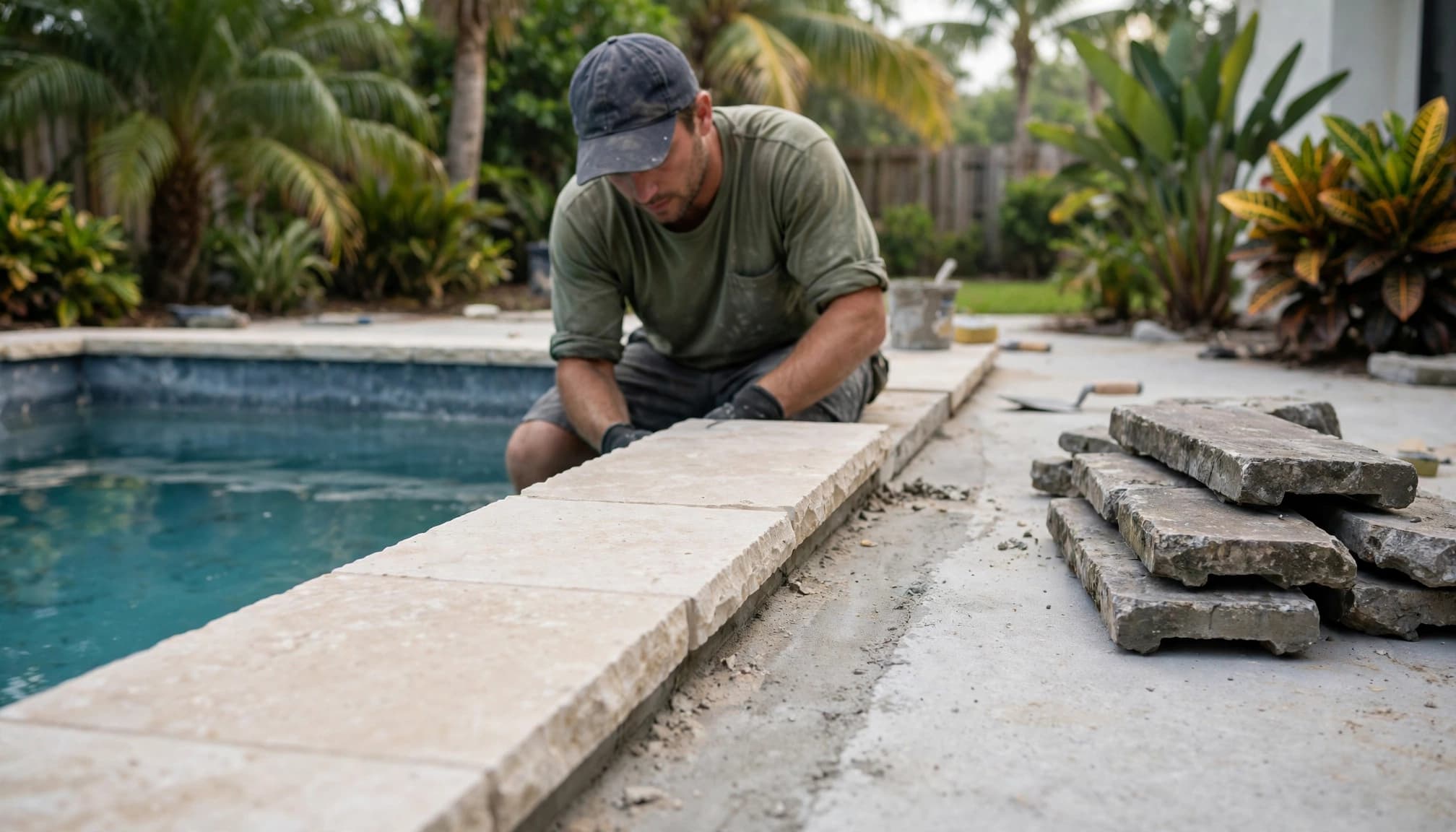
Inspection and preparation
The contractor first reviews the coping, waterline tile, bond beam, deck edge, drainage, and pool shape. Measurements help determine how many pieces or sections are required, especially around curves and raised walls.
The old coping is then removed with care. The exposed edge is cleaned and inspected. Any repairs to the supporting surface should be identified before new material is set.
Installation and finishing
The new coping is positioned to maintain a consistent line around the pool. Installers account for joints, corners, radius changes, elevations, and the transition to the deck.
After the coping is secured, the joints and adjacent surfaces are finished according to the selected material. Tile, deck repairs, sealers, or other work may follow if they are included in the approved scope.
San Juan's general construction process includes engineering and permits, brick and tile, deck work, and interior finishing. Renovation requirements vary, so homeowners should confirm the applicable process for their municipality and project scope. You can review our pool construction process to see how the company organizes larger pool projects.
How to Choose the Right Coping Material
Start with the conditions around your pool rather than choosing a sample in isolation. A material that looks attractive indoors may feel hot, slippery, or difficult to maintain beside a sunny pool.
Consider these questions during the planning visit:
- Does the material suit the pool's curves, corners, steps, raised walls, and existing deck?
- Will the selected texture provide comfortable footing when wet?
- How will the surface feel during the hottest part of the day?
- Does the color coordinate with the waterline tile, interior finish, home, and landscaping?
- Can damaged sections be replaced without disturbing a large area?
- Does the product require sealing, special cleaning, or regular joint maintenance?
- Will the proposed work require permits, engineering, inspections, or drainage changes?
Reviewing completed work can also help you compare edge profiles and deck transitions. Homeowners can view our pool remodeling projects for examples of renovated pools, tile work, and custom outdoor features.
When Coping Replacement Becomes a Larger Renovation
Coping replacement often exposes other opportunities to update an aging pool. You may decide to coordinate the project with interior replastering, waterline tile, deck remodeling, equipment updates, or screen enclosure work.
San Juan's listed renovation services include these types of improvements, along with additions such as spas, tanning ledges, and water features. Coordinating related work can reduce finish conflicts, but every addition should be evaluated for its effect on the existing pool, plumbing, electrical work, drainage, and permits.
A larger renovation may be appropriate when the coping, deck, interior finish, and equipment all show age. If the coping is the only issue, a focused replacement may provide the result you want without expanding the scope unnecessarily.
Frequently Asked Questions
How long does pool coping replacement take?
Project length depends on the pool's size, shape, material, access, removal conditions, repairs, weather, and related deck or tile work. A contractor should provide a schedule after inspecting the pool and confirming the scope.
Can new coping be installed over old coping?
Overlay installation may be possible in limited situations, but it depends on the existing material, elevation, stability, and the desired finished height. Covering an unstable surface can create problems, so the installer should approve the method after an inspection.
Is natural stone always cooler than concrete?
No material has one fixed temperature under every condition. Color, density, texture, shade, orientation, and local weather all affect surface heat. Compare pool-suitable samples outdoors and ask about the material's expected performance in your setting.
Should the pool be drained for coping work?
The need to lower or drain the pool depends on the coping design, removal method, pool edge, access, and the related work. The contractor should explain water-level requirements before the project begins.
Do I need a permit for coping replacement?
Permit requirements vary by location and scope. A simple finish repair may have different requirements than work involving structural repairs, deck changes, plumbing, electrical systems, or drainage. Confirm local rules before scheduling construction.
Conclusion
The best pool coping replacement is the one that matches the pool's structure, climate, deck, maintenance needs, and design. Concrete, brick, stone, pavers, porcelain, and cast products can all be suitable when the supporting edge is sound and the installation details are correct.
Start with a professional inspection, then compare the repair scope and material choices in writing. If you are planning an update in Southwest Florida, you can request a free pool renovation estimate before deciding whether your project needs a focused coping repair or a broader pool renovation.