
Choosing Variable-Speed Pool Pumps for Cape Coral Gunite Pools
A new gunite pool should feel effortless to own, but the pump behind it does much of the daily work. Choosing variable-speed pool pumps by horsepower alone can create a poor match for the pool's plumbing, filter, salt system, and water features.
The right pump depends on the entire hydraulic design, including flow requirements, pipe size, resistance, turnover needs, and operating schedule. A pool designer or licensed installer can calculate those requirements before construction begins, when the equipment pad and plumbing layout are still easy to coordinate.
Key Takeaways
- Pool pump sizing should follow the hydraulic design, not a horsepower number selected in isolation.
- A variable-speed pump can run at different speeds for routine filtration, cleaning, heating, or water features.
- Filter capacity, plumbing size, salt chlorination, automation, and feature loads all affect the final selection.
- Cape Coral's warm climate supports frequent pool use, so energy use, noise, maintenance, and service access deserve attention.
- The pump, electrical work, equipment pad, and plumbing should be planned together during the pool design process.
- Final flow rates, schedules, compatibility, and settings should come from the pool designer or licensed installer.
Why Pump Selection Matters for a New Cape Coral Gunite Pool
A pool pump moves water through the circulation system. It pulls water from the pool, sends it through filtration and sanitation equipment, and returns it through the pool's inlets, spa, or water features.
For a new gunite pool, the pump choice affects more than circulation. It can influence how well the filter works, whether a salt cell receives the required flow, and how consistently features such as bubblers or deck jets operate. That makes pump selection part of the pool design rather than a final equipment purchase.
San Juan Pools & Spas includes pool equipment installation services among its Cape Coral offerings. Homeowners should discuss the pump while reviewing the pool layout, plumbing plan, equipment pad, and intended features.
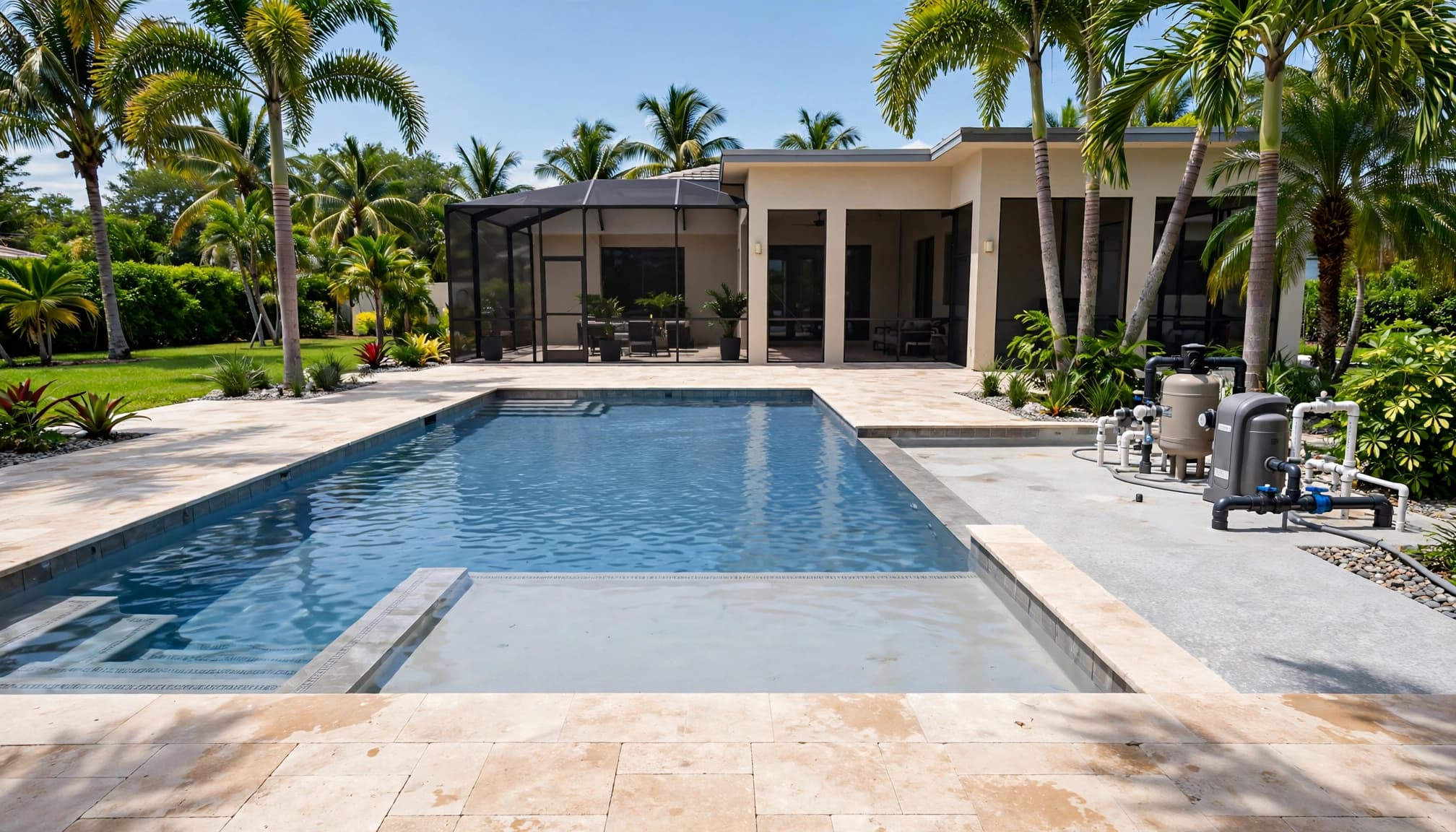
Look beyond horsepower
Horsepower describes the motor's rating, but it doesn't tell you how the complete system will perform. Two pumps with similar horsepower can produce different flow characteristics, control options, and operating requirements.
A pump that's too large may push more water than the filter or other equipment should handle. It can also make it harder to operate the system efficiently. A pump that's too small may struggle with a raised spa, a long plumbing run, or multiple water features operating at once.
Consider the pool's actual hydraulic design
The designer should account for pipe diameter, pipe length, bends, valves, elevation changes, and equipment resistance. Together, these factors create the system's head pressure, which affects how much water the pump can move.
The pool's volume also matters because the circulation plan must meet the desired turnover schedule. Turnover means circulating an amount of water equal to the pool's volume through the system. The required flow and operating time depend on the design, equipment, and usage expectations.
How to Choose Variable-Speed Pool Pumps by Design
Variable-speed pool pumps can operate at different speeds instead of running at one fixed rate. Lower speeds often suit routine filtration, while higher speeds may be needed for cleaning cycles, heating, spa operation, or water features.
That flexibility doesn't remove the need for proper sizing. It makes accurate design more important because the pump must perform across several operating conditions.
Match flow to each pool function
Ask the designer to identify the flow range needed for each major function. A new pool may have a basic filtration setting, a higher setting for a spillover spa, and separate requirements for a waterfall or attached water feature.
The ideal operating schedule may use different speeds at different times. However, the correct settings depend on the selected pump, filter, plumbing, salt system, and feature design. The installer should program and test those settings after the system is filled and started.
Account for plumbing before choosing the motor
Plumbing size affects resistance. Smaller pipes and longer runs generally create more resistance than larger pipes and shorter runs, but the actual calculation depends on the full layout.
This is one reason horsepower comparisons can mislead homeowners. A pump that appears powerful on paper may not be the right match for the pool's pipe network. The design should establish the required flow at the expected resistance, then identify equipment that can deliver it reliably.
Match the Pump to the Complete Equipment Package
A pump doesn't operate alone. It works with the filter, sanitation system, valves, heaters, automation controls, and return plumbing. Each component should be reviewed before the equipment order is finalized.
| System component | What to confirm | Why it matters |
|---|---|---|
| Plumbing | Pipe sizes, runs, bends, and elevation changes | These factors affect resistance and flow |
| Filter | Recommended flow range and cleaning needs | The filter must handle the circulation plan |
| Salt chlorination | Required flow and operating compatibility | The cell needs proper circulation to sanitize |
| Water features | Flow needed for each feature | Features may require separate operating settings |
| Automation | Supported equipment and control functions | Controls should match the installed system |
A clean equipment plan also leaves room for maintenance. The pad should provide access to the pump basket, filter, valves, salt cell, electrical connections, and any automation equipment.
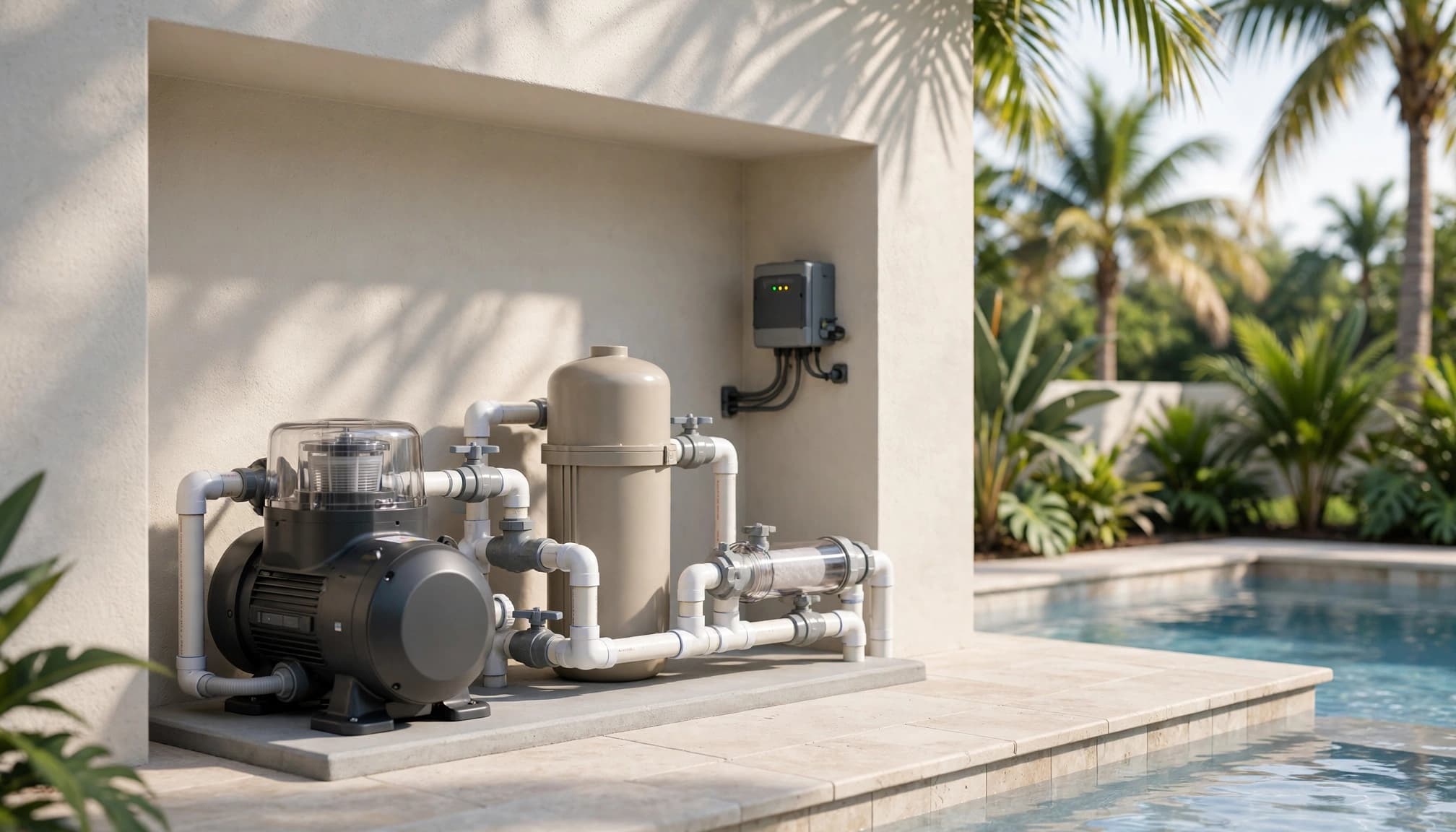
Plan for filtration and salt chlorination
A cartridge or other filtration system needs a pump that can circulate water through it without exceeding its intended operating range. The filter also needs enough flow for the pool's planned turnover and cleaning schedule.
Salt chlorination adds another requirement. The salt cell needs adequate water movement and proper installation within the circulation line. It also needs to work with the pump, filter, plumbing, and control system selected for the pool.
Saltwater systems still require water testing and routine pool care. They don't eliminate the need to maintain water balance, clean the filter, inspect the equipment, and follow the manufacturer's instructions.
Include features and automation early
Cape Coral homeowners often include sunshelves, spas, waterfalls, fountains, deck jets, bubblers, or fire bowls in a custom design. These features can create additional flow requirements and may need dedicated plumbing or valves.
San Juan's custom pool and spa features include options such as waterfalls, tanning ledges, and salt chlorination. Each feature should be shown on the plan before pump selection, especially when several features may operate together.
Automation can make daily operation easier by coordinating approved pool functions, lighting, and water features. The controls should be compatible with the equipment package, and the installer should explain which settings the homeowner can adjust safely.
Design for Cape Coral's Climate and Year-Round Use
Southwest Florida's warm climate allows many homeowners to use their pools throughout much of the year. That makes the circulation schedule a regular household operating cost rather than a seasonal concern.
Florida heat can also increase evaporation and affect water chemistry. A properly designed circulation system helps move treated water through the pool, but it doesn't replace testing, chemical adjustment, filter cleaning, or attention to water level.
If you want cooler-season swimming, ask about heating during the design stage. San Juan notes that installing a heat pump can provide the opportunity to use a pool year round. Actual comfort and operating cost depend on weather, water temperature, the pool's exposure, a cover, and the complete heating design.
The pump should also tolerate the daily conditions around the equipment pad. Direct sunlight, rain, salt air, and landscaping debris can affect access and maintenance. A protected, well-drained location with sufficient clearance makes service easier over time.
Compare Energy Use, Noise, and Long-Term Cost
A variable-speed pump can support different operating speeds, which gives the installer more control over the circulation schedule. Routine filtration may require a different setting than a spa, heater, or water feature.
Lower-speed operation can also reduce noise compared with running a pump at a higher speed, but the actual result depends on the pump, plumbing, equipment pad, mounting surface, and surrounding enclosure. Ask to hear a comparable installation if noise is a major concern.
Avoid judging value by the purchase price alone. Review the expected operating schedule, maintenance access, filter cleaning requirements, replacement parts, control compatibility, and warranty terms. A lower initial price may not be the best fit if the equipment doesn't support the pool's planned features.
No installer can promise one universal savings figure for every Cape Coral pool. Utility rates, run time, water features, plumbing resistance, weather, and homeowner settings all affect operating costs.
Coordinate the Pump With the Construction Process
Pump planning should happen before the pool is built, not after the shell and deck are complete. Plumbing routes, equipment placement, electrical connections, automation, and feature lines all need room on the plan.
San Juan's Cape Coral pool construction process lists 16 steps, including design, engineering and permits, shooting concrete, plumbing and backfill, pool equipment, electrical work, interior finish, and startup. That sequence shows why the pump cannot be treated as an isolated item.
The builder should confirm where the equipment pad will sit, how far it is from the pool, and how plumbing will reach the filter and return lines. The electrician should coordinate the required connections with the final equipment list. Any changes to the pool, spa, heater, salt system, or water features should be reflected before installation.
The process page identifies Hayward equipment as part of the company's equipment approach. It does not establish a specific pump model or guarantee that one model fits every pool. The final selection should follow the hydraulic calculations and the actual equipment package.
Questions to Ask Before Ordering the Pump
A clear conversation with the pool designer can prevent expensive changes later. Ask for the design assumptions in plain language, including the expected flow, operating schedule, and equipment limits.
Ask about performance and settings
Find out:
- What flow rate does the pool need for normal filtration?
- What flow is required for the spa, heater, cleaning cycle, and water features?
- What pipe sizes and plumbing distances affect the calculation?
- Which speeds will run during ordinary filtration?
- Will the pump need separate settings for the spa or features?
- How will the installer confirm flow after startup?
These questions focus the discussion on how the pool will operate rather than on horsepower alone.
Ask about service and future changes
Also confirm:
- Where can the filter, pump basket, salt cell, and valves be serviced?
- Which controls can be adjusted through the automation system?
- What happens if you add a feature or change the pool's use later?
- Which replacement parts and warranty terms apply?
- Who will explain startup, cleaning, and seasonal settings?
Homeowners can review the Cape Coral pool builder portfolio to compare completed pool layouts, water features, and equipment planning conversations. For a project discussion, use the site to request a Cape Coral pool estimate and bring your preferred pool size, spa plans, feature list, and heating goals.
FAQ About Variable-Speed Pool Pumps
Are variable-speed pool pumps right for every new pool?
They can be a strong option for many new pools because they allow more than one operating speed. The correct choice still depends on the pool's hydraulic design, filter, plumbing, sanitation system, features, and controls.
Does a larger horsepower pump provide better circulation?
Not automatically. A larger rating may be unnecessary or unsuitable if the plumbing and filter cannot use the additional flow. The designer should calculate the required performance at the system's expected resistance.
Can one pump run filtration and water features?
It may, depending on the design. Some pools use shared circulation with valves and programmed settings, while others use separate plumbing or equipment for particular features. The plan should identify which features may operate together.
Will a variable-speed pump reduce the pool's operating cost?
It may help manage energy use when the system operates at appropriate speeds and schedules, but no fixed savings amount applies to every pool. Runtime, speed, plumbing, water temperature, features, utility rates, and maintenance all affect the result.
Conclusion
For a new Cape Coral gunite pool, the right pump begins with the hydraulic plan. Horsepower is only one specification, while plumbing, turnover, filtration, salt chlorination, automation, heating, and water features determine how the system must operate.
Review those details with your pool designer or licensed installer before equipment is ordered. A well-matched pump can support dependable circulation, quieter operation, easier control, and more predictable long-term ownership.