Deck Jets vs Bubblers for Southwest Florida Pools
A water feature can change the feel of a backyard pool, but the wrong one can create extra splash, maintenance, and water loss. The deck jets vs bubblers decision depends on how you use the pool, where people sit, and how your yard handles Southwest Florida's sun, rain, and coastal air.
Deck jets create narrow streams that arc into the pool. Bubblers push water upward from a tanning ledge or shallow shelf. Both can look polished, but they offer different types of movement and work best in different pool layouts. Start with how each feature operates, then consider local conditions before choosing.
Comparing deck jets vs bubblers in a Southwest Florida pool
The biggest difference is location. Deck jets begin at the pool deck, while bubblers sit inside the pool, usually on a sun shelf or shallow step.
How deck jets work
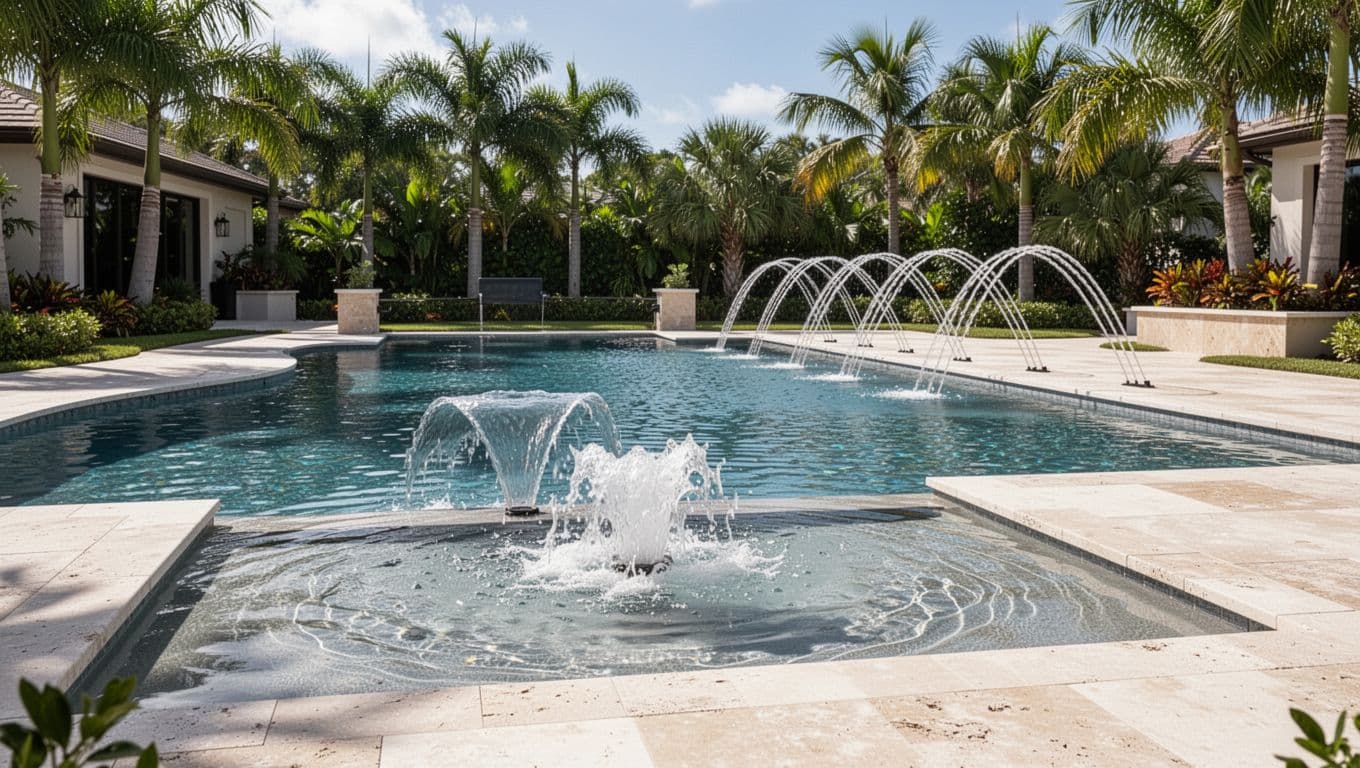
A deck jet uses a small nozzle installed in the surrounding deck. The nozzle sends a thin stream through the air and into the pool. Several jets can line one side of the pool, frame a spa, or create evenly spaced arcs along a curved edge.
Their height and direction can often be adjusted during installation. That matters in Southwest Florida, where wind can push a narrow stream off course. A qualified builder can position each nozzle so the water lands inside the pool instead of on the pavers or screen enclosure.
Deck jets are visible across the pool, so they work well when you want a feature that guests can enjoy from the lanai, outdoor kitchen, or seating area. They also leave the water shelf open for loungers, children, or shallow-water seating.
How bubblers work
A bubbler is a low fountain installed in a sun shelf, tanning ledge, or shallow step. Water rises a short distance and spreads across the ledge before flowing into the deeper pool.
Because the feature sits in the pool, you experience it up close. A bubbler adds gentle sound and movement beside a lounge chair, while also cooling the shallow ledge. It can create a focal point without sending water across a large section of the pool.
Bubblers need a suitable shallow area. If your design doesn't include a sun shelf or broad step, adding one during a remodel may require changes to the pool shell, plumbing, interior finish, and surrounding deck.
A deck jet draws attention across the pool. A bubbler creates activity in the place where people sit.
Southwest Florida conditions that affect your choice
A pool feature has to look good on a design plan and work well in the climate. Local weather affects water loss, surface finishes, equipment, and cleaning needs.
Intense sun, heavy rain, and evaporation
Southwest Florida's intense sun can make outdoor surfaces hot and increase evaporation. Moving water adds to that loss, especially when a feature sprays above the pool surface.
Deck jets tend to create more airborne water because their streams travel through the air. Wind can carry some of that spray onto the deck, nearby furniture, or screens. Bubblers usually keep the water closer to the surface, although they still add evaporation when they run for long periods.
Run time makes a major difference. A feature that operates during pool use may lose less water than one scheduled for hours every day. Automatic controls can help homeowners limit operation to selected times.
Heavy rain creates a different concern. Storms can raise the pool level quickly and introduce leaves, soil, and organic debris. A deck jet or bubbler won't solve drainage problems, so the pool design needs effective deck slopes, drains, and overflow planning.
Salt air, screens, and maintenance
Homes near the Gulf face salt-air exposure, even when they aren't directly on the waterfront. Salt air can affect exposed metal components, fasteners, fittings, and electrical equipment over time. Ask your pool professional which materials and finishes fit the location.
Screen enclosures also influence water-feature placement. A deck jet needs enough clearance for its arc, and a strong stream can strike the screen if the nozzle points too high. Bubblers avoid that issue because their movement stays inside the pool.
Both features need periodic attention. Debris can collect around nozzles, mineral deposits can affect water openings, and leaves may settle on a sun shelf. Pool chemistry, filtration, and routine cleaning remain important whether you select one feature or both.
Deck jets vs bubblers: pros and cons
Neither option is automatically better for every Southwest Florida pool. The right choice depends on the visual effect, pool shape, deck plan, and how close people will be to the water.
| Feature | Advantages | Potential drawbacks |
|---|---|---|
| Deck jets | Visible across the pool, flexible placement, strong visual movement, preserves shelf space | More exposed to wind, spray, deck traffic, and evaporation |
| Bubblers | Good for sun shelves, close-range sound, gentle movement, contained water action | Requires a shallow ledge, may interrupt lounging space, can splash nearby users |
The comparison becomes clearer when you look at each feature on its own.
Advantages and limitations of deck jets
Deck jets are a strong choice for homeowners who want a noticeable feature along the pool perimeter. Multiple jets can create a clean rhythm beside a rectangular pool or add movement to a freeform design.
They also work well for entertaining. Guests can see the streams from several areas of the yard, and the feature doesn't occupy the shallow ledge. When turned off, many deck-jet nozzles sit nearly flush with the deck.
However, placement requires care. The nozzles shouldn't sit where people walk, drag furniture, or place heavy planters. Paver replacement or deck resurfacing can also affect access to the fittings.
Wind is another limitation. An exposed deck jet may spray onto nearby surfaces, while a feature beside a tall screen wall may need careful aiming. More airborne water can also increase evaporation and leave mineral marks on light-colored decking.
Advantages and limitations of bubblers
Bubblers pair naturally with tanning ledges. They add movement beneath a seated person, keep shallow water circulating, and provide a pleasant cooling effect during hot afternoons.
Their lower profile suits homeowners who prefer a quieter design. A bubbler can mark the edge of a sun shelf without dominating the pool view. It also avoids the long arcs that may conflict with a screen enclosure or compact deck.
The tradeoff is space. A bubbler occupies part of the ledge, so the shelf needs enough room for both the feature and the people using it. Strong settings can create splash around lounge chairs, toys, or nearby coping.
Bubblers are also less visible from the far side of the property. If your main goal is a feature that guests notice immediately, deck jets may provide more visual reach.
Plan the feature with the pool and deck
Water features shouldn't be added after the main layout is complete. Their location affects the pool shell, deck, equipment, drainage, electrical work, and finished appearance.
Match the feature to your deck design
A row of deck jets looks best when it follows a deliberate line. That line might parallel the pool's long edge, frame a raised spa, or follow a gentle curve. Random spacing can make the feature look disconnected from the coping and pavers.
The deck also needs safe walking space around each nozzle. Keep fittings away from door paths, lounge-chair legs, and areas where children run. The stream should land within the pool, even when wind moves across the yard.
Bubblers need a different type of planning. The sun shelf should have enough open space around the fountain, with a finish that remains comfortable and slip-resistant when wet. The shelf's depth and shape also affect the height and spread of the water.
Review the proposed view from the lanai, pool steps, outdoor kitchen, and main seating area. A feature that looks balanced from one angle may feel crowded from another.
Homeowners planning a new pool can review custom pool design and remodeling services before selecting a feature. The surrounding deck, tanning ledge, screen enclosure, and equipment plan all need to work together.
Account for plumbing, equipment, and project timing
Deck jets and bubblers both require return plumbing, valves, and proper water flow. Depending on the design, a feature may share existing equipment or need a dedicated pump. The number of nozzles, distance from the equipment pad, pipe layout, and desired water height all affect the system.
Automation can make operation easier, especially for year-round outdoor use. You may want the feature available during gatherings without running it continuously. Controls can also help coordinate water features with lighting, a spa, or scheduled pool circulation.
Retrofit work is more complex than including a feature in a new build. Crews may need to open the deck, modify plumbing, cut into existing finishes, or verify that the equipment pad can support the added demand. Structural changes to a sun shelf require even more planning.
The pool planning, permitting, and installation process should include these decisions before excavation or deck construction begins. A licensed professional can also review electrical connections, bonding, drainage, and local code requirements.
A practical decision guide for local pool owners
Use these questions to narrow the choice before meeting with a builder:
- Choose deck jets if you want water movement that guests can see across the pool. They suit open pool edges, geometric layouts, and designs where the sun shelf needs to stay clear.
- Choose bubblers if your priority is a tanning ledge, shallow-water seating, or a feature people will enjoy at close range. They fit especially well beside lounge chairs and pool steps.
- Consider both when the property has enough space for separate visual zones. For example, deck jets can add movement along the far edge while bubblers bring activity to a sun shelf.
- Review wind and water use before approving the layout. Ask where spray will land during common wind conditions, how long the feature should run, and how the design will handle evaporation and storm-related overflow.
- Plan maintenance access around each nozzle and valve. A feature that looks attractive but cannot be reached easily will become harder to clean and repair.
- Compare the full project scope , not only the fixture. Cost factors include the number of nozzles, plumbing distance, pump and valve requirements, automation, deck modifications, tile or paver work, and retrofit access.
In a windy coastal yard, the best-looking deck-jet arc on paper may land outside the pool. Test the proposed direction and height against the actual deck, screens, and prevailing exposure.
Before construction or remodeling, consult a qualified local pool professional. Structural work, plumbing changes, electrical connections, bonding, drainage, permits, and code-specific decisions require site knowledge and licensed trades.
Conclusion
The deck jets vs bubblers choice comes down to the experience you want and the space your pool provides. Deck jets create broad visual movement and keep sun shelves open, while bubblers add gentle activity to shallow ledges and seating areas.
Southwest Florida's sun, rain, wind, salt air, screen enclosures, and year-round use should shape the final design. When placement, plumbing, drainage, and maintenance access receive equal attention, either feature can become a durable part of a custom pool.