
Hydrostatic Relief Valves for Southwest Florida Pool Renovations
An empty pool can face more pressure from the ground than it does when it's full. If you're planning a renovation, groundwater deserves attention before anyone starts draining the water. Hydrostatic relief valves can give that pressure a path into the pool, reducing the risk that it will push upward against the shell.
In Southwest Florida, the right draining plan depends on your property, the pool's construction, and conditions on the day of the work. Start by understanding what the valve can do, and where a pool professional still needs to make the call.
Why groundwater pressure matters during a renovation
A filled pool has substantial weight pressing down on its floor. Drain the water, and that counterweight disappears. If groundwater around or beneath the shell is high enough, it can press upward against the empty pool.
This matters most during work that leaves a pool empty or nearly empty. A short drain still calls for care because groundwater conditions can differ between nearby properties and change after heavy rain.
The risk is beneath the shell
Upward groundwater pressure can shift or lift a pool shell. Cracks and damage around the pool may follow. The outcome depends on the shell, its surroundings, and how much pressure develops, so a neighbor's trouble-free renovation isn't proof yours is safe to drain.
In places such as Cape Coral and Fort Myers, groundwater is a practical consideration for concrete-pool renovations. An experienced contractor should evaluate the site rather than assume the water table sits at a particular depth.
Water in the pool helps hold it down
Keeping water in a sound pool provides weight that helps resist uplift. Resurfacing and some other repairs, however, require a drained shell. That creates a temporary period when the crew must manage groundwater risk another way.
A relief valve can reduce pressure beneath an empty pool, but it cannot establish that draining the pool is safe.
How hydrostatic relief valves work
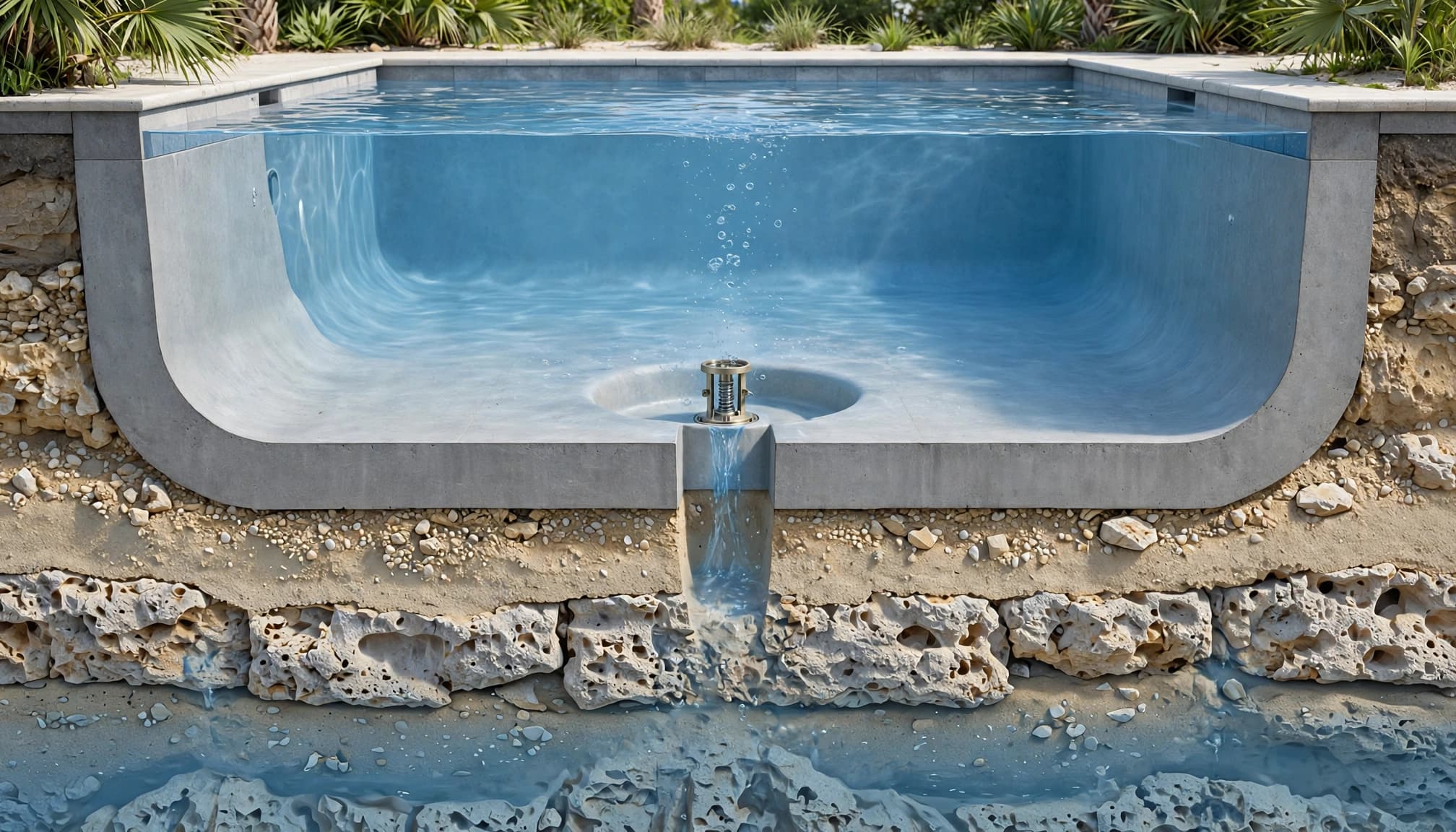
A hydrostatic relief valve is a fitting that can allow groundwater to enter a pool when pressure outside the shell exceeds pressure inside it. On many concrete pools, the fitting is at the deepest point, often in or near the main-drain sump. Location and design vary, so its presence shouldn't be assumed.
Pressure determines which way water moves
When the pool is full, pressure from pool water generally helps keep an automatic relief valve closed. As the water level falls, pressure beneath the floor may become greater. The valve can then open, admitting groundwater into the pool and reducing the pressure difference across the floor.
During a renovation, incoming water can seem inconvenient. Yet its appearance may be evidence that groundwater pressure needs attention before work continues.
Relief depends on a working passage
A valve only helps when its passage is appropriate for the pool and functioning as intended. A fitting can be missing, blocked, damaged, or unsuitable for the conditions at hand. It also has limits if groundwater arrives faster than the opening can relieve pressure.
For that reason, hydrostatic relief valves are part of a groundwater plan, not a substitute for one. A pool professional may need to assess conditions outside the shell or arrange dewatering.
When a renovation calls for closer groundwater checks
The need for a check isn't limited to visibly wet yards. Renovation plans, pool records, and recent weather all matter when deciding how to drain.
Interior work that requires an empty shell
Replastering or replacing an interior finish commonly requires access to the drained pool. Some tile, coping, or equipment projects can be completed with less water removal, depending on the scope. Ask your contractor how low the water must go and how long it needs to stay there.
A job that expands after the old finish comes off may extend that empty-pool period. Discuss who will monitor site conditions if repairs take longer than planned.
Unknown valve history or past water problems
Older pools may have limited records of their drain assembly or previous renovations. If nobody can confirm what relief fitting is present, an inspection is more useful than guessing from the pool's age. Report past groundwater seepage during draining, even if it stopped after refilling.
Also mention standing water on the property or a recent stretch of heavy rain. Those observations don't establish groundwater depth, but they give the contractor reasons to investigate.
Plan the drain before the pump starts
Draining is a controlled stage of a renovation, not simply a way to clear the work area. The contractor should account for the pool's construction, groundwater, valve access, weather, and the time needed to complete repairs and refill.
Inspect the pool and site conditions
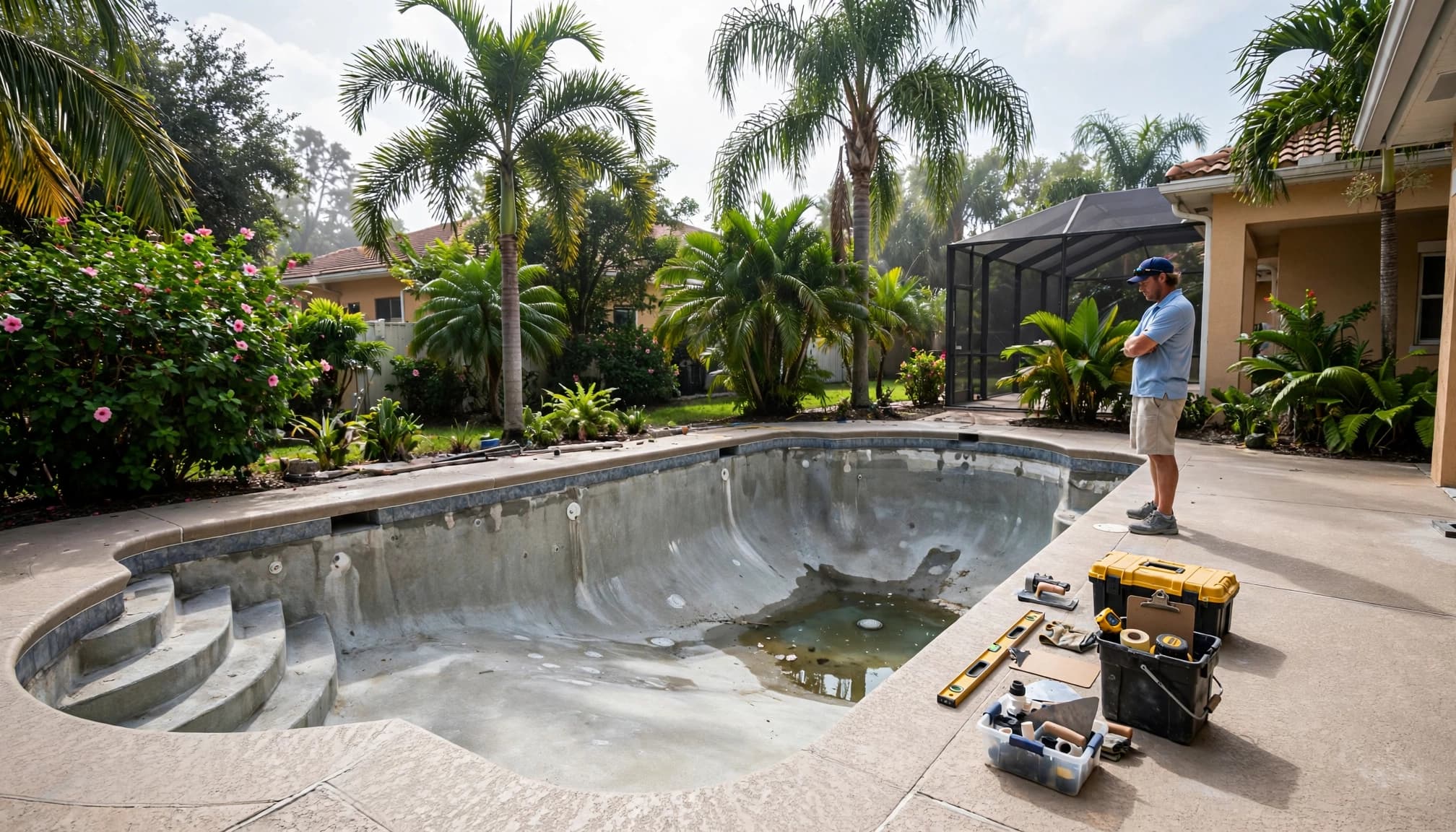
A qualified pool professional can identify the floor fitting, examine its accessible components, and decide whether further groundwater evaluation is needed. Depending on the site, a test hole or well point may help show what is happening outside the shell.
Ask how the crew will respond if water enters through the relief opening. You should also know who makes the decision to pause work when conditions differ from the plan.
Make room for dewatering if needed
Where groundwater is a concern, a professional may use a suitable dewatering approach to lower water outside the pool while it is empty. The method and duration depend on the property. A relief valve alone may not handle the conditions, especially if groundwater continues to feed the area around the shell.
Scheduling matters too. A forecast of heavy rain can change the work plan, even if the pool was safe to drain on an earlier visit. Coordinate the drain with the renovation crew instead of emptying the pool days before they arrive.
For homeowners comparing interior, deck, and equipment work, San Juan Custom Pools & Spas outlines its pool remodeling and renovation services. Set the draining plan alongside the full project scope so delays and added repairs don't leave the shell empty unexpectedly.
What to watch while the pool is empty
An empty shell gives the crew access to repairs, but it also removes the water weight that normally helps oppose uplift. Conditions should be monitored through the work period, not checked only when the pump shuts off.
Groundwater entering the pool
Water appearing at a floor relief opening may mean the fitting is doing its job. It can also complicate surface preparation or interior finish work. The response depends on the water source, the amount entering, and the condition of the pool.
Don't plug an opening simply to keep the work area dry. The crew should identify why water is entering and decide whether dewatering or a change in schedule is necessary.
Fittings need deliberate handling
Some pool-draining procedures call for opening a relief point while the pool is empty and restoring its closure during refill. That isn't a universal instruction for every valve. Automatic valves, removable plugs, and drain assemblies have different parts and service procedures.
Avoid removing a floor fitting yourself, particularly when groundwater conditions are unknown. A professional can check the assembly and determine whether seals or other components need replacement before the pool returns to service.
Refilling is part of the groundwater plan
The risk doesn't disappear the moment renovation work ends. Refilling restores weight inside the pool, but the crew still needs to coordinate the water level with any open relief point and outside groundwater controls.
Close and check the fitting at the right time
A relief opening left unsealed can allow unwanted water movement after the pool is back in use. Closing it too early, before the shell has enough water weight or groundwater is controlled, may create a different problem. Your contractor should follow the procedure appropriate to the pool and fitting.
Ask who will inspect the valve, document any parts replaced, and confirm the assembly is ready before finishing the refill. If the main-drain cover was disturbed, it also needs proper reinstallation by the crew.
Investigate seepage or water loss
After refill, watch for unusual water loss or persistent seepage near accessible fittings. Evaporation and normal filling adjustments can make early changes hard to interpret. A qualified pool professional can investigate rather than assuming the relief valve is the cause.
Keep a record of the fitting and any groundwater issues found during the renovation. That information can help the next crew plan future interior repairs.
Choosing valve hardware for an existing pool
Relief fittings aren't interchangeable simply because they perform the same task. Thread size, sump design, seal type, and access all affect what belongs in an existing assembly. Have a pool professional identify the installed parts before ordering a replacement.
For example, POOL360 lists a spring-loaded ABS hydrostatic relief valve with a self-cleaning O-ring seal in 1-1/2-inch and 2-inch male-pipe-thread versions. Hayward's SP1056 is listed as a 1.5-inch hydrostatic relief valve and drain fitting. Those product details help illustrate why matching the actual assembly matters; they aren't recommendations for every pool.
A supplier's replacement guidance may also differ by product. The POOL360 listing recommends replacing its valve whenever the pool is drained. Your contractor can assess the installed fitting, its condition, and the manufacturer's instructions during the renovation.
Key Takeaways
- An empty or nearly empty pool can face damaging upward pressure when groundwater outside the shell is high.
- Hydrostatic relief valves can admit groundwater to reduce that pressure, but they don't guarantee a safe drain.
- A qualified pool professional should assess the site, plan any needed dewatering, and manage the fitting through refill.
Frequently asked questions
Does every Southwest Florida pool have a hydrostatic relief valve?
No. Pool construction and drain assemblies vary, and you can't confirm a valve's presence by looking at the water surface. Have a qualified pool professional identify the fitting before planning a full drain. This is especially useful if you bought a home without records of earlier pool work.
Can I drain my pool if it has a relief valve?
The valve's presence alone doesn't make draining safe. Groundwater conditions, the shell, the valve's condition, and the length of the renovation all matter. Consult a qualified pool professional before draining, particularly for interior resurfacing that requires the pool to stay empty.
Why is water entering the pool during renovation?
If water enters through a relief opening, pressure outside the shell may be greater than pressure inside it. Other leaks or sources are also possible. Tell the renovation crew where and when the water appeared so they can identify its source and decide how to proceed.
Conclusion
Draining removes the water weight that helps hold a pool shell in place. Hydrostatic relief valves can reduce groundwater pressure , but their protection depends on the fitting and site conditions.
Before your Southwest Florida pool renovation, ask a qualified professional to plan the drain, monitor the empty shell, and coordinate the refill. For a site-specific discussion, you can request a pool renovation estimate from San Juan Custom Pools & Spas.