
Gunite Pool Renovation With a Screen Enclosure
Yes, you can often complete a gunite pool renovation without removing the screen enclosure. Resurfacing, tile replacement, and other updates may be possible with the cage intact, provided its condition and the available working space support the work.
The biggest distinction is between updating existing surfaces and changing the pool's structure or surrounding deck. Start with the renovation scope, then identify where the enclosure affects it.
Key Takeaways
- Interior finish work and localized updates often leave the screen enclosure in place.
- Pool expansions, major deck changes, or deteriorated framing may call for partial removal or replacement.
- The proposal should explain enclosure protection, temporary pool safety measures, and responsibility for restoration.
Gunite Pool Renovation Work That Often Keeps the Cage
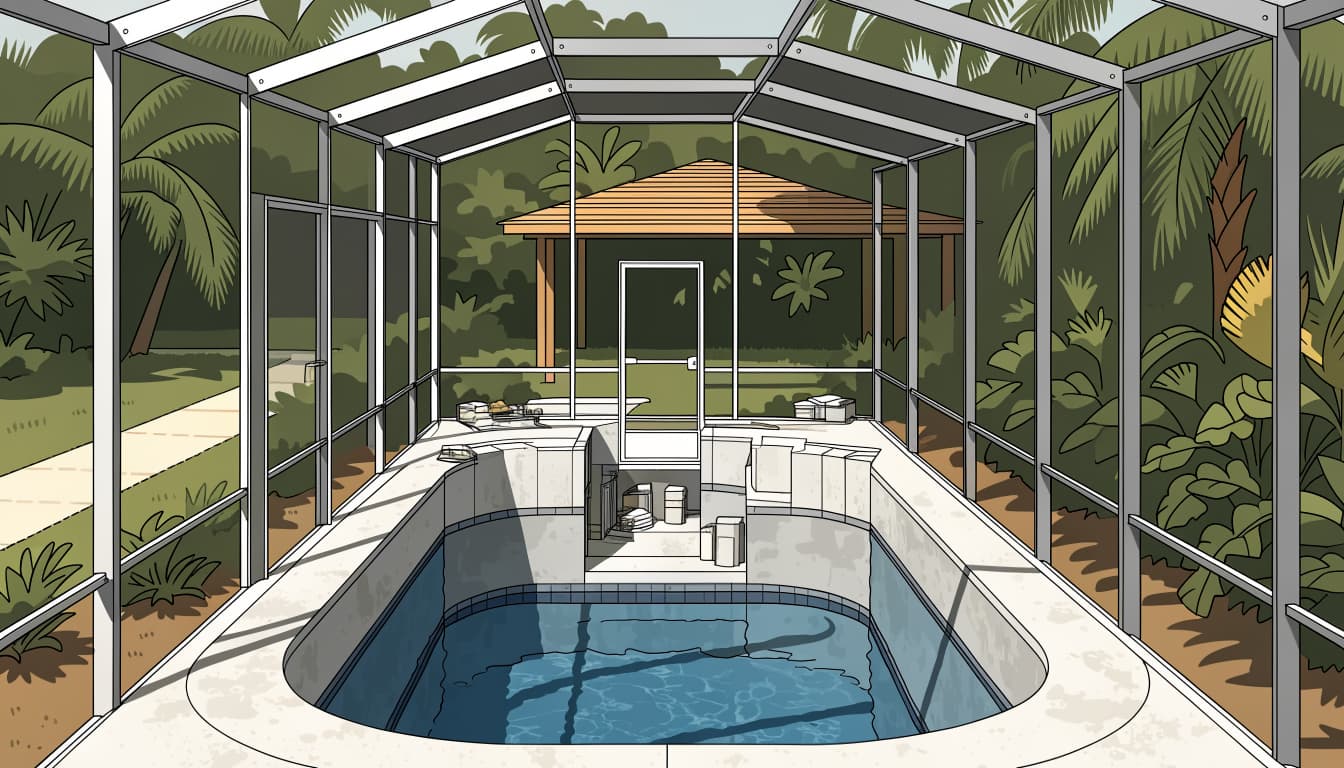
Resurfacing and interior repairs
Replacing worn plaster, quartz, or pebble finishes generally doesn't require changing the enclosure's footprint. Crews work within the existing shell, although preparation, debris handling, and finish application still require adequate working space.
The underlying condition matters more than appearance alone. Our guide to resurfacing versus rebuilding explains why a rough finish doesn't automatically mean the pool needs reconstruction.
Tile, coping, and selected upgrades
Waterline tile replacement and some coping repairs can also proceed beneath an existing cage. However, coping work needs closer coordination when nearby deck surfaces or enclosure attachments are involved.
Equipment updates may leave the enclosure untouched when the work stays at the equipment pad. Keep service space around the pump, filter, heater, and controls unobstructed.
An interior bench or tanning ledge doesn't automatically require cage removal either. Those changes still need structural and plumbing planning.
When Partial or Full Removal May Enter the Plan
A limited opening may be enough
Some projects need a temporary opening rather than removal of the entire enclosure. The important distinction is between removing screen mesh and altering the aluminum frame.
Screen mesh doesn't provide the same function as posts, beams, or structural connections. An enclosure professional should direct changes involving framing and attachments. Pool crews shouldn't treat a structural member as something that can simply come out and go back later.
Larger changes can affect the whole enclosure
Expanding the pool footprint, adding an attached spa, or substantially changing the deck may conflict with existing posts or enclosure boundaries. A taller feature can also conflict with the roof.
Meanwhile, deteriorated framing, corroded fasteners, or damaged attachment points can make retaining the cage less practical. Full replacement may become part of the broader renovation rather than a requirement of the pool finish itself.
The distinction between surface damage and gunite pool crack repairs also matters before the final scope is set.
Protect the Screens, Frame, and Surrounding Deck
Keeping the enclosure in place creates a protection obligation. Removing old finishes and tile can produce dust, fragments, and slurry near vulnerable surfaces.
The work plan should identify protective coverings for the frame, nearby glass, coping, and deck areas that will remain. Protection must also preserve drainage and avoid obstructing equipment ventilation or service access.
Keeping the cage standing doesn't mean leaving it unprotected. Demolition and cleanup need their own protection plan.
Record existing tears, dents, loose hardware, and corrosion before work begins. That condition record helps distinguish pre-existing problems from construction damage.
Also, plan for any interruption to the pool barrier. Temporary openings must not leave children or pets with uncontrolled access to the water or work area.
Coordinate Pool, Deck, and Enclosure Work
A shared schedule helps prevent one trade from undoing another's completed work. Pool repairs, plumbing changes, deck work, enclosure adjustments, inspections, and finish application need a coordinated sequence.
Complete concealed repairs before covering those areas. Likewise, leave inspection areas accessible until that stage is complete. Landscaping, soil, mulch, and pavers placed too early can block unfinished work.
Plan enclosure restoration around the remaining pool work so crews don't have to disturb newly repaired screens. Keep deck drains and equipment access clear throughout the project.
Finally, treat refilling and startup as part of the renovation. The new finish needs its specified water chemistry and care while any remaining backyard work continues nearby. Follow the finish-specific startup instructions.
Questions to Ask Before Work Begins
Your proposal should answer more than whether the enclosure can stay. Ask these questions during the planning conversation:
- Which screen sections, framing components, or attachments are included in the work?
- Who handles enclosure changes, protection, accidental damage, and final restoration?
- How will the project maintain pool safety when an opening is unsecured?
- What happens if surface preparation reveals shell damage or deteriorated enclosure connections?
- Which repairs, inspections, cleanup tasks, and startup services are included?
Get the answers in writing. A clear change-order process should document unexpected conditions and require approval before additional work begins.
Frequently Asked Questions
Does resurfacing automatically require cage removal?
No. Resurfacing works within the existing pool shell, so the enclosure can often remain. Its condition and the space available for preparation and application still affect the plan.
Can a spa or tanning ledge fit beneath the existing enclosure?
Sometimes. A ledge inside the shell may preserve the surrounding layout. An attached spa can affect the pool footprint, deck, plumbing, and nearby enclosure posts, so it needs broader planning.
Keep the Enclosure Decision Tied to the Renovation
Many surface-focused renovations can preserve an existing screen cage. Structural changes and enclosure deterioration deserve a broader plan before work starts.
The strongest proposal defines what stays, what changes, and who restores it . Our pool renovations and remodeling include finish updates, tile and coping replacement, and design changes. We can discuss those options alongside your existing enclosure during a free estimate.