
In-Floor Pool Cleaning Systems for Cape Coral Pools
A new pool gives you one chance to place plumbing beneath the shell before concrete, tile, and decking make changes far more difficult. For Cape Coral homeowners, in-floor pool cleaning systems deserve a clear decision during the earliest design conversations.
These systems can support circulation and move debris toward collection points, but they don't remove every cleaning task. A good plan matches the pool's shape, equipment pad, finish, and how your family expects to use the water.
How In-Floor Pool Cleaning Systems Work
An in-floor system uses cleaning heads set into the pool floor and sometimes steps or benches. At scheduled intervals, groups of heads rise and direct filtered water across the surface. The moving water guides leaves, sand, and settled debris toward the main drain, skimmer, or another collection area designed into the pool.
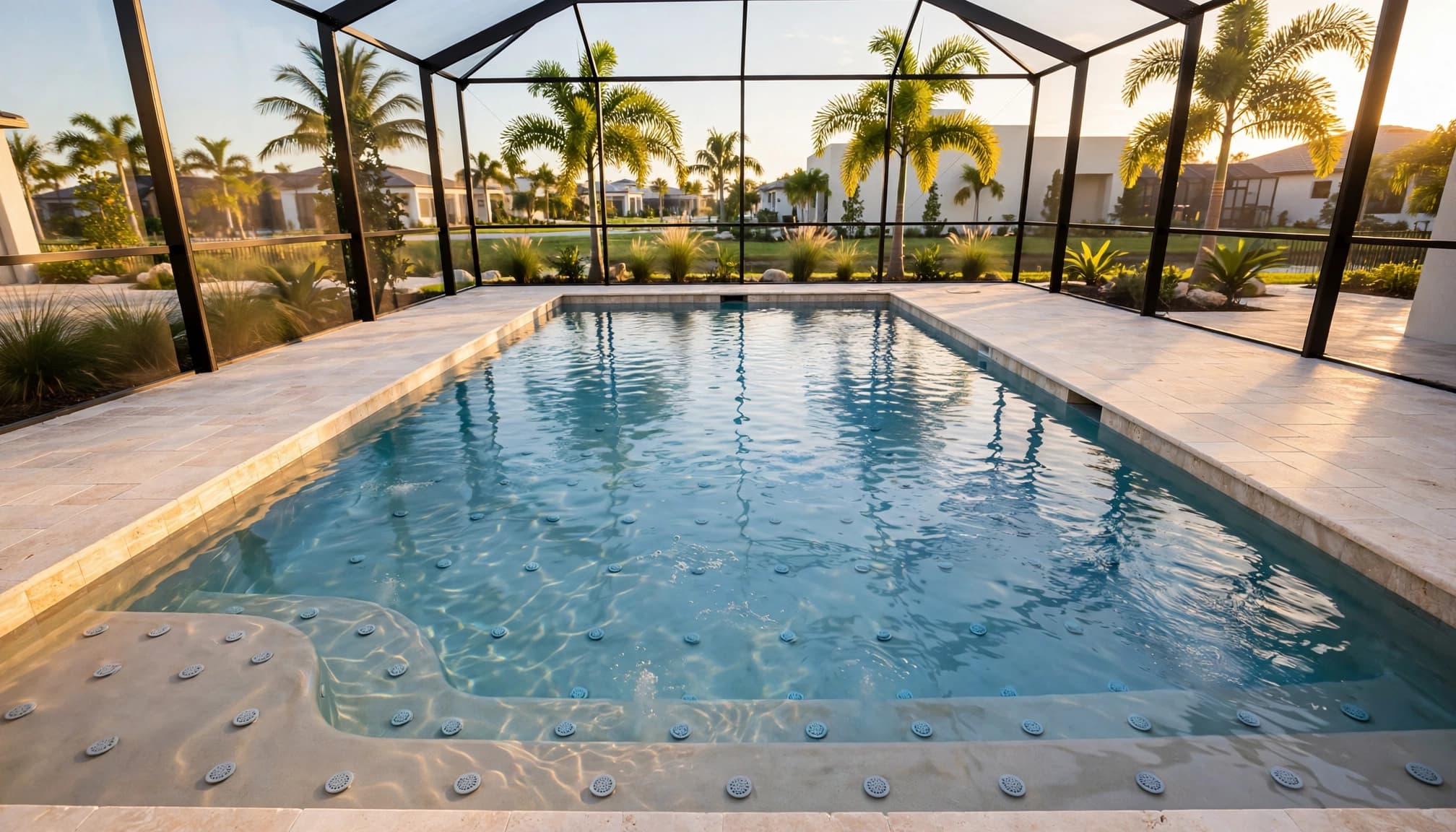
Cleaning heads work as part of circulation
The heads need dedicated plumbing lines, controlled water flow, and a compatible distribution method. Each zone receives water in sequence rather than every head operating at once. That arrangement helps move debris through areas where it tends to settle.
Pool contours matter. A broad shelf, curved wall, deep hopper, raised spa, or long bench can interrupt water movement. The design should account for those areas before the shell is built.
They are different from water features
Deck jets, bubblers, fountains, waterfalls, and spillways move water for appearance and sound. They may add surface motion, yet they are not cleaning systems. Likewise, a standard return fitting circulates filtered water but doesn't create the planned floor-level coverage of an in-floor setup.
Some homeowners pair a cleaning system with a sunshelf, spa, or water feature. Those choices can work together, but each needs its own plumbing plan and valve controls.
In-floor cleaning is part of the pool's hydraulic design, not an automatic water feature added after the pool is complete.
Plan Plumbing Before Excavation
The time to decide on an in-floor cleaner is before excavation and steel work. Once a gunite shell is in place, adding concealed floor plumbing may require demolition and patching. Review the intended system during the layout stage, then confirm it in the signed construction scope.
The published custom pool construction process for San Juan Pools & Spas places design, engineering and permits, excavation, concrete work, plumbing and backfill, equipment installation, and electrical work in a defined sequence. In-floor plumbing needs to be coordinated within those early steps.
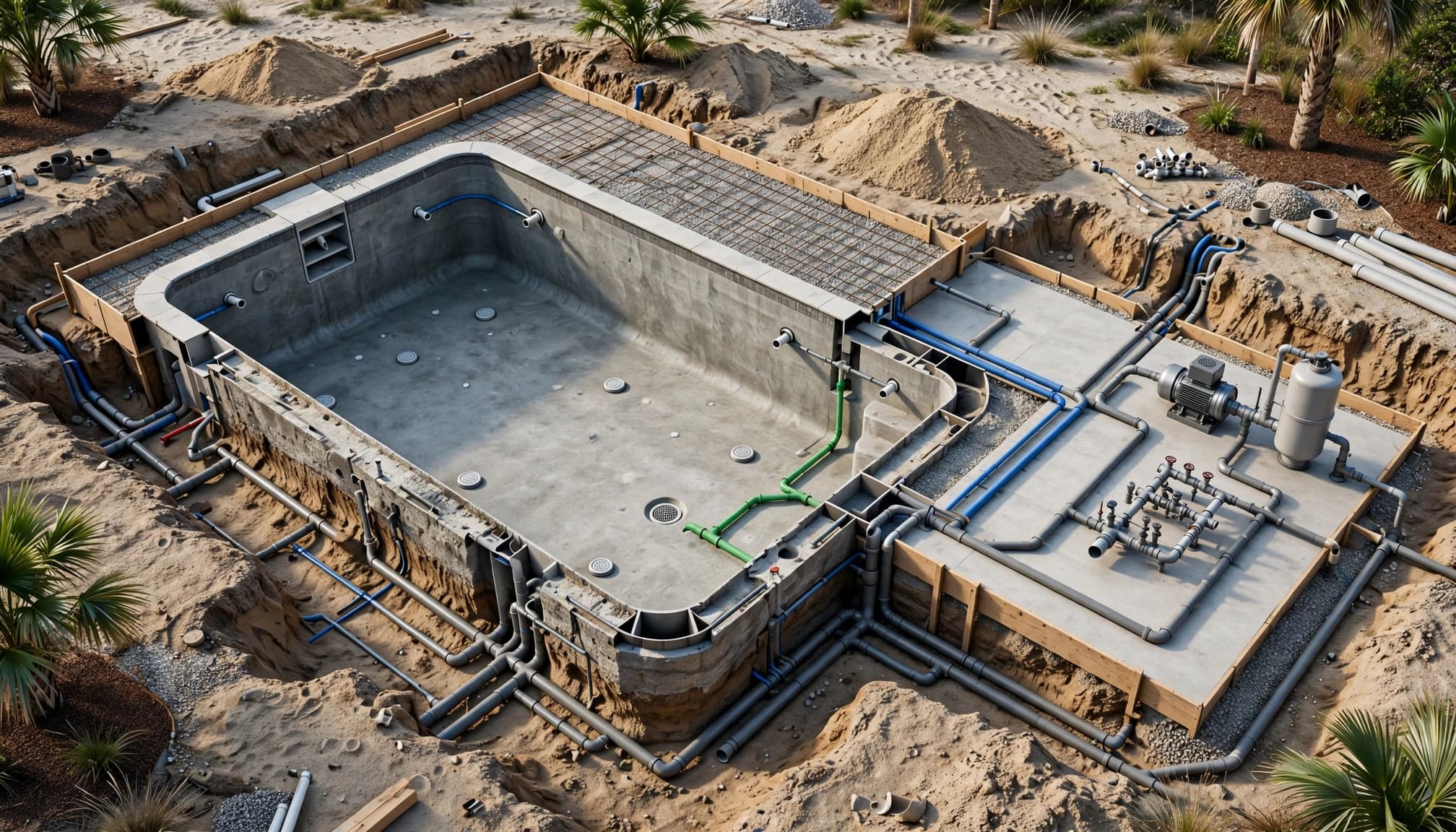
Map cleaning zones with the pool layout
Ask for a plan that shows the pool's main drain, skimmers, return fittings, floor-head locations, and plumbing routes. The drawing should also show steps, benches, a tanning ledge, and any attached spa.
A builder or qualified pool professional can identify places where debris may collect. Wind direction, nearby palms, screen enclosure openings, and roof runoff can all affect where leaves and grit enter the water.
Protect access for future service
Valves, distribution components, and equipment need accessible locations. Avoid burying service points beneath permanent decking, planters, or built-in outdoor kitchens. Access panels should fit the finished backyard design without becoming an afterthought.
Also ask how the plumbing will be pressure-tested before the deck and interior finish are installed. Written documentation helps establish what was installed beneath the surface.
Match the System to Pumps, Filters, and Controls
In-floor pool cleaning systems rely on the entire circulation package. A cleaning layout that isn't matched to the pump, filter, valves, and controls may not operate as intended. Request the equipment schedule before construction starts, rather than choosing components one at a time.
Confirm equipment compatibility in writing
The pump must provide the flow and pressure required by the proposed cleaning design while still supporting regular filtration. The builder should identify the filter type, valve arrangement, cleaning controller or distribution device, and any separate booster equipment if the selected system requires it.
San Juan Pools & Spas lists Hayward equipment in its construction process. However, homeowners should still ask whether the proposed in-floor system is compatible with the exact equipment package, not assume that any pump or automation setup will work.
Keep automation and water chemistry separate
Automation can schedule pumps, lights, heat, and water features. It may also coordinate cleaning cycles when the chosen equipment supports that function. A salt chlorination system manages chlorine generation, while an auto-fill system maintains water level. Neither replaces proper circulation design or routine water testing.
For homeowners comparing pool equipment installation in Cape Coral, the useful question is simple: which functions share a pump or control panel, and which need separate plumbing or electrical provisions?
Design the Pool Floor, Finish, and Deck Together
An attractive pool floor can also influence how debris moves. Gentle slopes, bench edges, and depth transitions all shape the path of water across the interior. A cleaning system should fit the finished pool, not a generic rectangle drawn before the final amenities are selected.
Account for benches, shelves, and spa spillways
Large sunshelves invite lounging, but their shallow water can collect fine debris. Benches and swim-out steps also create corners that need careful circulation planning. If a raised spa spills into the pool, its return flow may affect movement near that wall.
Bring feature choices into the first design meeting. The Cape Coral pool construction portfolio can help homeowners compare how tile, water features, and custom shapes change the appearance of a finished backyard.
Choose finishes with maintenance in mind
Pebble, quartz, and plaster finishes each have a different texture and visual effect. The cleaning heads must sit correctly with the specified interior finish so they operate freely and look integrated after the pool is filled.
Deck decisions matter too. Deck drainage should direct rainwater away from the pool when possible, since runoff can carry mulch, soil, and leaves into the water. Cape Coral's heavy summer rain makes a thoughtful drainage plan part of routine pool care.
Set Realistic Maintenance Expectations
A properly designed in-floor cleaner can reduce the amount of debris that settles in open areas. Still, it doesn't eliminate brushing, skimming after storms, vacuuming when needed, filter care, or water testing. Screened pools also collect pollen, insects, and fine debris that may need manual attention.
Follow the equipment manufacturer's schedule
Pop-up heads, valves, filters, pumps, and automation controls need periodic inspection. Ask the installer for the model numbers, manuals, warranty terms, start-up instructions, and recommended service intervals at handover.
Watch for uneven debris movement, a head that doesn't rise, reduced circulation, or a change in pump noise. Addressing a small performance issue early can prevent a larger service visit later.
Plan for Southwest Florida conditions
Summer downpours can dilute pool chemistry and add debris. Hurricanes and tropical storms can leave a pool with leaves, branches, and sediment that exceed any automated cleaning system's normal workload. During those events, manual cleanup and filter attention are still part of ownership.
A heater, salt system, and automation package can make pool care more convenient. Yet each added component creates another item that needs accessible service space and a clear operating plan.
Consider Long-Term Value Before Approving the Upgrade
An in-floor system increases the scope of a new build because it adds specialized floor components, plumbing, and controls. The right choice depends on your pool shape, nearby vegetation, cleaning preferences, equipment budget, and willingness to maintain a more complex circulation setup.
Compare the full ownership picture
Ask for the installed system, required equipment, electrical needs, startup, and warranty coverage as separate written items. Avoid comparing proposals by one line-item price alone. A lower initial figure may omit equipment or service access that another proposal includes.
In-floor cleaning can be a sensible choice when it is designed into the pool from the beginning. It may be less appealing when a simple pool shape, limited debris exposure, or a preferred robotic cleaner meets your needs with fewer built-in components.
Get the design details before signing
Before approving the plan, request answers to these points:
- Ask whether the floor cleaning heads, plumbing lines, valves, and controls are included in the contract scope.
- Confirm how the system works with the selected pump, filter, heater, salt chlorinator, and automation package.
- Review where future service access will be located after decking, landscaping, and a screen enclosure are complete.
- Verify that the final design follows applicable local requirements and is reviewed by a qualified pool professional.
Key Takeaways Before You Build
- In-floor pool cleaning systems must be planned before the gunite shell and deck are complete.
- Cleaning heads, plumbing zones, circulation equipment, and service access should appear on the approved design.
- Water features and standard return fittings are not substitutes for a purpose-built floor cleaning system.
- Expect ongoing skimming, brushing, water testing, and filter maintenance, even with automated cleaning.
- A detailed written scope gives you a stronger basis for comparing equipment and construction proposals.
Frequently Asked Questions
Can an in-floor system be added to an existing pool?
It may be possible in limited remodeling situations, but installing concealed floor plumbing after construction can require substantial demolition. For that reason, the system is usually easiest to evaluate during a new pool design.
Will an in-floor cleaner remove the need for a robot or manual vacuum?
No. It can help move debris through the pool, but storm cleanup, fine debris, walls, steps, waterline care, and unusual buildup may still require manual tools or a robotic cleaner.
Does every Cape Coral gunite pool need an in-floor cleaning system?
No. The decision depends on the pool's design, site conditions, nearby trees, equipment preferences, and budget. A qualified pool professional can compare it with other cleaning approaches for your specific backyard.
Can a pool have both in-floor cleaning and water features?
Yes, if the plumbing, pump capacity, controls, and electrical plan account for both. Discuss waterfalls, bubblers, deck jets, spas, and fire features early, because each can affect the equipment layout.
Build the Cleaning Plan Into the Pool Design
The strongest time to evaluate an in-floor system is before the first excavation begins. A complete drawing, compatible equipment schedule, and accessible service plan help prevent costly changes after the shell, finish, and deck are complete.
A well-planned pool still needs regular care, but in-floor pool cleaning systems can become a useful part of a coordinated circulation design. Homeowners ready to discuss a custom build can request a Cape Coral pool estimate and bring these questions to the first design meeting.