
Gunite Pool Demolition Options for Florida Renovations
An aging pool can limit your backyard before it becomes an obvious structural problem. For Southwest Florida homeowners, gunite pool demolition may create a cleaner starting point for a new pool, spa, deck, or complete outdoor renovation.
The right scope depends on the existing shell, access to the property, drainage plans, utilities, and the design you want afterward. Before choosing a method, compare the available renovation paths and ask the contractor to explain what each one means for your site.
Key Takeaways
- A dated gunite pool may need resurfacing, remodeling, partial removal, or complete replacement.
- Demolition decisions should follow a site assessment, not a general price-per-square-foot estimate.
- Access, hauling, grading, drainage, utilities, and deck removal can affect the scope and cost.
- Local requirements vary by municipality and project, so confirm permits and inspections with your contractor and local authorities.
- The best demolition plan supports the finished backyard design, rather than treating removal as a separate job.
When an Aging Gunite Pool May Need a Renovation
Gunite pools are concrete swimming pools that can serve a home for years. Over time, however, the interior finish, tile, coping, deck, equipment, plumbing, and surrounding layout may no longer fit the property or the owner's needs.
Sometimes a remodel can update the pool without removing the shell. Other projects require a larger reset because the homeowner wants a different shape, a new location, more deck space, or features that the existing structure cannot support.
What an existing-pool renovation can include
A renovation may involve a new interior finish, replacement tile, updated coping, modern equipment, a new deck, or added features. Depending on the design, homeowners may also consider a tanning ledge, spa, water feature, or improved circulation system.
San Juan Pools & Spas describes gunite pools as durable for years but notes that they eventually show signs of aging. Its pool remodeling and renovation services include existing-pool updates, custom construction, equipment installation, and related improvements.
A site visit helps separate cosmetic issues from conditions that affect the entire pool structure. It also gives the contractor a chance to review property access, the deck, equipment area, drainage patterns, and the relationship between the pool and the home.
When demolition becomes part of the plan
Demolition becomes more likely when the existing footprint no longer works for the planned backyard. A homeowner may want to change the pool's length, widen a narrow deck, add a spa, improve circulation, or create more usable space around the water.
The age of the pool alone doesn't determine the answer. The proposed design, existing conditions, and total renovation scope matter more than a single visible crack or outdated finish.
San Juan's published information uses different language for different claims. Its services page says gunite pools last for years, while its construction page discusses a properly built pool lasting for decades without losing efficiency or beauty. Those statements shouldn't be treated as a guarantee for every existing pool.
Gunite Pool Demolition Options to Compare
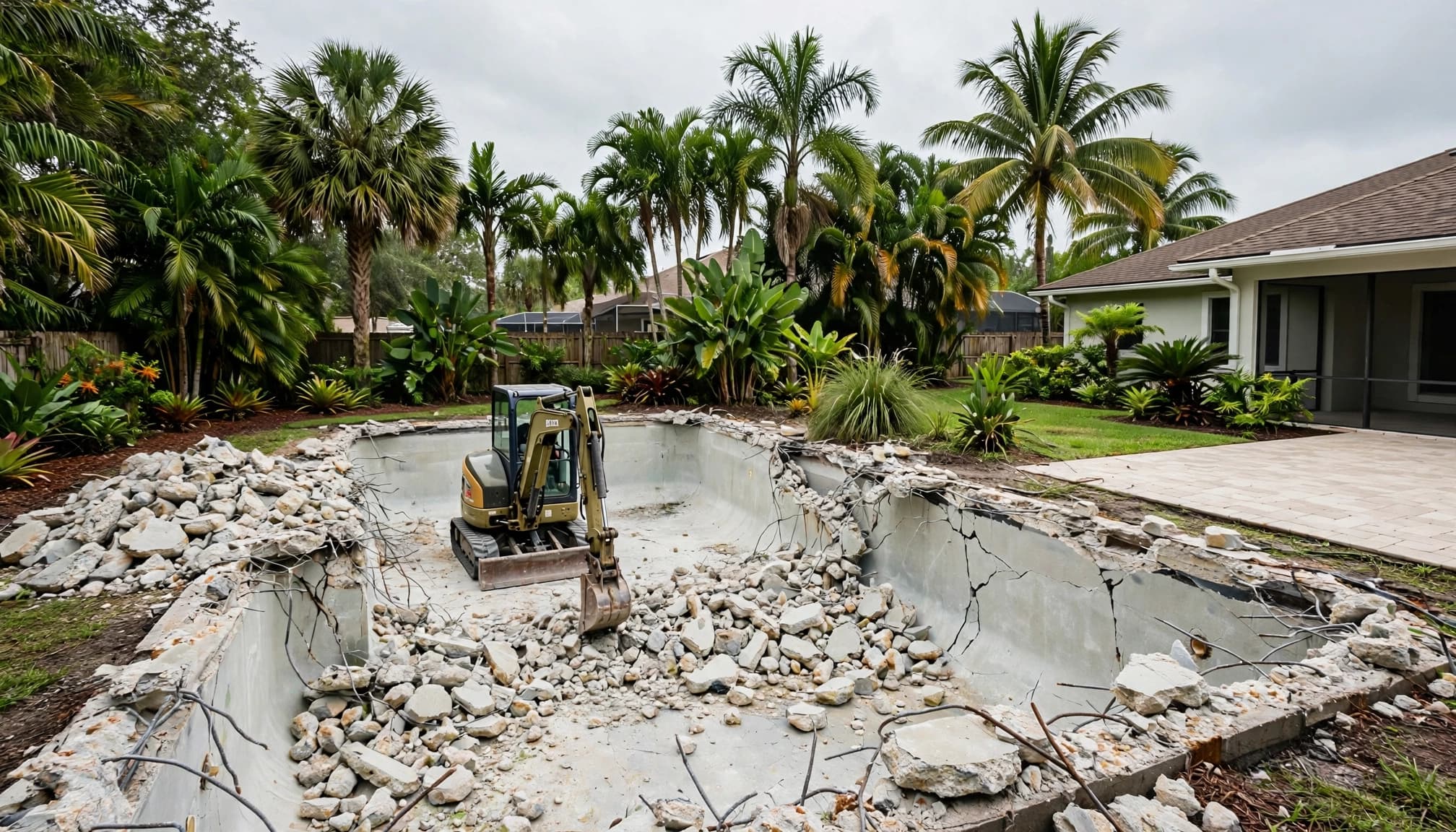
The phrase "pool demolition" can describe several different project scopes. A proposal should explain exactly what the crew will remove, what remains in place, how materials will leave the property, and how the area will be prepared for the next phase.
The options below are categories to discuss with a qualified contractor. They aren't interchangeable, and the right choice depends on the future design and site conditions.
Compare the scope, not just the demolition label
A project may involve complete removal of the existing shell, selective removal in areas affected by a new layout, or another approved approach that prepares the property for construction. Some homeowners need the old pool and deck removed. Others may only need portions of the structure changed before a remodel.
Ask the contractor to identify:
- The concrete, plumbing, coping, tile, deck, and equipment that will be removed.
- Materials that will remain, if any, and how they will affect the new design.
- Whether broken concrete will be hauled away or handled elsewhere on the property.
- How the excavation will be stabilized and prepared for later construction.
- What temporary protection will be used for the home, screen enclosure, landscaping, and nearby surfaces.
A clear scope prevents a low initial estimate from becoming a series of added charges after work begins.
Match removal to the finished design
The demolition plan should begin with the pool you intend to build. A new pool layout may need different elevations, plumbing routes, equipment placement, deck dimensions, or access for construction machinery.
For example, preserving part of an existing structure could restrict the new shape or create complications around the deck. Complete removal may offer more design freedom, but it may also involve a broader scope of excavation, hauling, grading, and site preparation.
Your contractor should explain the advantages and drawbacks of each proposed approach in writing. If the project requires engineering, permits, inspections, or special documentation, those requirements can vary by municipality and project. Confirm them before demolition starts.
| Project consideration | Why it matters |
|---|---|
| Existing shell condition | Affects whether remodeling or removal is practical |
| Future pool layout | Determines how much structure must change |
| Side-yard access | Influences equipment access and material handling |
| Deck and landscaping | May need protection, removal, or replacement |
| Drainage and grading | Affects how the site is prepared afterward |
| New features | Can change plumbing, electrical, and equipment needs |
The most useful proposal connects the demolition scope to the entire renovation instead of pricing removal in isolation.
Site, Drainage, and Access Considerations
Southwest Florida properties can have tight side yards, screened enclosures, established landscaping, paver decks, fences, and homes positioned close to the pool area. Each condition can affect how workers access the site and protect the surrounding property.
Measure access before signing a contract. Ask whether the contractor has reviewed gates, fences, overhead clearance, surface conditions, and the route for removing debris. A plan that works on paper may need changes if equipment cannot reach the pool without disturbing other parts of the yard.
Drainage deserves equal attention. Removing a pool changes the shape and elevation of the property. The finished area must fit the new design while directing water appropriately around the home, deck, equipment, and nearby structures. Requirements and solutions vary by municipality and project, so the contractor should identify what needs review rather than promise a universal method.
Also discuss irrigation lines, electrical runs, gas lines, water service, sewer connections, and any utilities near the work area. The contractor should explain how the existing equipment pad and connections will be handled before demolition begins.
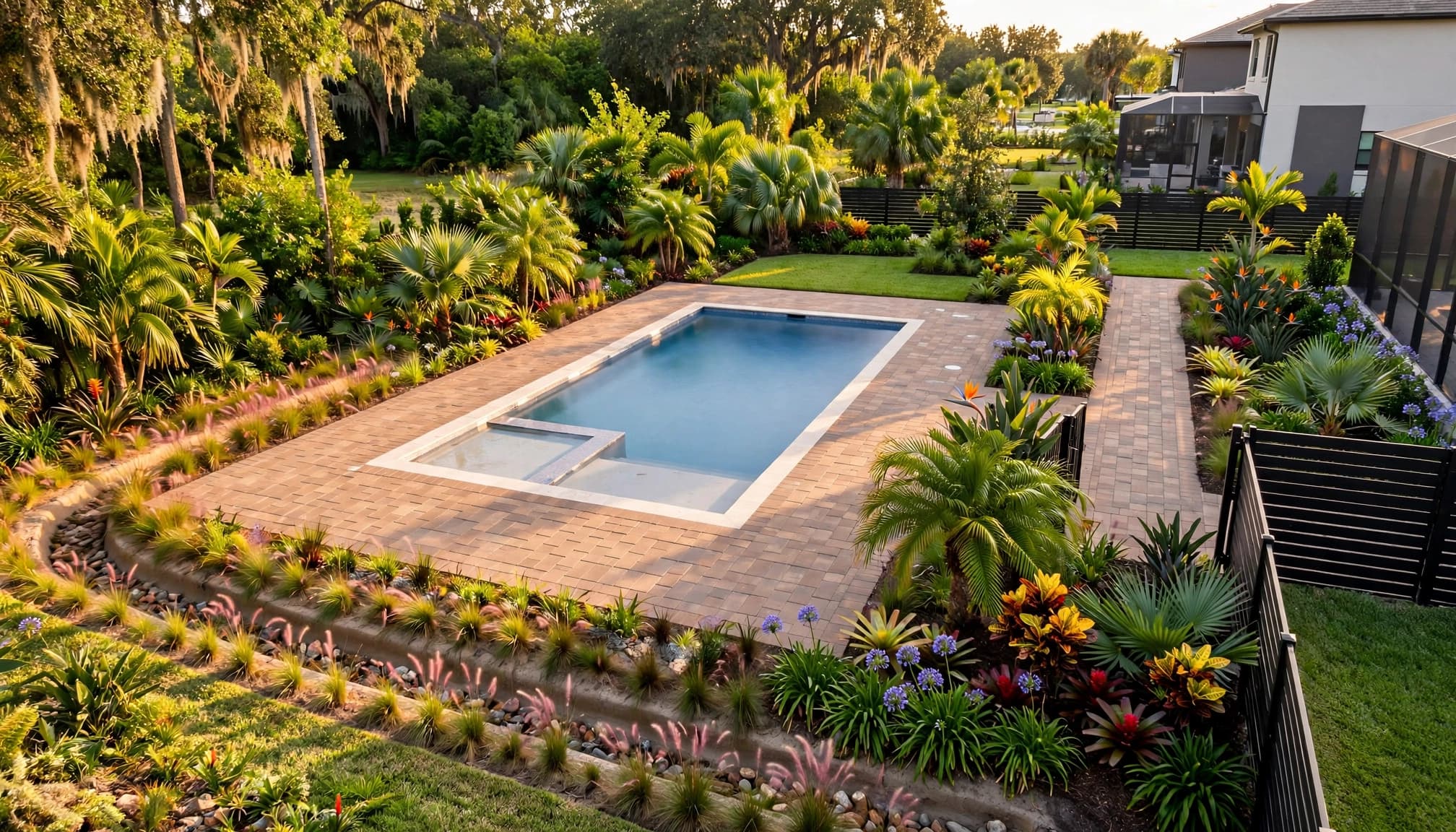
A good site plan accounts for the temporary construction phase and the finished backyard. It should show where the new pool, deck, drainage features, equipment, landscaping, and access paths will fit together.
How the Pool Construction Process Fits the Renovation
Demolition is one part of a larger project. Once the old pool is removed or modified, the site may need grading, engineering coordination, utility work, excavation, structural preparation, plumbing, electrical work, decking, and interior finishing.
San Juan's published pool construction process lists 16 stages for a new pool, beginning with layout, engineering, and permits. The sequence continues through excavation, form and steel work, concrete, backfill, tile, decking, equipment, electrical work, interior finish, and filling the pool.
That sequence describes construction, not a universal demolition procedure. Still, it shows why the removal plan should be coordinated with the design and installation stages that follow. A demolition contractor who only discusses breaking concrete may not be addressing the full renovation.
Before work starts, ask for a written project sequence. It should identify the handoff between demolition, site preparation, new pool construction, deck work, equipment installation, and final finish work. Confirm who coordinates inspections and which items remain the homeowner's responsibility.
For examples of completed work, review Cape Coral pool renovation projects and compare the finished layouts with your goals for space, features, and outdoor living.
Features to Consider After Demolition
A cleared site gives you an opportunity to rethink more than the pool's shape. The new design can address how your family uses the backyard, how guests move around the deck, and how much maintenance the system requires.
San Juan's featured upgrades include spas, waterfalls, tanning ledges, bubble features, salt chlorination, and auto-fill systems. You can review additional pool upgrades for a backyard retreat before meeting with a designer.
Consider the following during planning:
- A tanning ledge can create a shallow area for lounging or supervised play.
- A connected spa may improve everyday use without requiring a separate structure.
- Waterfalls, bubblers, deck jets, or fire bowls can change the visual and sensory experience.
- Salt chlorination and auto-fill systems may affect equipment layout and service planning.
- A larger deck can provide more space for furniture, shade, dining, and circulation.
Feature decisions should happen before demolition whenever possible. They can affect the pool footprint, plumbing routes, electrical work, structural details, equipment capacity, and deck layout.
The best result is a design that fits the property instead of filling every available space. Leave room for access, maintenance, drainage, furniture, and the way people actually use the backyard.
Questions to Ask a Demolition Contractor
Use the first consultation to test how clearly the contractor understands the whole project. Ask for direct answers and written details rather than relying on a general description of "pool removal."
Important questions include:
- What exact demolition scope do you recommend, and why? Ask what will be removed, retained, hauled away, or prepared for the next phase.
- Have you inspected the entire work area? Confirm that the review includes side-yard access, fencing, screens, landscaping, decks, equipment, utilities, and the home's proximity.
- How will you protect the property? Ask about the house, windows, pavers, irrigation, landscaping, screen enclosure, and neighboring areas.
- How will the site be graded afterward? The answer should address the finished pool design, drainage, elevations, and any municipal or project-specific requirements.
- Who handles permits, engineering, inspections, and utility coordination? Requirements vary, so the contract should identify responsibilities clearly.
- How are debris and unsuitable materials handled? Confirm hauling, disposal, cleanup, and whether those items are included in the proposal.
- What costs could change after demolition begins? Ask about unknown plumbing, buried utilities, difficult access, additional concrete, soil conditions, or design changes.
- How does the demolition connect to the new pool schedule? Make sure the proposal explains the transition to excavation, construction, decking, equipment, and finish work.
San Juan Pools & Spas reports more than 30 years of experience and serves homeowners seeking custom pool construction and renovation. When comparing contractors, look for clear communication, relevant project experience, licensing and insurance information, and a contract that defines the work.
What Affects the Cost of Gunite Pool Demolition?
A reliable estimate requires more than the pool's length and width. The condition of the existing structure, the selected demolition scope, access, hauling distance, and the amount of site restoration all affect the total.
Other factors may include:
- Removal or preservation of the deck, coping, tile, landscaping, and screen enclosure.
- The number and location of existing plumbing, electrical, gas, and equipment connections.
- The equipment needed to reach the pool and move materials through the property.
- Grading, drainage work, soil preparation, and restoration after removal.
- Engineering, permits, inspections, and municipality-specific requirements when applicable.
- The size and complexity of the replacement pool, spa, features, deck, and equipment system.
- Changes requested after demolition begins.
Ask for separate line items for demolition, hauling, site preparation, new construction, decking, equipment, finishes, and optional features. That format makes it easier to compare proposals and identify what is included.
Avoid choosing a contractor based only on the lowest initial number. A detailed scope often gives you a more useful comparison than a short estimate with broad allowances.
Frequently Asked Questions
Can every old gunite pool be remodeled instead of demolished?
No single answer applies to every pool. The existing structure, proposed design, equipment, plumbing, deck, and site conditions determine whether remodeling is practical. A contractor should inspect the pool before recommending renovation or removal.
Is complete removal always the best option?
No. The best approach depends on the replacement design and the condition of the existing pool. Ask the contractor to compare the available scopes and explain how each one affects construction, drainage, access, schedule, and cost.
Do I need a permit for gunite pool demolition?
Requirements vary by municipality and project. Ask the contractor which permits, engineering documents, inspections, and approvals may apply, then confirm the requirements with the appropriate local authority.
How long does demolition take?
The duration depends on access, scope, debris handling, weather, site conditions, inspections, and the work that follows. A contractor should provide a project schedule after inspecting the property.
Can I add a spa or tanning ledge after demolition is planned?
Discuss those features before demolition begins. A spa, tanning ledge, waterfall, or new equipment system can affect the footprint, plumbing, structural work, deck, and equipment area.
What should I bring to the first consultation?
Bring your preferred pool size, photos of the backyard, ideas for features, concerns about drainage or access, and any available information about the existing pool. A clear wish list helps the contractor connect demolition with the finished design.
Conclusion
Gunite pool demolition should support the backyard you want next. Compare the demolition scope, site access, drainage plan, utility work, deck changes, and replacement design before choosing a path.
A detailed site assessment and written proposal can reduce surprises while giving you a clearer view of the renovation. For homeowners ready to discuss an existing pool in Southwest Florida, request a pool renovation estimate that addresses both removal and the finished outdoor living space.